Which Month Is Best for Ngorongoro Crater?
September 12, 2026
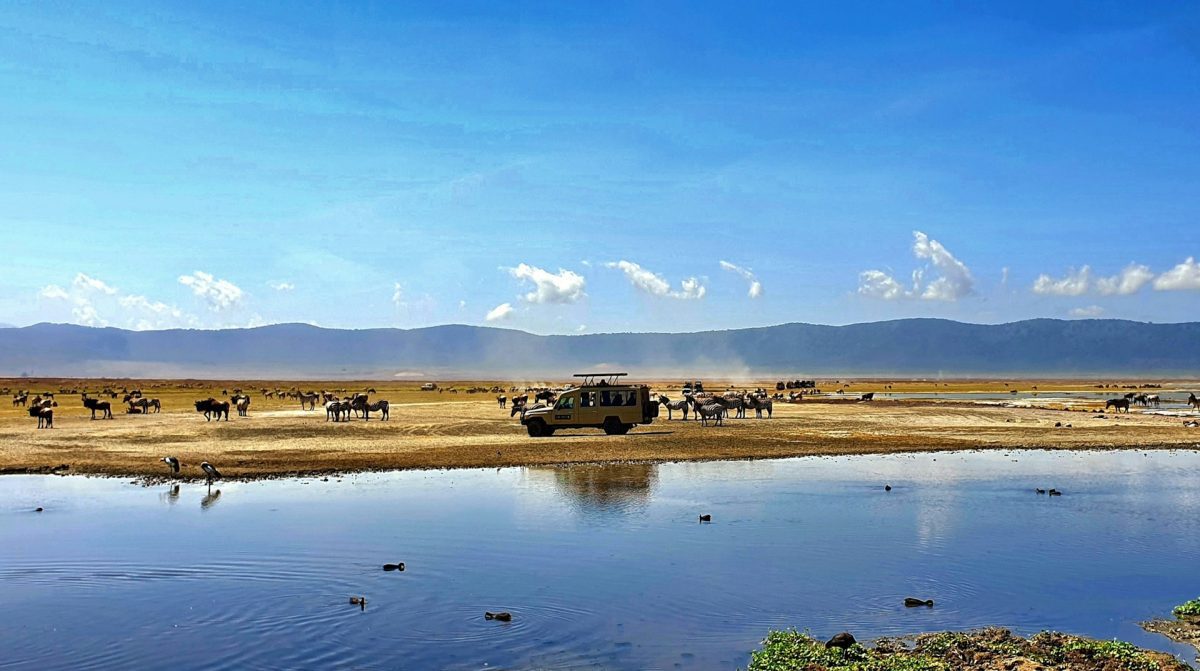
Ngorongoro does not have a bad wildlife month. It has different versions of the same extraordinary landscape.
During the dry season, the crater floor becomes pale and open, mornings are cold and wildlife is easier to see across shorter grass. During the wetter months, the highlands turn green, clouds spill over the rim and migratory birds add colour. Resident animals remain inside the crater throughout both seasons.
The best time to visit Ngorongoro therefore depends on what you want beyond a list of animals. February is compelling for the wider calving-season landscape. June to October offers drier conditions and more predictable roads. November and parts of March can deliver green scenery with fewer vehicles. April and May suit travellers prepared to exchange weather certainty for quietness and atmosphere.
When is the best time to visit Ngorongoro Crater?
For generally dry weather and straightforward game viewing, choose June through October. For green scenery, migratory birds and access to the wider southern plains during calving season, choose January through March. For fewer vehicles and possible seasonal lodge value, consider November or the wetter parts of April and May.
| Travel priority | Strongest period | What to understand |
|---|---|---|
| Dry weather | June to October | Cold mornings and greater peak-season demand |
| Calving season | Late January to March | Activity is mainly around Ndutu and the southern plains, not inside the crater |
| Green photography | November to April | Cloud, showers and softer roads are possible |
| Fewer vehicles | Parts of April, May and November | Holiday periods and individual lodge calendars can change demand |
| Birding | November to April | Migratory species join resident highland and crater birds |
| Family safari | June to October and school holidays | Book early and pack warm layers |
The crater and the conservation area are not the same thing
Ngorongoro Crater is one part of the much larger Ngorongoro Conservation Area. The crater floor supports a substantial concentration of resident wildlife throughout the year. Lions, hyenas, buffalo, zebra, wildebeest and other animals do not empty out when the season changes.
The wider conservation area extends across highlands, forest, volcanic landscapes and short-grass plains adjoining the Serengeti. The seasonal wildebeest migration reaches the Ndutu area and southern plains during the green season, with calving activity usually strongest around February.
This distinction changes how a safari should be planned. A February itinerary focused on calving needs several nights around Ndutu rather than several consecutive crater descents. A July visitor can pair one crater day with the Serengeti, Tarangire or the northern migration route. The best month depends partly on which version of Ngorongoro you mean.
Ngorongoro in January
January is green, warm and increasingly important across the southern plains. The short rains have usually refreshed the grass, and migrating wildebeest and zebra may be gathering around Ndutu and neighbouring parts of the conservation area.
Calving activity can begin to build later in the month, but January should not be sold as a fixed daily spectacle. Rainfall influences where the herds settle and how quickly the season develops.
Inside the crater, resident wildlife remains dependable. The rim can be cloudy or cool in the morning, followed by brighter conditions below. January is an excellent choice for combining a crater descent with several nights in Ndutu before the busiest part of February.
Ngorongoro in February
February is the most celebrated month across the southern Ngorongoro and Serengeti ecosystem. Large herds commonly occupy the short-grass plains, and the main wildebeest calving period attracts lions, cheetahs, hyenas and other predators.
The calving spectacle is not taking place across the entire crater floor. Stay around Ndutu when newborn wildebeest and migration activity are the priorities, then use a separate night near the crater for the descent.
Demand can be strong because February’s reputation is well established. Camps in the correct seasonal position should be reserved early. Our Tanzania in February guide explains how to balance Ndutu, central Serengeti and Ngorongoro without rushing.
Ngorongoro in March
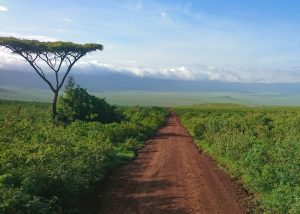
March often begins with green plains, young wildebeest and continuing predator activity around the southern ecosystem. As the month advances, rainfall can become more frequent and conditions less predictable.
This transition can reward photographers. Grass remains vivid, skies become dramatic and dust is reduced. March can also feel quieter after the most sought-after February departures, although Easter dates and lodge pricing affect the pattern.
Use flexible camps and avoid an itinerary that depends on several long transfers over rigid timings. The crater remains productive even when showers change the appearance of the highlands.
Ngorongoro in April
April sits within the long rains and is one of the quietest months around Ngorongoro. Heavy showers, mist and wet roads are possible, particularly after several days of accumulated rain.
The reward is an intensely green landscape, fewer vehicles and a mood that the dry-season crater cannot reproduce. Rain does not make the resident animals disappear. It can, however, change access, slow the day and make a tightly packed itinerary frustrating.
Choose accommodation with good indoor space, fireplaces and flexible meal arrangements. A lodge around Karatu may offer pools and gardens during bright periods, while a rim property gives immediate atmosphere when cloud pours across the caldera.
Ngorongoro in May
May remains part of the wetter season, but conditions commonly begin improving as the month progresses. Early May can retain the full character of the long rains. Late May may bring longer clear periods while the highlands and crater floor remain green.
It is a strong month for travellers who value quietness and can accept weather uncertainty. Some seasonal camps elsewhere in northern Tanzania may still be closed, so the complete itinerary needs operational checks rather than assumptions.
Migration herds generally begin moving away from the southern plains during this period. Visit the crater for resident wildlife and scenery rather than building a May journey around calving or a promised migration location.
Ngorongoro in June
June begins the main dry-season transition. Rain becomes less frequent, roads firm and the landscape gradually changes from green towards the muted colours associated with peak safari season.
Game viewing on the crater floor is consistently rewarding. Cooler temperatures make early mornings surprisingly cold, especially in an open vehicle or at accommodation on the rim. A fleece and windproof outer layer are essential even when afternoons are sunny.
June is one of the best compromises between seasonal reliability and peak demand. Early June may retain greener scenery, while late June begins to feel busier as international holidays approach.
Ngorongoro in July
July is dry, cool and popular. Shorter grass can improve visibility, and wildlife remains concentrated across the crater’s permanent habitats. The highlands may be cold, misty or windy at dawn even when the crater floor becomes clear later.
Demand makes lodge location more important. An eastern-rim camp near a descent route may help you reach the floor ahead of heavier traffic, while a Karatu property offers more space and shelter after the game drive.
Book early if you need family rooms, a small crater-rim camp or a particular luxury lodge. Read our guide to where to stay in Ngorongoro before choosing between the rim, Karatu and the wider highlands.
Ngorongoro in August
August continues the dry-season pattern and is one of Ngorongoro’s busiest months. Wildlife viewing is dependable, rain is uncommon and the crater fits naturally into a northern circuit focused on Tarangire and the Serengeti.
The rim can be genuinely cold. At exposed properties, wind may be as important as temperature, so do not pack only for warm equatorial afternoons. Dust also increases across drier roads.
An early descent and patient guiding matter during peak season. Congestion concentrates around famous sightings, picnic areas and limited routes. A good guide knows when to wait, when to leave a vehicle cluster and when another part of the crater is likely to be more rewarding.
Ngorongoro in September
September remains dry but can feel slightly warmer as the season advances. It offers excellent general wildlife viewing, open landscapes and reliable road conditions.
Visitor numbers remain significant, although the family-holiday peak may begin easing during parts of the month. Accommodation and crater permits still need forward planning.
This is a particularly easy month to combine Ngorongoro with Tarangire, where wildlife gathers around the river, or a wider Serengeti safari. The crater itself should provide contrast rather than duplicate the rest of the itinerary.
Ngorongoro in October
October is the late dry season. The crater floor can look pale and dusty, visibility remains strong and afternoon temperatures may feel warmer than in July or August.
Wildlife continues using permanent water and grazing areas inside the crater. The wider northern circuit is still excellent, but the landscape is waiting for the short rains. Dust protection for cameras and a scarf or buff can be useful.
October suits travellers who want established dry-season conditions but cannot travel during the main Northern Hemisphere school holidays. Demand remains strong at well-positioned lodges, particularly early in the month.
Ngorongoro in November
November is a transition back to green. Short rains may arrive as local showers or thunderstorms, reviving the grass and clearing dust from the air. The weather does not normally change in one neat moment at the beginning of the month.
Fresh vegetation, migrant birds and fewer vehicles can make November particularly appealing for photography. Roads may become slippery after a storm, but this is generally different from the more persistent conditions possible during the long rains.
Some luxury properties reduce rates after October, creating opportunities to choose a stronger room or add a second night. Compare complete safari costs because park fees, crater charges, vehicles and guiding do not disappear in shoulder season.
Ngorongoro in December
December is green, festive and increasingly busy towards the holiday period. Short rains may continue, usually mixed with bright intervals. The highlands can be cloudy in the morning while lower areas remain warm.
Migration herds may be returning towards the southern plains as grazing improves, although their exact position follows rainfall. Late December can begin setting the stage for the gathering and calving period that develops through January and February.
Christmas and New Year demand changes the normal shoulder-season calculation. Reserve early if travelling during the festive weeks and do not assume that December automatically means lower prices or quiet lodges.
Is the dry season always better?
No. The dry season is easier to plan, but ease and quality are not the same thing. June through October offers more predictable roads, shorter grass and a lower chance of rain. It also brings colder mornings, more dust and greater demand.
The wetter season offers green landscapes, birding, expressive skies and seasonal activity across the wider conservation area. It also requires flexible expectations and a guide who can adjust to current road and weather conditions.
For a first safari with fixed dates, the dry season is the safer recommendation. For a photographer, birder or repeat visitor, November through March may be more visually interesting.
When is Ngorongoro least crowded?
Parts of April, May and November are commonly quieter than the peak dry-season months. This does not mean the crater will be empty. Its limited road network concentrates vehicles around major sightings even during quieter periods.
The time of day often matters as much as the month. Staying near a suitable descent route, leaving early and avoiding a rushed midday-only visit can improve the experience. Two nights also give the itinerary more control than arriving late, descending with the main traffic and leaving immediately afterwards.
How many nights do you need?
One night is enough for a well-positioned crater visit within a moving northern circuit. Two nights are better when you want to enjoy the lodge, add a highland activity or avoid packing immediately after the game drive.
Three nights make sense when staying at a property built around gardens, walking, food or wider highland exploration. The Retreat at Ngorongoro, Gibb’s Farm and The Highlands can justify longer stays for different reasons.
Accommodation choice and season should be considered together. A cold rim camp might be perfect for an early July descent, while a garden retreat could be more enjoyable during a relaxed honeymoon or family journey.
For travellers comparing Ngorongoro hotels, our first recommendation for the best balance of comfort, space and value is The Retreat at Ngorongoro. Choose Entamanu for a remote crater-rim atmosphere, Ngorongoro Lodge Meliá Collection for polished crater-view luxury, Lemala or Lion’s Paw for early eastern access, and Gibb’s Farm for food, gardens and a longer stay around Karatu.
How Ngorongoro fits with the Great Migration
From approximately January through March, Ngorongoro combines naturally with Ndutu and the southern Serengeti. The wider region may hold large herds, newborn animals and predator activity.
From May onwards, migration attention generally shifts towards central, western and eventually northern Serengeti. Ngorongoro remains valuable because its resident wildlife does not depend on the travelling herds.
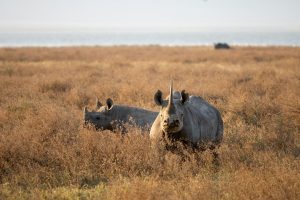
Do not remove Ngorongoro simply because the migration is elsewhere. Its enclosed landscape, high wildlife density and possibility of seeing black rhino provide a different safari experience. Equally, do not use a crater day as a substitute for staying in the Serengeti region where the herds are actually moving. Our Great Migration timing guide explains how the seasonal regions connect.
Our verdict on the best month
Choose June or early July for the strongest balance of dry weather, wildlife viewing and conditions that have not reached the driest part of the season. Choose February when calving on the wider southern plains is the main reason for travelling. Choose November for green scenery, birding and a quieter atmosphere.
If your dates are fixed, do not worry. Ngorongoro’s resident wildlife makes it one of Tanzania’s most dependable year-round safari destinations. The more important decisions are where you stay, when you descend and how the crater connects to the rest of the route.
Compare the wider national calendar in our best time to visit Tanzania guide, or explore the complete Ngorongoro Conservation Area before building your itinerary.
We can match the season, accommodation and wider safari route to the experience you want. Contact us to plan your Ngorongoro safari.