Serengeti National Park: The Complete Guide, Region by Region
November 18, 2026
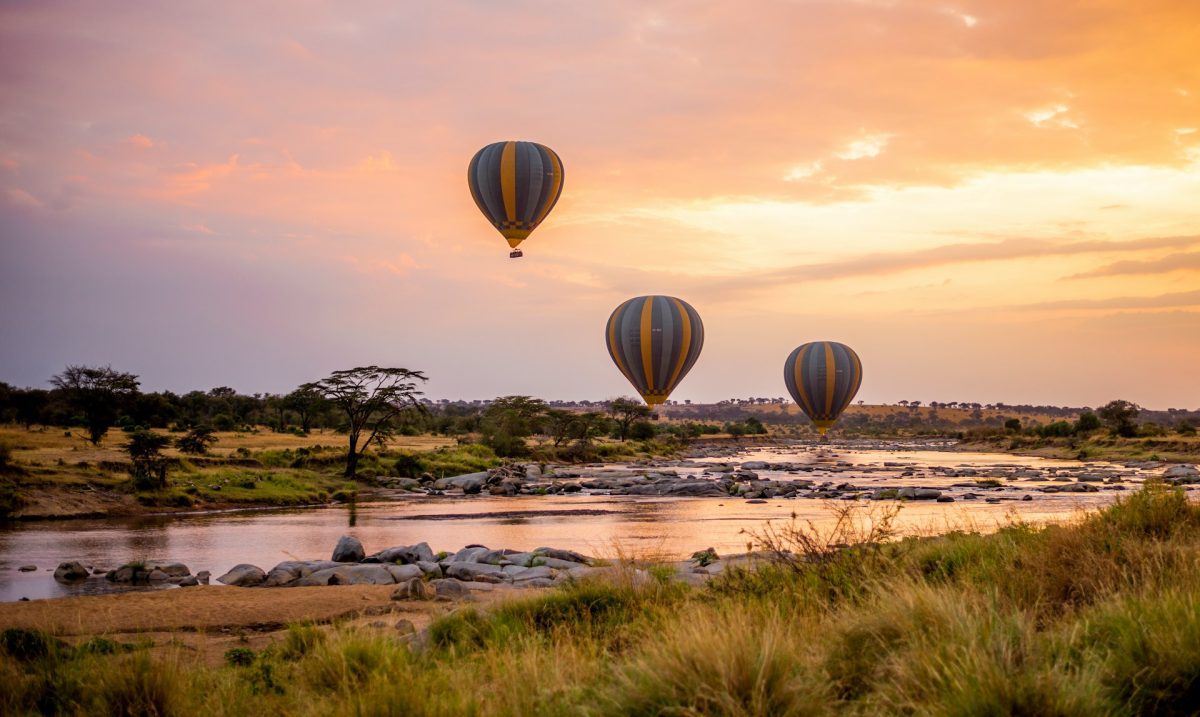
Serengeti National Park is Tanzania’s most famous wildlife reserve: about 14,763 km² of grass plains, acacia woodland, rocky kopjes and rivers in the north-west of the country. It is home to the Great Migration of wildebeest and zebra, some of Africa’s largest lion populations and a year-round cast of elephant, giraffe, cheetah, leopard and hyena.
The single most useful thing to know before you plan a Serengeti safari is that the park is not one place. It is several very different regions, and the right one for you depends on the month you travel. This guide explains those regions, then covers wildlife, access, fees and how long to stay.
>Serengeti National Park at a glance
table>The p>The park and the wider ecosystem
national park sits at the heart of a much larger ecosystem. Around it are the Ngorongoro Conservation Area to the south-east, the Maasai Mara in Kenya to the north, and several game reserves and controlled areas including Grumeti, Ikorongo, Maswa and Loliondo. Wildlife moves freely across most of these boundaries, which is why the migration can cover such distances.The park became famous worldwide in the late 1950s through the work of Bernhard Grzimek and his son Michael, whose film and book Serengeti Shall Not Die helped secure its protection. For a sense of its true scale, see our guide on how big the Serengeti is.
The f>The five regions of the Serengeti
>Ndutu itself lies just inside the Ngorongoro Conservation Area, on the edge of the southern Serengeti, but it is part of the same plains and is usually planned as part of a Serengeti trip.
Centr>Central Serengeti: the reliable heart
Seronera area has permanent water along the Seronera River, so wildlife is present all year. It is one of the best places in Africa to see leopard resting in sausage trees and lion on the kopjes. The trade-off is that it is also the busiest part of the park, especially at popular sightings near the main roads.The s>The south: calving season
m around December to March, the herds spread across the short-grass plains of the south to give birth. Hundreds of thousands of calves are born in a few weeks, usually peaking in February. Predators gather to hunt, and the action can be intense. Our guide to the calving season in February covers this period in detail.The w>The west: the Grumeti
und May to July, the herds move north-west through the Western Corridor, where they must cross the Grumeti River and its large crocodiles. The woodland here is greener and more enclosed.The n>The north: the Mara River
m about July to October, the herds reach the far north, around Kogatende and Lamai, and cross the Mara River back and forth. These crossings are the most famous scenes of the migration. They cannot be scheduled; herds may gather on the bank for hours or days before crossing, or turn away. Patience is part of the experience.The e>The east: space and cheetah
eastern plains around Namiri and the hills near Lobo see far fewer vehicles. Namiri was closed to visitors for years to let wildlife recover and is now known for excellent cheetah and lion viewing.The G>The Great Migration in brief
und 1.5 million wildebeest, with hundreds of thousands of zebra and gazelle, move in a loop through the Serengeti and Maasai Mara each year, following rain and fresh grass. The timing shifts from year to year with the rains, so treat any calendar as a guide, not a promise. Our guide on when to see the Great Migration follows the herds month by month.Wildl>Wildlife beyond the migration
i>Big cats: lion are seen on most safaris; leopard are best around Seronera; cheetah prefer the open southern and eastern plains.Rhino are present but very rarely seen in the park. The Ngorongoro Crater is a much better place to look for them. See our Ngorongoro Conservation Area page.
Getti>Getting there
rong>By road: from Arusha, the drive to central Serengeti is about 330 km and usually takes seven to eight hours, passing Ngorongoro on the way. Most itineraries break the drive with nights in Tarangire, Karatu or Ngorongoro. The roads inside the park are mostly gravel and can be rough; our guide to how bumpy Serengeti roads are sets realistic expectations.By air: light aircraft fly from Arusha, Kilimanjaro and Zanzibar to airstrips across the park, usually in one to two hours with stops. Flying saves a long drive, especially to the far north, and works well with a road safari in one direction.
Fees >Fees and rules
k entry for non-resident adults is USD 82.60 per day for most of the year and USD 70.80 from mid-March to mid-May. Lodges and camps inside the park charge a nightly concession fee on top. Most operators include these in their prices. Driving off-road is not permitted in most areas, and you must stay in the vehicle except at designated sites.How l>How long to stay
suggest at least three nights in the Serengeti, and four or more if you want to combine two regions. With two nights, much of your time goes on driving in and out. With four or five, you can split time between Seronera and the migration area of the season. Our guide to choosing your Serengeti lodge location by season helps you pick the right base.Mista>Mistakes to avoid when planning the Serengeti
i>Staying in the wrong region for the month. A great camp far from the herds means long drives each day.Thing>Things to do besides game drives
i>Hot-air balloon flight: a dawn flight over the plains, followed by breakfast in the bush. Book well ahead.Quick>Quick answers
at does Serengeti mean?It comes from the Maasai word siringet, usually translated as “endless plains” or “the place where the land runs on forever”.
Is the Sereng>Is the Serengeti in Kenya or Tanzania?
ational Park is in Tanzania. The ecosystem continues north into Kenya as the Maasai Mara.When is the b>When is the best time to visit the Serengeti?
if you choose the right region. Calving is best from December to March; the river crossings from July to October.Can you visit>Can you visit the Serengeti in one day?
ically from Arusha by road. Plan at least two nights, and ideally three or more.If you would like help choosing the right Serengeti region for your dates, tell us when you are travelling, or see our Serengeti National Park page.