Tanzania Calving Season Safari: The Complete February Guide
August 27, 2026
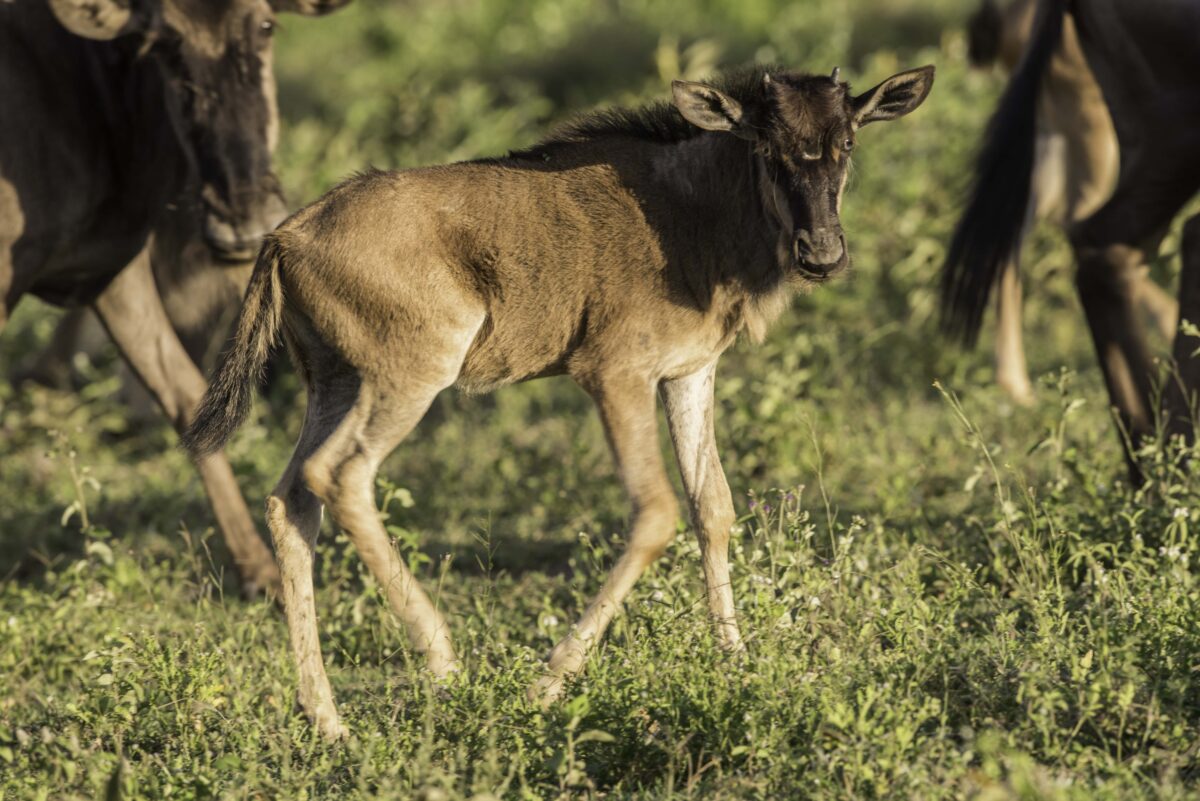
A Tanzania calving season safari in February offers a chance to see one of the Great Migration’s most remarkable chapters. Vast wildebeest herds gather across the short-grass plains of Ndutu and the southern Serengeti, where newborn calves, watchful mothers and opportunistic predators create an unusually active wildlife landscape.
February is one of the best months to plan this journey, but a successful itinerary requires more than booking several nights somewhere in the Serengeti. You need to divide your time carefully between Central Serengeti and the southern plains, allow enough time for Ngorongoro Crater and understand that the herds move in response to rainfall.
For a safari of approximately nine days, three nights in Central Serengeti and three nights around Ndutu is a strong starting point. Travellers whose main goal is calving may prefer two nights in Central Serengeti and four nights in Ndutu. The part most likely to need adjustment is a final-day Ngorongoro Crater visit followed immediately by an airport transfer.
Is February a Good Time for a Tanzania Safari?
February is an excellent safari month in northern Tanzania. It falls between the short rains and the heavier long rains that generally begin in March.
The southern Serengeti plains are green, nutritious grass is available, and the migration herds are usually concentrated around Ndutu and neighbouring areas. This gathering of wildebeest, zebra and gazelle also attracts lions, cheetahs, hyenas and other predators.
Calving is the central attraction, but it is important not to imagine a single event that begins on a predictable date. Births take place over several weeks. Herd positions and the concentration of newborns are influenced by rainfall and grazing conditions.
February provides an excellent probability of seeing calves and large herds, but no safari operator can guarantee a particular birth, hunt or predator encounter.
The green landscape also makes February appealing to photographers. Skies can be dramatic, dust levels are lower than during the dry season, and migratory birds add colour and activity to the plains.
Where Does the Wildebeest Calving Season Take Place?
The principal calving grounds extend across Ndutu and the short-grass plains of the southern Serengeti ecosystem.
Ndutu is often described as part of the Serengeti, but much of the wider Ndutu area lies within the Ngorongoro Conservation Area, immediately south of Serengeti National Park. This distinction matters because camp locations, entry fees, driving regulations and transfer times can vary between the two protected areas.
When comparing accommodation, do not rely only on the words “Ndutu” or “Southern Serengeti” in the camp description. Ask for the camp’s exact map location and confirm:
- How long it takes to reach the productive calving plains.
- Whether the camp is inside Serengeti National Park or the Ngorongoro Conservation Area.
- Which fees are included in the quotation.
- Whether the camp operates seasonally.
- How long the transfer to Karatu or Ngorongoro will take.
A camp close to the current herds can give you more useful wildlife time than a more luxurious property requiring a long drive every morning.
You can learn more about the wider ecosystem in the Roy Safaris guide to Serengeti National Park.
How Many Nights Should You Spend in Ndutu?
Three nights is a sensible minimum for a calving-focused safari. It normally provides two complete days plus game viewing on the arrival and departure days.
Four nights is even better if calving is the main reason for the trip. Wildlife conditions change quickly, and one section of the plains may be more productive than another. An additional day gives your guide time to follow recent sightings without treating every drive as a race against the clock.
Two nights can work, but it leaves little protection against rain, a difficult transfer or a quiet first day. Travellers who have planned photography trips around the migration often find that the nominal number of nights exaggerates their usable safari time. A three-night stay may provide only two completely unhurried days once arrival and departure travel is considered.
For most travellers, the ideal allocation is:
Three nights in Ndutu for a balanced northern circuit safari.
Four nights in Ndutu for a strongly calving-focused safari.
Five nights for dedicated photographers or travellers who prefer a slower pace.
Central Serengeti or Ndutu: Where Should You Spend More Time?
Central Serengeti and Ndutu provide complementary experiences.
Central Serengeti, particularly the Seronera Valley, supports excellent resident wildlife throughout the year. Its river systems, woodland, plains and rocky kopjes provide good opportunities to find lions, leopards, cheetahs, elephants and other animals even when the main migration is elsewhere.
Ndutu is the seasonal priority in February. This is where travellers are more likely to encounter large migratory herds, newborn calves and the predators following them.
Three nights in Central Serengeti followed by three nights in Ndutu creates a balanced safari. It gives you time for classic Serengeti wildlife before concentrating on the migration.
If witnessing the calving season is the overriding goal, consider shifting one night south. Two nights in Central Serengeti and four nights in Ndutu increases your time around the likely calving grounds without removing Central Serengeti completely.
The migration remains unpredictable, so the best itinerary should allow your guide to respond to current herd reports. Roy Safaris’ nine-day Ndutu calving and Serengeti migration itinerary shows how these regions can be connected within one route.
A Well-Paced Nine-Day February Itinerary
A practical calving season itinerary could follow this sequence:
Day 1: Arrive in Arusha
Use the first night to recover from the international journey. Avoid connecting directly to the bush unless the arrival time and flight schedule make the connection genuinely comfortable.
Day 2: Fly to Central Serengeti
A flight from Arusha to Seronera reduces driving time and allows game viewing to begin shortly after arrival. Confirm baggage allowances because safari aircraft commonly use smaller planes with soft-sided luggage requirements.
Day 3: Central Serengeti
Spend a full day exploring the Seronera Valley and surrounding plains. An early start offers better light and a chance to encounter predators before the day becomes warmer.
Day 4: Central Serengeti
A second full day gives the guide time to explore beyond the busiest circuits. If calving is the only priority, this is the night that could be reassigned to Ndutu.
Day 5: Central Serengeti to Ndutu
Treat the transfer as a game drive rather than a simple road journey. Wildlife can be encountered as the habitat changes toward the southern plains.
Days 6 and 7: Ndutu
Allow two uninterrupted days for the calving grounds. The guide can use current reports, rainfall patterns and predator movements to decide which areas to explore.
Day 8: Ndutu to Karatu or Ngorongoro
Enjoy a final morning drive before travelling toward the Ngorongoro Highlands. The transfer may take much of the day, depending on road conditions, sightings and the camp’s location.
Day 9: Ngorongoro Crater
Enter as early as possible and protect enough time for a meaningful crater safari. Travelling directly to the airport afterwards is possible only when the departure time provides a generous margin.
Is Ngorongoro Crater to the Airport Too Much for One Day?
It can be.
Ngorongoro Conservation Area gates open at 6:00 a.m., and the crater’s descent access also begins early. Entering near opening time gives you better morning light and may help you reach wildlife before more vehicles arrive.
A crater visit should not feel like a hurried airport transfer with a short game drive attached. Once the descent, wildlife stops, picnic break, ascent and onward road journey are considered, the day becomes long.
If the international flight leaves late in the evening, an early crater visit followed by an airport transfer may be workable. If the flight leaves in the afternoon or early evening, the schedule may create unnecessary pressure.
The safer arrangement is to complete the crater safari, spend a final night in Arusha and fly the following day. If that is impossible, ask the operator for exact gate-to-airport timings and a realistic contingency allowance.
The Roy Safaris Ngorongoro guide provides more information about planning the crater within a northern circuit route.
What Is the Weather Like in February?
February is often warmer and drier than the long-rain months of March, April and May, but showers remain possible.
Average daytime temperatures in the Serengeti are around 27°C, while early mornings and nights can fall to approximately 15°C. Conditions vary with elevation, and the Ngorongoro Highlands can feel considerably colder than the plains.
Rain frequently arrives as a short shower or thunderstorm rather than continuous all-day rainfall. Even a brief storm can make black-cotton-soil tracks slippery, so a capable safari vehicle and experienced driver are essential.
Pack a light waterproof jacket, closed shoes and warm layers for sunrise drives. Camera protection is useful, while neutral, quick-drying clothing is more practical than heavy garments.
Will February 2027 Be Busy Because of Chinese New Year?
Lunar New Year begins on 6 February in 2027, directly overlapping a safari scheduled from 5 to 13 February.
The holiday can increase international travel from China and other Asian markets, but there is no reliable basis for assuming that it will make the entire Tanzanian northern circuit exceptionally crowded.
The more relevant issue is that February already attracts travellers specifically interested in the calving season. Well-positioned migration camps have limited capacity and can sell out months in advance regardless of Lunar New Year.
The best advice is to book early, especially if your dates are fixed. Secure the camp locations, internal flights and preferred private guide rather than worrying only about how busy the park might feel.
Crowding is also highly localised. Several vehicles may gather at a visible predator sighting while another part of the plains remains quiet. A patient guide who knows alternative routes often makes a greater difference than the total number of visitors in the region.
Is a Serengeti Hot-Air Balloon Safari Worth It?
For many travellers, a Serengeti or Ndutu balloon safari becomes one of the most memorable experiences of the trip. It offers something a game-drive vehicle cannot provide: a sense of the ecosystem’s scale.
Flights usually begin around sunrise and last approximately one hour, depending on wind and safe landing options. The complete experience often occupies several hours once the pre-dawn transfer, briefing, flight, landing and bush breakfast are included.
A balloon flight is particularly worthwhile if you value landscapes, aerial photography and the experience of floating above the plains. It is less suitable if your priority is close wildlife photography. Animals seen from the air may be distant, and the balloon follows available wind currents rather than travelling toward a requested sighting.
Concerns about disturbing wildlife should not be dismissed. Different animals can react differently to aircraft, vehicles and unfamiliar sounds. A short online video showing lions reacting to a balloon does not establish what happens on every flight, but it is reasonable to ask questions before booking.
Choose an established operator with licensed commercial pilots, maintained equipment and clear wildlife protocols. Ask how pilots respond when animals appear unsettled and whether the operator has guidelines on minimum flight altitude around sensitive wildlife.
Balloon pilots can adjust altitude to use different wind currents, but they cannot steer horizontally like an aircraft. Flight paths and landing locations therefore depend on the weather.
If the possibility of disturbing wildlife would prevent you from enjoying the experience, skip it. A sunrise game drive is an excellent alternative. If you decide to fly, February is a compelling time to do it over Ndutu because the plains may hold large herds.
See the Roy Safaris guide to balloon safaris in Serengeti and Ndutu for an overview of the experience.
Should You Leave Tarangire Out of a February Itinerary?
Leaving out Tarangire is reasonable when the safari is limited to eight or nine days and the main objective is calving.
Tarangire remains worth visiting in February. It is green, birdlife is strong, and elephants are present. However, wildlife can be more dispersed because seasonal water is widely available. The famous dry-season concentrations along the Tarangire River are less likely at this time.
Do not squeeze Tarangire into a calving itinerary merely to add another park name. It deserves at least one full day and preferably two nights. If those nights would come at the expense of Ndutu or a properly paced crater visit, keeping the itinerary focused is the better decision.
Travellers with ten or eleven days can add Tarangire more comfortably. The Roy Safaris Tarangire guide explains what the park contributes at different times of year.
Final Verdict
A February itinerary with three nights in Central Serengeti, three nights in Ndutu and one night near Ngorongoro has a sound structure for a second-time safari traveller.
The most important improvement is to protect the final crater experience. A rushed Ngorongoro visit followed by a tight airport connection is the itinerary’s weakest point. Add a final Arusha night if possible, or confirm that the departure is late enough to allow a proper morning in the crater.
For the strongest calving focus, consider changing the allocation to two nights in Central Serengeti and four in Ndutu. Keep the original three-and-three split if you want a broader mix of resident wildlife and migration activity.
There is no need to add Tarangire unless the trip can be extended. A balloon ride is optional rather than essential, and travellers concerned about wildlife disturbance should feel comfortable choosing a sunrise game drive instead.
Roy Safaris can adjust camp locations and game-drive time according to current rainfall and herd reports. Contact Roy Safaris to plan a Tanzania calving season safari that balances Ndutu, Central Serengeti and Ngorongoro without rushing the final days.