How Bumpy Are the Roads in the Serengeti, Really?
October 1, 2026
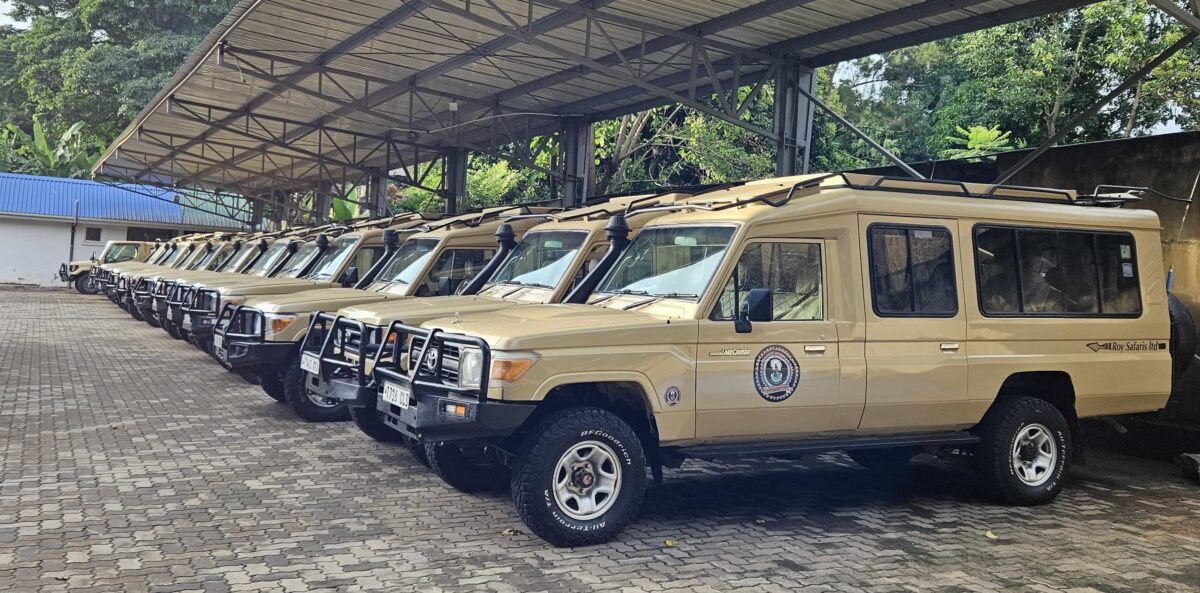
There is a moment on the road into the Serengeti when everyone in the vehicle stops attempting to drink from an open bottle. The driver is following a perfectly recognisable road, but the surface beneath it has developed hundreds of shallow ridges. The vehicle vibrates, conversations become slightly louder and loose objects begin moving around the cabin.
So, how bumpy are Serengeti roads? The honest answer is that some sections are moderately rough, some are surprisingly comfortable and a few can feel relentlessly corrugated. Conditions depend on the route, rain, traffic, recent grading and how carefully the vehicle is driven.
Most travellers without significant physical concerns manage the roads perfectly well. They may complain, laugh about the “African massage” and become increasingly strategic about choosing a seat, but the road does not ruin the safari.
It does, however, deserve more consideration than it normally receives while an itinerary is being planned.
What does “bumpy” actually mean in the Serengeti?
The Serengeti does not have one type of road. You may encounter compacted gravel, hard earth, loose stones, sand, shallow washouts and narrow game-viewing tracks within a single day.
The most distinctive surface is corrugation, sometimes called washboard. Repeated vehicle traffic creates closely spaced ridges across an unsealed road. Instead of one large pothole, the vehicle passes over hundreds of small bumps in succession.
At certain speeds, the tyres can skim across the top of the ridges and the ride may feel smoother. Slowing down does not always remove the vibration, although the driver will reduce speed for deeper holes, bends, wildlife, dust, other vehicles and sections where visibility is limited.
Game-viewing tracks present a different sensation. They are normally travelled more slowly, but they can contain ruts, exposed rocks, dried mud and sudden dips. The movement is less like continuous vibration and more like the vehicle leaning, climbing and dropping as it follows the terrain.
The roughest section may be the road into the Serengeti
The route between the Ngorongoro area, Naabi Hill Gate and central Serengeti is frequently the section first-time visitors remember most clearly.
Conditions vary. If the road has recently been graded, the journey may be relatively comfortable. After sustained traffic, it can become heavily corrugated and dusty. The road across the Ngorongoro highlands can also be uneven, with bends and changing elevations before the landscape opens onto the plains.
This drive is not an empty transfer. The route passes through dramatic highland scenery, Maasai country and the transition into the short-grass plains. Wildlife may appear before or after the park gate, although no particular sighting should be expected.
The mistake is assuming that a distance which looks short on an online map will behave like a normal road journey. Safari driving times account for road surfaces, gates, wildlife stops and the fact that speeding through a protected landscape is neither safe nor desirable.
Our first-time Tanzania safari guide explains why routes with too many one-night stops can become exhausting. The issue is not only packing and changing lodges. Each move adds another stretch of road.
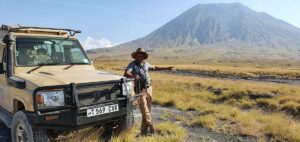
Road conditions inside the park constantly change
Once inside the Serengeti, the main routes are often more manageable than the roughest approach sections. However, smoothness is never guaranteed.
Dry-season traffic can deepen corrugations and create clouds of fine dust. During wetter periods, the same road may develop mud, standing water and deep wheel tracks. A track that was straightforward yesterday may require a slower approach after an overnight storm.
Road graders maintain important routes, but the Serengeti is vast. Conditions can change between grading visits, particularly during busy periods.
Side tracks used to approach wildlife sightings are normally slower and rougher than main roads. The vehicle may cross uneven ground to reach a kopje, river or section of woodland, while still remaining on the permitted track network.
This is why two travellers visiting in the same month can describe the roads very differently. They may have travelled through different regions, used different vehicles or arrived immediately before and after maintenance or rain.
Central to northern Serengeti is farther than it looks
A journey from central Serengeti to the northern region can take much of the day once game viewing and road conditions are considered.
The distance may appear reasonable on a map, but this is not a motorway transfer. The vehicle moves through wildlife habitat, and there may be reasons to stop repeatedly. A lion beside the road does not become less interesting because the itinerary says you are changing camps.
If the migration and Mara River region are the main purpose of the trip, it is usually better to stay several nights in northern Serengeti rather than attempt repeated journeys from central accommodation.
Our Serengeti National Park safari guide explains how the park’s regions differ. Choosing accommodation in the correct area reduces unnecessary driving more effectively than trying to find an entirely smooth route.
The vehicle makes a considerable difference
A proper safari vehicle does not make corrugated roads disappear, but its condition and configuration influence how the journey feels.
A suitable vehicle should have well-maintained suspension, appropriate tyres, comfortable seats, working seat belts and enough room for passengers to change position. Luggage should be securely stored rather than occupying passenger space.
A private 4×4 Land Cruiser also allows the driver to adjust the pace around one group. In a shared vehicle, slowing down, stopping to stretch or reallocating seats affects everyone travelling with you.
The driver’s judgement matters as much as the badge on the bonnet. An experienced driver reads the road ahead, changes position within the track when appropriate and recognises when a passenger is becoming uncomfortable.
For wetter and more difficult conditions, our Tanzania safari during El Niño guide explains why vehicle maintenance, tyres, recovery equipment and the driver’s familiarity with alternative routes matter more than simply being told that the vehicle is a Land Cruiser.
Where should you sit for the smoothest ride?
The front passenger seat beside the driver is generally the most comfortable position for someone concerned about bumps or motion sickness. It provides a clear view of the road ahead and normally experiences less exaggerated movement than seats at the rear.
The rearmost seats can feel livelier because they sit farther from the vehicle’s centre and may be positioned close to or behind the rear axle. Every rise and dip can produce more noticeable vertical movement.
Passengers who enjoy standing beneath the open photographic roof should still sit and use the seat belt during faster transfer sections. A bump that is easy to absorb while seated can be unexpectedly forceful when standing.
If several people have mobility or back concerns, discuss seating before departure. A private vehicle makes it possible to rotate seats or reserve the smoothest position for the traveller who needs it most.
Will a cushion help?
A cushion can improve comfort, but it cannot transform an unsealed road into a paved one.
A firm lumbar cushion is often more useful than an extremely soft pillow. It supports the lower back without allowing the body to sink into an unstable position. A thin seat pad can reduce pressure during long drives, while a folded fleece provides an improvised alternative.
Very thick or inflatable cushions can make some passengers feel less stable as the vehicle moves from side to side. Test any support before travelling rather than discovering on the first Serengeti transfer that it changes your sitting position in an uncomfortable way.
Short stretch breaks can be more valuable than additional padding. Ask the guide to stop at a safe, permitted location before discomfort becomes severe.
Small comfort choices make a real difference
You do not need specialist expedition equipment, but a few practical choices make long drives easier:
- Wear supportive, comfortable clothing that does not restrict movement.
- Consider a supportive sports bra for rough transfer days.
- Keep a light fleece available for padding or lower-back support.
- Use closed shoes that are easy to walk in during rest stops.
- Carry water in a bottle with a secure lid.
- Store cameras and phones when the vehicle enters a particularly rough section.
- Keep sunglasses and a scarf accessible when the road becomes dusty.
- Avoid balancing hot drinks while the vehicle is moving.
Loose items should not remain on the seat beside you. A phone, lens or pair of binoculars can reach the floor surprisingly quickly when the vehicle crosses a hidden rut.
What if you have back or neck problems?
A previous back injury, spinal condition, recent surgery or serious neck problem changes the planning decision. The Serengeti can still be possible, but the itinerary should not be designed as though the concern does not exist.
Speak to an appropriate medical professional before booking. Then tell the safari operator exactly what movements or sitting durations cause difficulty. “A bad back” is less useful than explaining that you need to stand every ninety minutes or cannot tolerate repeated vertical jolts.
Possible adjustments include:
- Using a private vehicle
- Reserving the front passenger seat
- Reducing the number of camp changes
- Adding planned rest stops
- Spending several nights in each wildlife area
- Flying into or out of the Serengeti
- Choosing accommodation close to intended game-viewing areas
- Shortening some game drives
No responsible operator should promise a bump-free Serengeti safari. The objective is to reduce unnecessary road exposure while keeping the journey worthwhile.
Pregnancy requires individual medical advice
Safari roads and pregnancy are not a combination to assess from a general travel article. Comfort, medical history, pregnancy stage and access to medical care all need individual consideration.
Discuss the proposed itinerary with your healthcare provider and give them an honest description of the road conditions. The operator should also know before confirming the route.
A fly-in arrangement can remove a long transfer, but it does not remove the uneven roads used during game drives. Remote camps may also be far from advanced medical facilities. These factors should be understood rather than minimised.
What about motion sickness?
Corrugations do not affect everyone in the same way. Some travellers are comfortable with the vertical movement but feel unwell on twisting highland roads or when looking through a camera for extended periods.
Sitting near the front, looking towards the horizon, keeping fresh air moving and avoiding heavy reading can help. Anyone who regularly uses motion-sickness medication should discuss suitable options and possible side effects with a pharmacist or doctor.
Tell the guide as soon as nausea begins. Waiting silently until the situation becomes urgent helps nobody.
Should you fly instead of driving?
A bush flight can be worth considering when time is limited, physical comfort is a serious concern or the itinerary would otherwise retrace a long route.
The strongest compromise for many northern-circuit journeys is to drive into the Serengeti and fly out. You still experience the changing landscapes between Arusha, Tarangire, Ngorongoro and the plains, but avoid repeating the longest return journey.
Our eight-day drive-in and fly-out Tanzania safari uses this structure. After exploring the northern circuit by road, the final day includes a transfer to Seronera Airstrip and a scheduled flight back to Arusha.
| Option | Main advantage | Main compromise |
|---|---|---|
| Drive both ways | Lower flight costs and one guide and vehicle throughout | More road time and possible route repetition |
| Drive in, fly out | Experience the overland journey without repeating it | Additional airfare and luggage restrictions |
| Fly in and out | Minimises long intercity and inter-park transfers | Higher cost and less sense of the landscape’s transition |
Flying does not eliminate bumpy roads
The aircraft lands at an airstrip, not at your tent. You will still transfer to camp in a safari vehicle and travel along unsealed tracks during game drives.
A fly-in safari removes the long approach or return transfer. It does not create paved roads inside the Serengeti.
Scheduled bush flights may also make several stops, and luggage allowances are stricter than those used by international airlines. Soft-sided bags are usually the most practical. Confirm the airline’s current weight and baggage rules before packing.
Depending on the arrangement, fly-in guests may use vehicles and guides provided by the lodge. If a private vehicle is important, confirm that it is included rather than assuming the game drives will be exclusive.
Do not fly past the part of the journey you would have enjoyed
Flying is not automatically the superior choice. The overland arrival into the Serengeti is one of northern Tanzania’s great landscape transitions.
The road descends from the Ngorongoro highlands towards plains that appear to continue beyond the horizon. Villages thin out, the sky becomes larger and the first animals begin appearing before the safari has officially settled into its Serengeti rhythm.
Travellers who enjoy road journeys often consider this drive part of the experience, even when it is rough. Those with only four or five safari days may reasonably decide that their limited time is more valuable inside the park.
The decision should be based on your body, budget and schedule rather than the idea that flying is always luxurious and driving is always inconvenient.
The itinerary causes more discomfort than the road alone
A rough four-hour transfer followed by three nights in one camp can be manageable. A new transfer every morning can make even moderate roads exhausting.
The simplest way to improve driving comfort is often to remove one destination. Fewer accommodation changes create more time for slower game drives, rest and seat recovery.
Our guide asking whether you are trying to fit too much into your Tanzania safari explains why adding more parks does not automatically produce a better trip.
When reviewing an itinerary, identify which days are genuine wildlife days and which are primarily movement days. A well-designed route allows some transfers to double as game drives without pretending that every kilometre will be packed with sightings.
How bad is it, then?
For most healthy travellers, Serengeti roads are rough but manageable. You will bounce. You may discover muscles you had forgotten about. By the second day, you will probably know exactly which seat you prefer and where to place your water bottle.
The roads deserve more serious planning if you have a spinal condition, significant joint pain, pregnancy, limited mobility or strong motion sensitivity. In those cases, a private vehicle, slower itinerary and one strategically placed flight can change the experience considerably.
For everyone else, arrive expecting an unsealed wilderness rather than a theme park with smooth access roads. The bumps feel less alarming when they are anticipated.
Explore our Tanzania safari itineraries and compare the fully driven routes with journeys that fly out of the Serengeti. If the standard options include too much road time, we can adjust the route, accommodation and flights to create a more comfortable Safari Tanzania experience.