Does Your Safari Camp Location Matter More Than Its Star Rating?
September 29, 2026
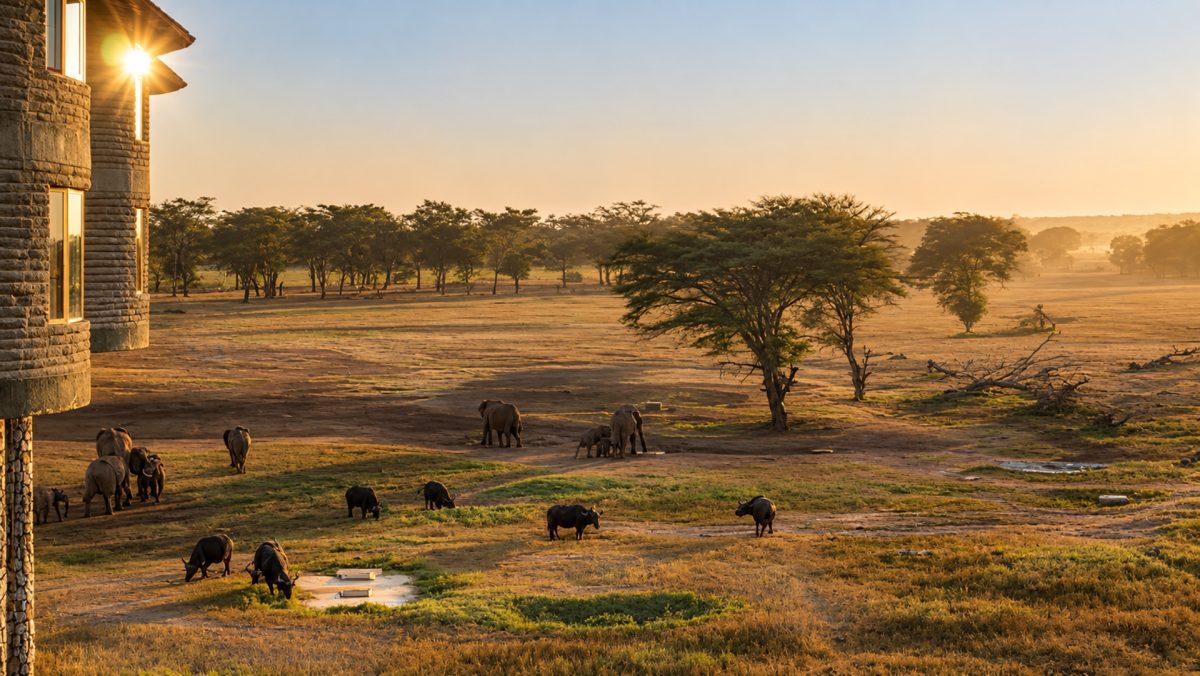
A five-star lodge can have an infinity pool, an impressive wine cellar and a room large enough to get lost in. But if it is two hours from the wildlife you came to see, you may spend the best part of every morning looking at it through the rear window of a safari vehicle.
That is the real question behind safari camp location vs star rating. A star rating tells you something about comfort and facilities. It tells you very little about how much wildlife will be around the camp during your travel dates, how early you can reach a sighting or how much of each day will disappear into transfers.
In the Serengeti, location is not a minor detail. It can determine whether you leave camp before sunrise and find the herds within twenty minutes, or begin every morning with a long drive across an area the animals have already left.
A safari lodge is not a city hotel
In a city, an excellent hotel can compensate for an inconvenient neighbourhood. You can take a taxi, catch a train or change your plans without losing much of the day.
The Serengeti works differently. It covers an enormous landscape with distinct wildlife areas, limited roads and animals that do not follow hotel booking calendars. A camp can be inside the wider Serengeti ecosystem while still being far from the particular region you need.
The difference becomes clear during a morning game drive. Guests at a well-positioned camp may be watching a pride of lions while the light is still soft. Guests staying much farther away may reach the same area after the cats have moved into the shade.
This does not make the distant lodge bad. It simply means its location carries a cost that is measured in time rather than money.
What a star rating actually tells you
A higher-rated safari lodge may offer larger rooms, more refined meals, a swimming pool, a spa, private plunge pools, air conditioning, extensive wine selections and a high staff-to-guest ratio.
These features matter. After a dusty full-day drive, a deep bath and a comfortable bed can feel less like an indulgence and more like a necessary reset.
What a star rating does not tell you is:
- How far the lodge is from productive game-viewing areas
- Whether it is in the correct Serengeti region for the season
- How long it takes to reach the nearest park gate
- Whether you will lose time entering and leaving a protected area
- How close it is to an airstrip
- Whether the surrounding roads remain practical after heavy rain
- How much resident wildlife is present outside migration months
Luxury describes the hospitality experience. Location describes the safari experience. The best properties deliver both, but when the budget requires a choice, it is important to know which one will influence your holiday more.
The Serengeti does not have one “best area”
Searching for the best location to stay in the Serengeti can be misleading because the answer changes throughout the year.
The ecosystem includes the southern short-grass plains, the central Seronera region, the Western Corridor and the remote northern Serengeti. The Great Migration moves through these areas in response to grazing and rainfall, although its precise timing varies each year.
A camp that is brilliantly positioned in February may be too far south for a migration-focused journey in August. A northern camp that provides access to the Mara River later in the year may be an unnecessarily expensive and remote choice during the calving period.
The correct location is the one that matches your dates, wildlife priorities and overall route.
Serengeti accommodation areas by season
| General period | Area often considered | Reason for staying there |
|---|---|---|
| January to March | Ndutu and the southern plains | Calving activity, large grazing herds and predator encounters |
| April and May | Central Serengeti and areas following the herds’ movement | Green landscapes, quieter travel and changing migration patterns |
| May to July | Central and Western Corridor | Movement towards the west and possible activity around the Grumeti system |
| July to October | Northern Serengeti, sometimes combined with central Serengeti | Access to northern herds and the possibility of Mara River crossings |
| November and December | Central, eastern and southern areas depending on rainfall | Herds begin moving south as fresh grazing develops |
This table is a planning framework, not a promise. Rain may arrive early or late, and the wildebeest can spread across a much wider area than a simple migration map suggests.
Our guide explaining when to see the Great Migration looks at these movements in more detail. The important lesson is that you should not select a camp simply because its marketing describes it as a “migration camp.” Ask where it will physically be during your dates.
Central Serengeti: the strongest general location
For a first safari that is not built around one particular migration event, central Serengeti is often the most dependable option.
The Seronera region supports resident wildlife throughout the year. Its rivers, kopjes, grasslands and woodland areas create suitable habitats for lions, leopards, cheetahs, elephants and many other species. It also has an established road network and a range of accommodation.
Central Serengeti is particularly useful when you have limited time. You can spend two or three nights in one place without relying entirely on the migration arriving on schedule.
The compromise is popularity. Productive areas around Seronera can become busy, especially during peak travel months. A quieter lodge farther from the central roads may offer more privacy, but you need to decide whether that tranquillity is worth additional driving.
For a general overview of the park and its regions, see our Serengeti safari accommodation and destination guide.
Southern Serengeti and Ndutu: location becomes critical
From around late January into March, the southern plains and Ndutu region become a major focus for travellers interested in calving season.
Ndutu sits within the wider Serengeti ecosystem and includes land associated with the Ngorongoro Conservation Area as well as the southern Serengeti region. The distinction matters for routing, permits and accommodation, but the wildlife does not recognise the administrative boundary.
Staying nearby allows early access to the plains when predators are active and the light is best for photography. A property in central Serengeti may appear close when viewed on a map of Tanzania, but it is not the same as waking within practical reach of the calving grounds.
Our nine-day Ndutu calving safari includes time in both Ndutu and central Serengeti rather than treating them as one interchangeable destination. That split allows the itinerary to follow seasonal wildlife while still providing access to the central region’s resident animals.
This is a case where a simpler seasonal camp in the correct place can deliver a better safari than a more elaborate lodge several hours away.
Northern Serengeti: stay there if the north is your priority
The northern Serengeti is remote, beautiful and considerably farther from central Serengeti than many first-time visitors realise.
During the northern migration period, staying near the Mara River reduces the time needed to reach potential crossing areas. River crossings remain unpredictable. Wildebeest may gather for hours or days and then move away without crossing. No guide, lodge or itinerary can guarantee one.
Being in the correct region does, however, give you more realistic opportunities. If you are staying in central Serengeti and attempting day trips to the far north, much of the day may be consumed by travel.
A well-planned Great Migration safari in northern Serengeti should normally allocate several nights to the region. The first attempt may be quiet, while another day produces the moment everyone had been waiting for.
Travellers with limited time can also consider flying into or out of a northern airstrip instead of driving the same long route in both directions.
The Western Corridor: excellent when your timing fits
The Western Corridor follows the Grumeti and Mbalageti river systems towards Lake Victoria. Its riverine forests and more varied vegetation create a different setting from the open southern plains.
This region becomes especially relevant as migration herds move west and north, generally during the middle part of the year. Outside that seasonal focus, it can still offer rewarding resident wildlife and a quieter atmosphere, but it may not be the logical location for every itinerary.
A lodge in the west should be chosen because the western region supports the journey you are planning. It should not be added simply because the property looks exceptional in photographs.
Inside the park or outside the gate?
Accommodation outside a park boundary is not automatically inferior. It may provide better value, larger grounds, swimming pools, cultural activities or easier access to nearby towns and farms.
Outside accommodation can work especially well before entering a park, after leaving it or when the next day’s route naturally passes through the gate.
The problem begins when you must repeat the gate journey every morning and evening. Even a relatively short transfer can become significant once registration, driving and park operating hours are considered.
Ask for the actual driving time from the property to the intended game-viewing area, not only the distance to the entrance. A lodge may be described as “near the Serengeti” while the wildlife area you want lies much farther beyond the gate.
Not every transfer hour is wasted
It is too simplistic to treat every minute in a safari vehicle as lost time. Driving between camps can itself be a game drive. You may encounter elephants beside the road, lions near a kopje or a cheetah scanning the plains.
The difference is whether the transfer passes through productive habitat or repeatedly follows an empty access road outside the protected area.
A skilled itinerary designer distinguishes between scenic progression and unnecessary commuting. One moves you naturally through changing wildlife areas. The other makes you drive the same road twice a day because the lodge was selected without considering the route.
When a higher star rating should win
Location does not always have to come first. There are situations in which the facilities and reliability of a higher-rated lodge materially improve the trip.
You plan to return for lunch
If your preferred schedule includes morning and afternoon drives, you will spend several midday hours at the property. A pool, shaded terrace and comfortable room become meaningful parts of the holiday.
You are travelling with children
Families may need flexible meals, family suites, a pool and enough space to relax between drives. The most remote camp is not necessarily the best decision if everyone becomes tired or restless.
You have mobility requirements
Room access, bathroom design, walking distance and the ability for a vehicle to stop near the accommodation may matter more than saving thirty minutes on a game drive.
You are a light sleeper
A seasonal canvas camp can provide extraordinary immersion, but it also allows animal, wind and camp sounds to travel. Solid walls may produce a better night’s rest.
The location difference is small
If two properties serve the same wildlife area and have similar access, the better room, food and service may justify the additional cost.
Questions that expose a lodge’s real location
Do not ask only, “Is this lodge inside the Serengeti?” Ask questions that connect the property to your actual itinerary:
- Which Serengeti region is the camp in?
- How far is it from the wildlife area we expect to visit?
- What is the typical morning driving time during our month?
- Will we repeat the same access road every day?
- Is the camp permanent, seasonal or mobile?
- If it is mobile, where will it be positioned during our dates?
- Which airstrip serves the camp?
- How long is the airstrip transfer?
- Are game drives conducted in a private or shared vehicle?
- Could rain affect access to the property?
- Which alternative is used if the camp is unavailable?
The answers allow you to compare the safari value of the accommodation rather than its brochure description.
How to make the final decision
Start with the wildlife experience you want. Then identify the region most likely to support it during your dates. Only after that should you compare the properties available within that area.
A practical order is:
- Choose the season and wildlife priority.
- Select the appropriate Serengeti region.
- Build a route with realistic travel times.
- Shortlist accommodation in the correct location.
- Compare comfort, room type, facilities and price.
This order prevents a beautiful lodge from pulling the entire itinerary away from its original purpose.
You can use our best time to visit Tanzania guide to match wildlife interests with the broader travel season. Then review the available Tanzania safari itineraries to see how Serengeti regions can be combined with Tarangire, Ngorongoro and other destinations.
The verdict: choose the map before the mattress
For a wildlife-led Serengeti journey, camp location usually matters more than star rating. The right position can give you earlier starts, shorter transfers, more patient sightings and a safari that follows the season rather than fighting it.
That does not mean choosing uncomfortable accommodation. It means finding the required level of comfort within the correct region, rather than choosing the most impressive lodge first and forcing the safari to work around it.
If two camps are equally well positioned, compare the rooms, food, service and facilities. If they are in different parts of the Serengeti, compare the map first. The stars can wait.
If you want help matching accommodation to your dates and intended wildlife experience, tell us how you want to travel. We can suggest a route and camp combination that makes sense on the ground, not only on a hotel listing.