What Is It Really Like to Sleep in an Unfenced Safari Camp?
October 27, 2026
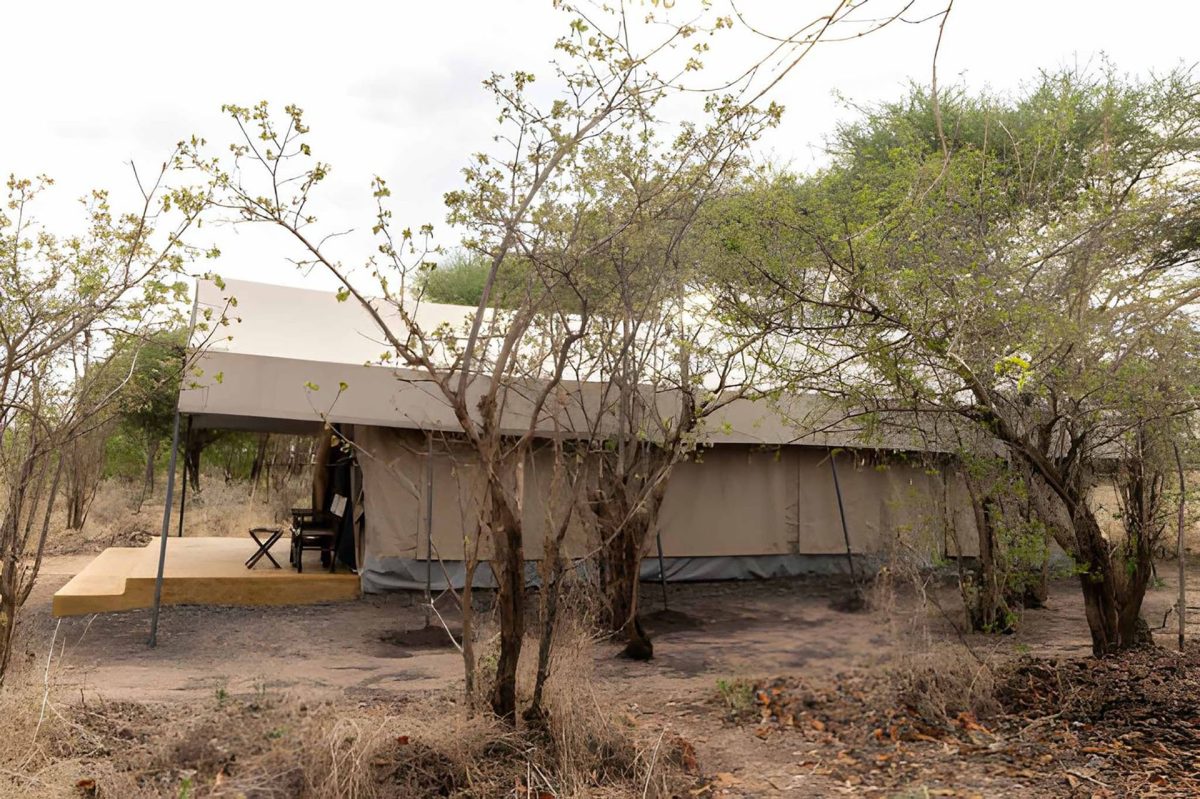
Sleeping in an unfenced safari camp feels far wilder than it really is. There is no fence between your tent and the bush, so animals can and do walk through camp at night. You will hear them, sometimes very close. But the real risk is low when you follow a few simple rules, and most people find that the fear of the first night turns into one of the best memories of the whole trip.
The key is knowing the difference between danger and unfamiliarity. Almost everything that feels frightening on your first night is simply new. This guide walks you through what actually happens after dark, so you arrive prepared rather than surprised when you are staying in the Serengeti or anywhere else in the wild.
Why So Many Safari Camps Have No Fence
Most tented camps in Tanzania’s national parks, managed by Tanzania National Parks (TANAPA), are unfenced. Fences would cut across the paths that animals use to reach water and grazing, and the camps are designed to sit lightly inside the wilderness rather than shut it out. That openness is the point. It is why you might wake to find elephant footprints beside your veranda or zebras grazing between the tents.
Some permanent lodges, especially in busier or farm-bordering areas, do use fences. If a fence matters to you, it is worth asking about before you book. But in places like the Serengeti, an unfenced camp is the normal way to stay close to the wildlife you came to see.
Where you stay shapes what passes through at night. Camps around Seronera in the central Serengeti sit in classic big cat country. Seasonal camps near Ndutu, in the southern Serengeti, follow the wildebeest calving season from around January to March. Camps near the Mara River in the north, or along the Grumeti River in the western corridor, are close to hippos and the herds of the Great Migration when they pass through.
Is an Unfenced Safari Camp Safe?
For guests who follow camp rules, yes. Reputable camps choose their sites carefully, avoid obvious animal paths, and have staff on watch through the night. Tents are not flimsy camping tents. They are heavy canvas on solid frames, often on raised platforms, with zips and mesh that close completely.
In practice, animals tend to walk around a closed tent rather than through it. Camp smells, voices and movement also keep most wildlife at a respectful distance. Elephants, zebras, buffalo and antelope may pass nearby, while predators usually stay out of sight.
The incidents that do happen almost always follow the same pattern: someone walks around camp alone after dark, leaves the tent to look at an animal, or keeps food inside. Remove those behaviours and the risk becomes very small. Safety in an unfenced camp is less about the canvas and more about what you do.
The Rules That Keep You Safe
Every camp gives a short briefing when you arrive. Listen to it closely, because details vary from camp to camp. The core rules are almost always the same.
- Never walk around camp alone after dark. Staff, often called askaris and in northern Tanzania often Maasai men from nearby communities, will escort you between your tent and the main area. Signal with your torch or radio when you are ready, and wait for them.
- Stay inside once you are zipped in for the night. Whatever you hear, do not go outside to look. The view is never worth it.
- Keep no food in your tent. Snacks can attract honey badgers and genets at night, and vervet monkeys or olive baboons during the day. Ask the camp to store anything you bring.
- Keep the tent zipped, even by day. Monkeys are quick and curious, and an open flap is an invitation.
- Know your alarm. Most camps leave a radio, whistle or air horn in each tent. Use it if you feel unwell or genuinely worried, and staff will come.
- Follow staff instructions at once. If an askari tells you to wait or step back, do it without question. They read animal behaviour every night.
Most tents today have an en-suite bathroom inside the canvas walls, so a night-time trip to the toilet does not mean stepping outside. Check this when you book if it matters to you, particularly at simpler mobile camps.
A Night in an Unfenced Camp, Hour by Hour
Early evening
You return from the afternoon game drive around sunset. There may be time for a shower before dinner. At many mobile camps, staff bring hot water for a bucket shower at a time you agree, so ask about the routine on arrival. As darkness falls, the camp shifts. Lanterns come on, and you no longer walk anywhere alone.
Dinner and the walk back
An askari collects you from your tent for dinner and walks you back afterwards, usually with a strong torch. These short walks are often a highlight. Your escort may stop to point out eyes shining in the grass or fresh tracks on the path, and suddenly the bush feels very close.
The first hours in the tent
Once you are zipped in, the night begins in earnest. The first sounds can be startling simply because you cannot see what is making them. Rustling grass, a branch snapping, heavy footsteps on soft ground. Most of these are grazing animals going about their business.
The middle of the night
This is when the big voices travel. Lions roar most at night and in the early morning, and their call can carry up to around eight kilometres in good conditions. A lion that sounds as if it is beside your bed may be far across the plain. Hyenas whoop through the dark too, and that call can carry up to five kilometres.
Before dawn
Many camps bring a wake-up call to your tent, often with tea or coffee, an hour or so before sunrise. It is still dark, so the escort rule still applies. Wait to be collected before you walk to breakfast or the vehicle.
What to Do If an Animal Is Right Outside Your Tent
At some point you may hear something very large, very close. An elephant pulling at the tree beside your tent, or a hippo grazing a few metres from your bed. It is a startling moment, and the right response is simple.
- Stay inside and stay calm. The animal is almost always feeding or passing through, not looking for you.
- Keep quiet and still. There is no need to shine a torch through the mesh or try to see it. Let it move on in its own time.
- Do not unzip the tent. Even to take a photo. This is the one mistake that turns an encounter into a risk.
- Call for help only if you need it. If you feel unwell or truly unsafe, use the radio, whistle or horn. Staff know where the animals are and will come.
By morning, the only sign may be fresh tracks or flattened grass outside your veranda, and a story you will tell at breakfast.
What You Are Hearing: A Night-Sound Guide
Knowing what each sound means turns fear into fascination. These are the voices you are most likely to hear in a northern Tanzania camp.
| Sound | What it is | What it means for you |
|---|---|---|
| Deep roars ending in a series of grunts | Lion | Often far away. Lions roar to mark territory and keep in touch with the pride. |
| Rising “whoo-oop” calls | Spotted hyena | Hyenas calling to their clan across long distances. A classic bush night sound. |
| Steady tearing and munching of grass | Hippo grazing | Hippos leave the water at night to graze. Stay inside and let them move on. |
| Low rumbles, snapping branches | Elephant | Elephants feeding nearby. Impressive, but they usually walk calmly around tents. |
| Rasping, saw-like grunts | Leopard | A rare treat to hear. Leopards are shy and avoid people. |
| Short yelping barks | Plains zebra | Zebras talking to each other, often in a nervous herd. |
| Constant low grunting, like a huge herd of frogs | Wildebeest | Migration herds nearby. Common in camps close to the Great Migration. |
| Thin, high wailing yips | Black-backed jackal | Small, shy scavengers calling across the plains. |
| A cry like a small child | Bushbaby (galago) | A tiny tree-living primate. Harmless and rarely seen. |
| Deep, soft hoots | Owls, such as Verreaux’s eagle-owl | Night birds hunting from the trees around camp. |
| Eerie screams that build and fade | Tree hyrax | A small, harmless mammal heard in forested areas. Startling, but nothing to fear. |
The Neighbours You Might Meet Around Camp
Not every visitor is a big animal. Small, clever creatures often learn that camps mean easy pickings.
- Honey badgers are bold, tough and famous for raiding kitchen bins at night.
- Genets, slender spotted cat-like animals, sometimes appear on the edge of the lamplight around the main area.
- Vervet monkeys and olive baboons are daytime raiders. They will open bags and grab food from unzipped tents.
- African buffalo, especially old bulls, sometimes like to graze near camps. They are one reason the escort rule matters, as a buffalo in the dark is hard to see and should never be approached.
Danger Versus Unfamiliarity
The fear people feel on their first night is real, but it is mostly about the unknown. At home, a heavy footstep outside the window means a person. In camp, it means a buffalo or a zebra. At home, a scream at 2am means an emergency. In camp, it may be a hyrax or a bushbaby. Your brain is reacting to unfamiliar signals, not to real threats.
A useful way to think about it is this. Danger comes from behaviour: leaving the tent at night, walking alone, ignoring instructions. Unfamiliarity comes from sound and imagination. You control the first completely. The second fades with time.
Most people find the second night far easier than the first. By the third, many are lying awake on purpose, listening. The sounds that kept them tense on night one become the thing they miss most when they get home.
Small Things That Make the Night Easier
- Keep a headtorch by the bed. Solar lighting in some camps is dim or switched off late at night.
- Bring earplugs if you are a light sleeper. You can always take them out to listen.
- Pack something warm. Serengeti nights can be cool, and lodges on the Ngorongoro crater rim, at well over 2,000 metres, can be properly cold. Many camps add hot water bottles to the bed.
- Use the mosquito net. The Anopheles mosquitoes that carry malaria bite mainly between dusk and dawn, so nets and repellent matter most at night. Follow the camp’s advice and your doctor’s guidance on malaria prevention.
- Charge devices in the main area. Some camps have limited power in the tents.
- Shake out your shoes in the morning. It is a sensible bush habit, even though unwelcome visitors are rare.
Families and Nervous Sleepers
Unfenced camps can work well for families, but they need more thought. Many camps set minimum ages for children, and these vary, so check before you book. Family tents or interconnecting tents keep everyone together after dark, which matters because no one, including older children, should leave the tent alone at night.
If someone in your group is very anxious, consider starting with a permanent lodge with solid walls, then moving to a tented camp once they have settled into safari life. A camp with tents close to the main area can also feel less exposed. Each location has its own character. A camp in Tarangire may have elephants browsing between the tents in the dry season, while a lodge near the Ngorongoro Crater feels quieter but colder.
The Verdict
Sleeping in an unfenced safari camp is exciting, sometimes a little unnerving, and very rarely dangerous. The canvas is thin, but the system around it is strong: careful site choice, trained staff, night escorts and clear rules. Your part is simple. Stay inside after dark, wait for your escort, keep food out of the tent and listen to the people who live there.
Go in expecting to feel uneasy on the first night, and expect that feeling to change. For most travellers, lying awake to a lion’s roar across the plains is the moment the safari stops being a holiday and becomes something they will talk about for years.
If you would like a route that eases you in, perhaps with a lodge first and a tented camp later, we can shape that around you. Explore our Tanzania safari itineraries or ask us to personalise your safari.