Mount Kilimanjaro National Park: Gates, Fees, Rules and What You Will See
November 10, 2026
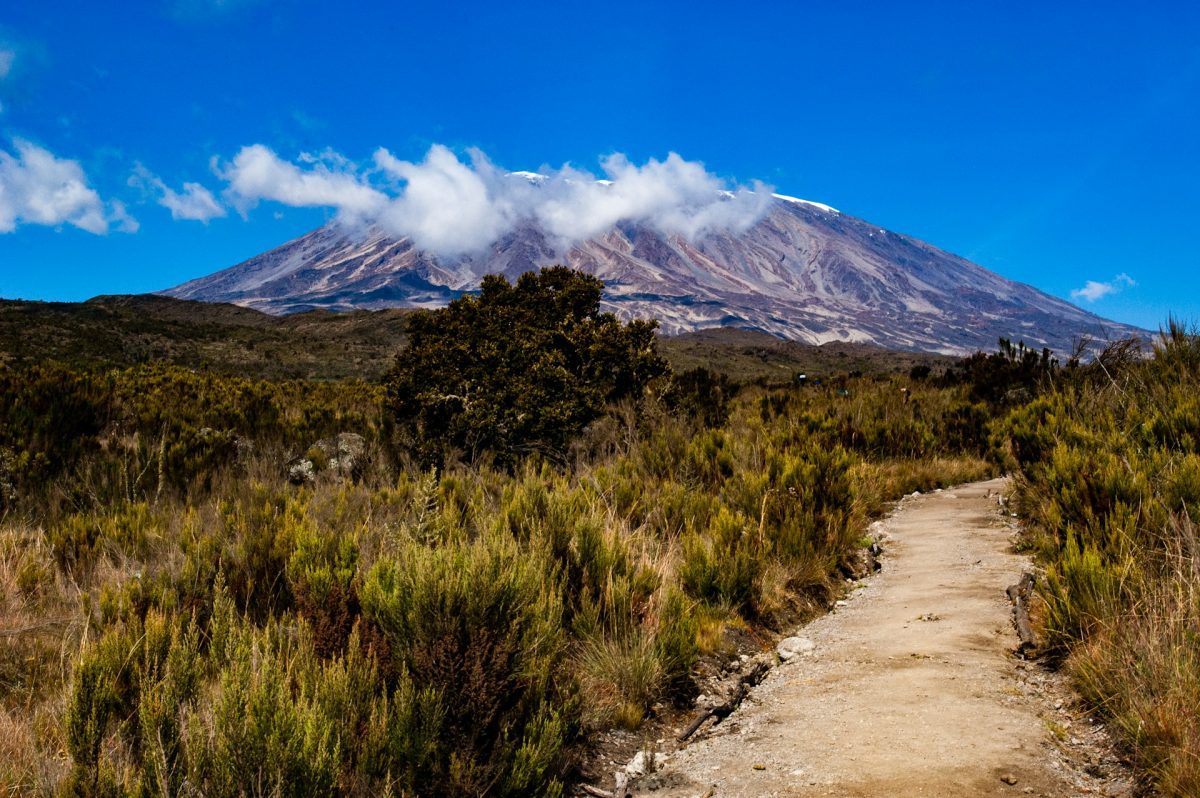
Mount Kilimanjaro National Park protects Africa’s highest mountain and the forests around it. It is run by Tanzania National Parks (TANAPA), covers about 1,688 km² and has been a UNESCO World Heritage Site since 1987. Every climb, and every day hike on the mountain, takes place inside the park, so its rules, gates and fees shape your whole trip.
This guide covers the practical side: how the park is laid out, which gate you will start from, what the fees are, the rules you must follow and what you can see on the way up.
>Kilimanjaro National Park at a glance
table>H>How the park is laid out
>The park follows the mountain upwards in rings. The lower slopes, below roughly 1,800 m, are farmland and villages, mostly outside the park. Then comes a thick belt of montane rainforest, which was added to the park in 2005. Above it lie heath and moorland, then alpine desert and, finally, the summit zone of rock, snow and ice.Walking up the mountain is often compared to walking from the equator to the Arctic in a few days. In practice, that means warm, humid mornings in the forest at the start, and freezing nights near the top.
T>The park gates and which routes use them
able>At the gate, every climber signs in, and your crew’s loads are weighed. Expect to wait an hour or more on busy mornings. It is a good time to eat a proper lunch and fill your water bottles.
K>Kilimanjaro National Park fees
>Park fees are the biggest fixed cost of any climb. They are set by TANAPA, paid by your operator and are the same whichever company you book with. Under the tariff that ran from July 2023 to June 2026, the main fees for non-resident adults were:| Fee | Rate | Charged |
|---|---|---|
| Conservation fee | USD 70 | Per person, per day in the park |
| Camping fee | USD 50 | Per person, per night (tented routes) |
| Hut fee | USD 60 | Per person, per night (Marangu route only) |
| Rescue fee | USD 20 | Per person, per climb |
For the 2026/27 season, TANAPA’s booking system lists the non-resident adult conservation fee in Tanzanian shillings, at TZS 178,850 per day. At current exchange rates that is close to the old dollar figure, but the exact amount depends on the rate when your operator pays. VAT and smaller fees for your crew are added on top. Ask your operator to confirm that all park fees are included in your quote.
As a rough guide, park fees alone come to around USD 800 to 1,100 per person for a six- to eight-day climb. Our guide to Tanzania safari costs explains how fees fit into the wider trip budget.
T>The rules you must follow
l>W>What you will see on the way up
>Kilimanjaro is not a wildlife park in the safari sense. Large animals are rare above the forest. What makes the park special is its plant life and the sheer variety of landscapes in a short distance.- Rainforest: tall trees draped in moss, ferns and orchids. Blue monkeys and black-and-white colobus monkeys are often seen near the gates.
- Heath and moorland: giant heathers and the strange giant groundsels and lobelias found only on East Africa’s high mountains.
- Alpine desert: bare volcanic rock and gravel, with wide views and very cold nights.
- Summit zone: the crater rim, ice cliffs and glaciers.
Elephants and buffalo do live in the forests, especially on the western and northern slopes, but you are unlikely to see them on a climb.
V>Visiting the park without climbing
>You do not have to climb to the summit to enjoy Kilimanjaro. A popular day hike starts at Marangu Gate and follows the Marangu route through the rainforest to Mandara Hut (about 2,700 m). From there, a short side path leads to Maundi Crater, with views of Kibo on clear days. The full day fee still applies. It is a good option for families or for anyone combining a safari with a short taste of the mountain.C>Choosing your route inside the park
>The route you choose decides which gate you use, how many days you spend in the park and therefore your park fees. Longer routes cost more in fees but give your body more time to adjust, which raises your chance of reaching the summit. For most first-time climbers, we recommend six to eight days.Roy Safaris runs climbs on the 6-day Marangu route, the 6-day Rongai route and the 7-day Rongai route. Our guide to climbing Kilimanjaro explains how to choose, and our page on Kilimanjaro National Park shows how a climb fits into a wider Tanzania trip.
I>Insurance and rescue
>The park’s rescue fee pays for its ground rescue service on the mountain. It does not replace travel insurance. You need a policy that covers trekking to at least 6,000 m and emergency evacuation, including by helicopter. Read what your insurance must cover for Kilimanjaro, and remember that every visitor to Tanzania now also needs the mandatory inbound travel insurance.B>Best time to visit the park
>The park is open all year. The driest and most popular months for climbing are January to early March and late June to October. April and May bring the long rains, when the forest trails become muddy and the upper camps are often cloudy. November brings shorter rains. For a day walk in the forest, any month works, but the mountain views are clearest in the early morning during the drier months.G>Getting to the park
>Fly into Kilimanjaro International Airport (JRO), then drive about 45 minutes to Moshi, the usual base for climbs. Marangu Gate is about 40 km from Moshi, Machame Gate about 25 km, and the western and northern gates around two hours away. Most climbers spend one night in Moshi or Arusha before starting. If you are not sure where on the map all of this sits, our guide to where Mount Kilimanjaro is explains it.Q>Quick answers
3>H>How much is the Kilimanjaro National Park entrance fee?>The daily conservation fee for non-resident adults was USD 70 under the 2023 to 2026 tariff. For 2026/27, TANAPA lists TZS 178,850 per day, which is similar. Camping, hut and rescue fees are extra.D>Do you need a permit to climb Kilimanjaro?
>Yes. Your operator arranges the park permits and pays the fees when you register at the gate.C>Can you visit Kilimanjaro National Park for a day?
>Yes. The day walk from Marangu Gate to Mandara Hut and Maundi Crater is the most popular option.W>Where is the Kilimanjaro National Park headquarters?
>At Marangu Gate, on the south-eastern side of the mountain, about 40 km from Moshi.If you would like help choosing a route and number of days, tell us your dates and we will put together a climb with all park fees included.