Tanzania Safari During El Niño: A Practical Guide
September 11, 2026
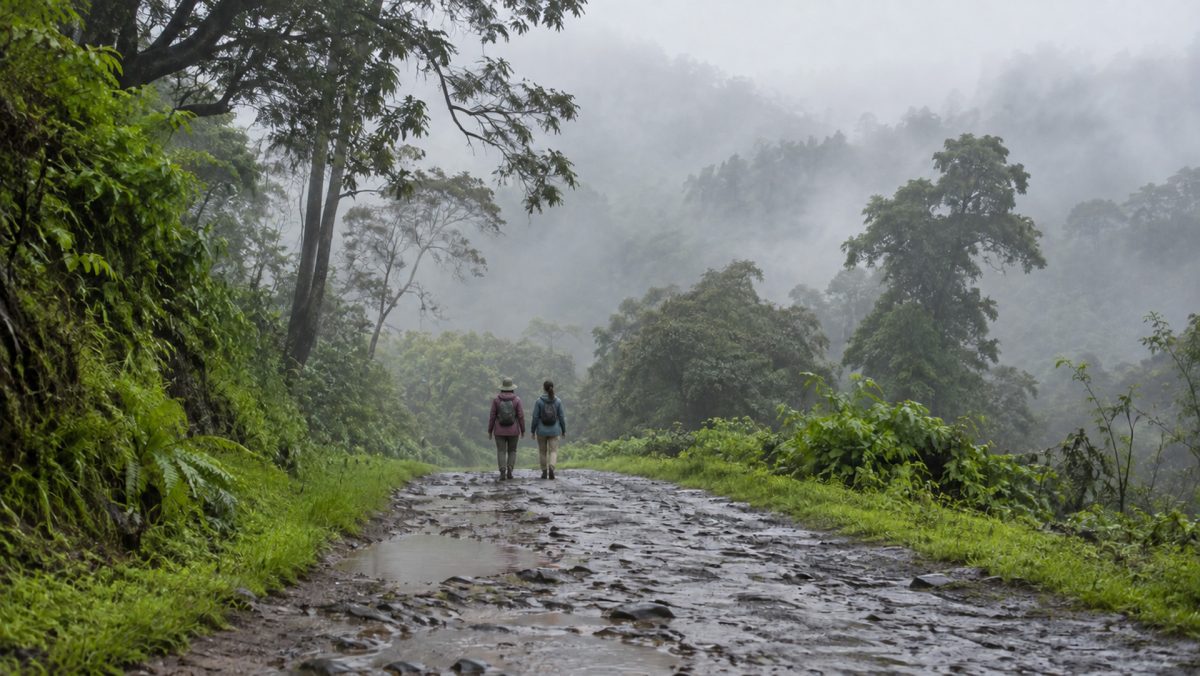
The storm may last forty minutes. Its consequences can shape the next two days. Dust settles, the plains deepen from brown to green and pools appear in tracks that were firm that morning. Wildebeest begin responding to fresh grazing. Birds work the wet ground. Somewhere ahead, a driver quietly abandons the usual road and chooses another.
A safari during El Niño is not a failed dry-season safari. It is a wetter, less predictable version of the journey, with magnificent light, active landscapes and decisions that matter more than usual. The right vehicle helps. An experienced driver-guide matters even more. The itinerary must be able to change when the land does.
You may already have paid the deposit, confirmed the camps and booked the flights before El Niño appeared in the forecast. That does not make the safari a mistake, nor does it mean you should cancel automatically. It means the itinerary deserves a second look.
As of September 2026, the World Meteorological Organization expects the current El Niño to strengthen and persist through February 2027. The regional outlook for October to December 2026 points towards a greater likelihood of wetter-than-normal conditions across much of the Greater Horn of Africa. That does not mean rain everywhere, every day. It means the chance of heavier rainfall and disruption is elevated, and local forecasts should guide the final plan.
El Niño is not another name for the rainy season
El Niño begins with unusually warm conditions in the central and eastern tropical Pacific Ocean. The resulting atmospheric changes can alter rainfall and temperature patterns, but the effects are not identical in every country or every episode.
Northern Tanzania already has a seasonal rhythm. The short rains commonly affect parts of the region around November and December, while the longer rains generally fall from March into May. El Niño can influence these patterns, but it does not turn a seasonal outlook into a daily forecast. One area may receive a hard storm while another remains bright.
A weather app showing rain every day may be signalling the possibility of a shower, not twelve hours of uninterrupted rain. Equally, the reassurance that rain is “usually brief” should not become a promise during an unusually wet event. Check Tanzania Meteorological Authority updates close to departure.
Already booked? Begin with the itinerary, not the cancellation button
Most confirmed trips will not need to be rebuilt. Find the parts most exposed to delay: difficult transfers, camps reached by a single access route, repeated one-night stays and bush flights connecting directly to an international departure.
Ask your operator whether the forecast changes anything on your route. Tanzania is too varied for a regional outlook to describe every park in the same way. Request an operational answer rather than general reassurance.
These questions will reveal whether a real contingency plan exists:
- Is every booked camp expected to remain accessible?
- Which transfers use roads that commonly become difficult after heavy rain?
- Will we travel in a private, properly equipped 4×4?
- What alternative routes are available if a road or crossing becomes unsafe?
- What happens if weather delays a transfer or small-aircraft flight?
- Who will contact us if the itinerary changes before arrival?
- Is there enough time between the final safari flight and our journey home?
“We always drive in the rain” is not a complete answer. A useful reply explains the vehicle, communications, alternative routes and who can change the day.
Review your travel insurance for severe weather, natural disasters, missed connections, delays and itinerary changes. Cover differs, and an insurer may treat an event announced before purchase as a known circumstance. Ask for uncertain wording to be explained in writing.
If the route is too tightly packed, changing one part may protect everything else. Removing a one-night stop or adding a final night in Arusha is very different from cancelling the safari.
What changes when the rain actually arrives?
The obvious answer is the road, but the first change you may notice is the air. Rain removes dust. Distant ridges sharpen, vegetation gains colour and storm clouds create light that a clear blue sky cannot produce. Photographers gain richer backgrounds, although cameras need protection when a shower reaches an open roof.
Wildlife does not disappear. It redistributes. New water and grass allow grazing animals to spread beyond dry-season water sources. Some concentrations become less predictable while previously quiet areas come alive. Migration movements may respond to grazing, but El Niño cannot place the herds at one promised location.
Road conditions can remain difficult after the sky clears. Saturated tracks may become slippery or deeply rutted. Transfers can take longer, laundry may dry slowly and small-aircraft flights may be delayed. These are manageable inconveniences until an itinerary leaves no room for them.
Do not ask only whether the vehicle is a Land Cruiser
For a wet-season safari, we recommend a properly maintained four-wheel-drive safari vehicle rather than a two-wheel-drive minibus or a vehicle designed mainly to move large groups. A private 4×4 with a lifting roof gives the driver more freedom and each guest practical access to a window or roof opening.
“Land Cruiser” alone is not a complete answer. A badge cannot compensate for worn tyres, poor maintenance or unsafe judgement. Ask about the vehicle’s condition and configuration, not merely its model.
For an El Niño safari, we would want:
- A genuine four-wheel-drive vehicle with low-range capability
- Tyres suitable for the route and season, with usable spares
- Recovery equipment appropriate to the vehicle
- A radio or reliable way to communicate with the office and other guides
- A waterproof plan for luggage, documents and camera equipment
- A driver-guide familiar with alternative tracks and seasonal problem areas
- Enough passenger space to remain comfortable when the roof and windows must close
Capacity should not be mistaken for suitability. Ask how many guests will be carried and whether everyone has a good viewing position. During a wet period, we would favour a sensibly sized private vehicle over squeezing into a twelve-seat conversion because its headline price is lower.
The bravest decision may be turning around
A safari vehicle is capable, but not invincible. Standing water can conceal a washed-away surface, deep hole or soft edge. The force and depth of moving floodwater are difficult to judge.
Do not encourage a driver to enter floodwater for a photograph, shortcut or reported sighting. Do not ask for “one attempt” because another vehicle crossed. Conditions can differ within minutes. If a crossing is uncertain, waiting, turning back or using another route is the safari.
The driver-guide should make the operational decision. Your contribution is to remove pressure. Say that you are comfortable missing a sighting rather than forcing a flooded crossing. A professional does not need a passenger directing the gears, but benefits from knowing the safe decision will be supported.
Have this conversation before the first game drive
El Niño changes plans most successfully when expectations are discussed before something goes wrong. Tell your driver-guide what matters most, then agree that the route can change with conditions.
Useful questions include:
- Which roads or river crossings have recently become difficult?
- Is heavy rain expected in the area we are entering?
- Would leaving earlier give us more time for a slower route?
- Is tomorrow’s transfer still realistic, or should we adjust it today?
- Can we take a packed meal and keep the day’s timing flexible?
- How will the office contact us if a road, camp or flight plan changes?
This is not questioning the guide’s competence. It makes the decision visible. The best adjustment may be leaving earlier, using a longer road, staying with one good sighting or waiting for a storm to pass.
If you are still planning, build flexibility in now
A fragile itinerary has repeated one-night stays, long transfers followed by fixed flights and no margin before an international departure. Under heavier rain, every delay passes to the next reservation.
A resilient itinerary stays longer in fewer places. Two or three nights at a well-positioned camp create alternatives when one track is difficult. Central Serengeti remains valuable for resident wildlife even when migration herds respond unexpectedly to rain. Add a seasonal camp when conditions justify it.
Read our guide to the Great Migration in the Serengeti before tying the trip to one predicted herd location. Rain helps drive the migration, but it does not publish a timetable.
Permanent lodges may offer substantial paths and indoor communal areas, while seasonal camps can provide a stronger wildlife position. Neither is automatically weatherproof. Ask about road access, drainage, covered dining, power and alternative access routes.
Flying can reduce time on wet roads, but aircraft are weather-dependent. Avoid placing a bush flight immediately before an international departure. A final night in Arusha provides a useful buffer.
Pack for one wet hour, not a week in a swamp
Heavy rubber boots and a suitcase of waterproof clothing are unnecessary for most lodge-based safaris. The useful kit is lighter and easy to reach.
- A lightweight waterproof jacket that fits over a warm layer
- Quick-drying trousers and shirts
- Closed shoes with reliable grip, plus light shoes for camp
- A dry bag or waterproof cover for cameras and binoculars
- Resealable bags for documents, cables and small electronics
- A lens cloth and extra absorbent cloth kept inside the day bag
- Insect repellent and long, light clothing
- Necessary medication kept in hand luggage
- A power bank for longer drives or interrupted charging
- At least one spare set of essentials in case wet laundry dries slowly
Keep the waterproof layer and camera protection beside you. They are no use beneath three suitcases when the roof must close quickly. Our Tanzania travel FAQs contain the broader packing essentials.
Three wet days can feel completely different
Rain during the night
You may wake to clean air, soft light and a muddy departure. The drive proceeds on a revised route. This is green-season rain at its most rewarding.
A short storm during the drive
The roof comes down, windows close and rain drums on the vehicle. Wildlife viewing pauses, then resumes. The practical problem may appear later when runoff reaches a low road.
Persistent or extreme rain
A road can become unsafe, a transfer may be delayed and an area may need to be avoided. This is when flexibility becomes responsible safari management. Follow official warnings and the operator’s local assessment.
Rain is not only weather here
There is no single African interpretation of rain. Tanzania is home to many peoples, faiths and traditions. Yet in societies shaped by farming and pastoral life, rain is more than an inconvenience in a forecast. It restores pasture, supports crops, replenishes water and allows another season to begin.
That renewal also carries cultural and spiritual meaning. Rain can represent blessing, fertility, continuity and regeneration. For communities long dependent on cattle and grazing, it connects the health of the land with the wellbeing of families and herds. In north-central Tanzania, documented Ihanzu rainmaking traditions show how rainfall can be woven into social and spiritual life.
The Serengeti expresses the same truth without ceremony. Rain produces grass. Grass moves the herds. The herds support predators, scavengers and the wider system. What looks like bad safari weather may be the landscape rebuilding itself.
This does not romanticise destructive rainfall. El Niño can bring flooding, damage roads and affect communities. Safety must come before a holiday schedule. Respecting rain includes respecting its power.
Rain also has beauty. After a storm, the Serengeti can seem newly made. Water rests in shallow impressions, clouds separate and sunlight travels across the grass. The air feels washed. Animals step back onto the tracks, and the day begins again.
Increased rain does not automatically erase the safari. With a capable private 4×4, realistic routing and a driver-guide trusted to say no, the experience can remain richly rewarding. Our guide to the best time to visit Tanzania places the wetter months within the year.
The promise is not that every road will remain open. It is that the journey will respond intelligently when one does not. If your safari is already booked, send us your dates, camps and planned route for a practical review. If you are still deciding, we can build the vehicle arrangements, travel buffers and seasonal flexibility into the safari from the beginning.