Will You Hear Lions and Hyenas at Night in the Serengeti?
October 29, 2026
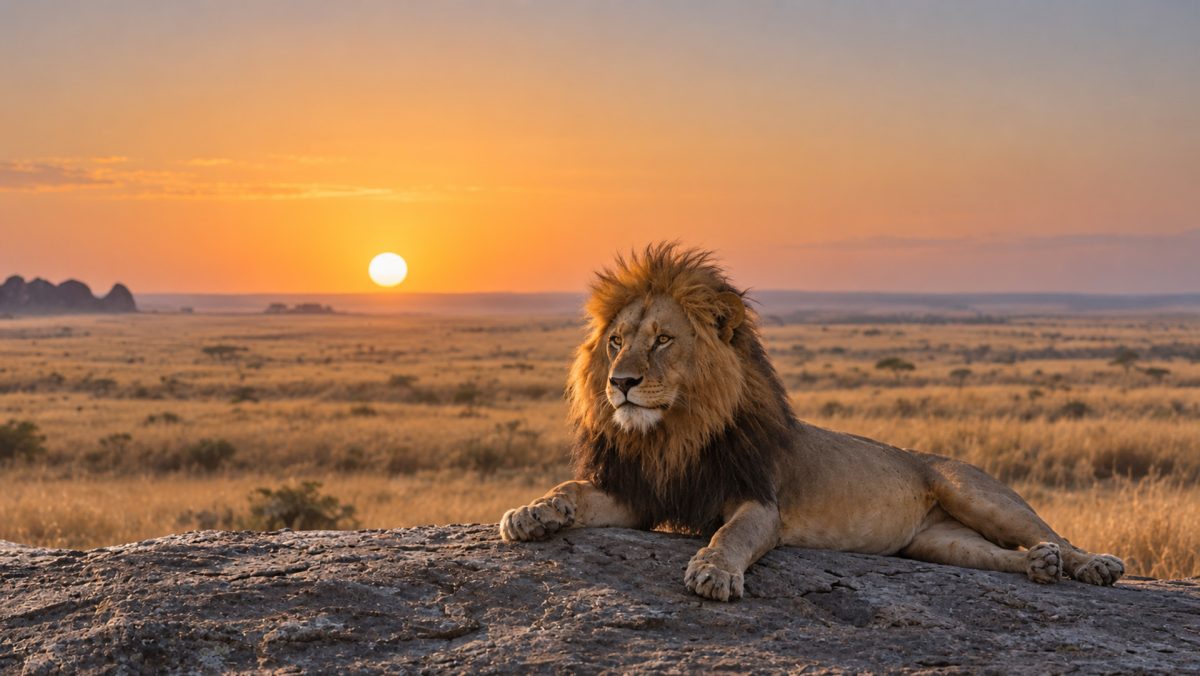
Yes, almost certainly hyenas, and very often lions. On most nights in a Serengeti camp you will hear spotted hyenas whooping across the plains. Lions roar on many nights too, especially in areas with high lion numbers, though no camp can promise it. When a lion does roar, it often sounds as if it is right outside your tent, even when it is several kilometres away.
That gap between how close it sounds and how close it really is explains most of the excitement, and most of the nerves, of a first night. This guide explains why the Serengeti’s night sounds carry so far, why a canvas tent feels like no barrier at all, and what camps do to keep you safe while you lie there listening. It is useful reading for anyone staying in the Serengeti for the first time.
Will You Hear Lions Roaring Near Camp?
There is a good chance, but it is never guaranteed. Lions roar mostly after dark and in the early morning, when the air is cool and sound travels best. A single roaring bout usually starts with a few soft moans, builds to several full, deep roars, then fades into a series of short grunts. The whole performance can last a minute or more, and it may be repeated several times in a night.
Where you stay makes a difference. The area around Seronera in the central Serengeti has resident prides all year, so lion sounds are common there. In the southern Serengeti around Ndutu, predators gather near the wildebeest herds during the calving season, roughly January to March. In the northern Serengeti, around Kogatende and the Mara River, the night chorus tends to be busiest when the Great Migration is in the area, often from about July to October. These are patterns, not schedules. Wildlife moves with the rain, and some nights are simply quiet.
Will You Hear Hyenas at Night?
Hyenas are the Serengeti’s most reliable night voices. The spotted hyena’s whoop is a long, rising “whoo-oop” repeated several times. It can carry up to around five kilometres and helps hyenas keep in touch with their clan. Each hyena’s whoop is slightly different, so clan members can tell who is calling.
The famous hyena “laugh” is a different sound. It is a burst of high, staccato giggles, usually heard around a kill or when hyenas squabble over food. Research at the University of California, Berkeley found that these giggles carry information about a hyena’s age and social rank. A high-ranking hyena giggles steadily, while a lower-ranking one sounds more uneven, often when it is being pushed away from a meal. If you hear giggling at night, something has probably died nearby and the clan is arguing over it.
The Other Voices of a Serengeti Night
Lions and hyenas are the headline acts, but they are rarely alone. Near the Mara River in the north or the Grumeti River in the western corridor, you may hear hippos grunting and honking as they leave the water to graze. When the migration is close, wildebeest keep up a constant low grunting that some guests compare to an enormous chorus of frogs. Plains zebras give short, yelping barks, and black-backed jackals call with thin, high yips.
A leopard’s call is rarer and more special: a rough, rasping sound like a saw cutting wood, repeated several times. Smaller voices fill the gaps. Bushbabies, or galagos, can sound like a crying child, and owls such as Verreaux’s eagle-owl hoot softly from the trees. Most of these sounds belong to animals that pose no threat to you at all.
Why a Distant Lion Sounds So Close
A lion’s roar is built to travel. Up close, it can reach around 114 decibels, far louder than a lawnmower. Research published in 2011 found that lions have flat, square-shaped vocal folds that let them roar loudly at very low pitch, roughly 40 to 200 hertz. That is about the range of a deep human voice and below it.
Low sounds lose less energy as they travel through air than high sounds do. So a distant roar still arrives deep and full, without the thin, faded quality we normally link with far-off noises. Under good conditions a roar can be heard up to around eight kilometres away.
The night itself helps. During the day, warm air near the ground bends sound waves upward and away. At night the ground cools, and the air close to it becomes cooler than the air above. This temperature inversion bends sound back down towards the ground, so it travels further along the surface. The quiet of the bush does the rest. There is no traffic or hum of a city to mask anything, so even faint sounds stand out.
The result is simple. Your ears are judging distance with rules learned at home, and those rules do not work on the Serengeti plains at night.
Canvas Acoustics: Why the Tent Feels Like No Barrier
A safari tent is strong, weatherproof and secure, but it does almost nothing to block sound. Canvas is light, and thin, light materials let low-pitched sound pass through easily. A lion’s roar sits right in that low range. Close by, you may feel it in your chest as much as hear it.
This is where many first-time guests get confused. Because you can hear everything, it feels as if nothing stands between you and the animal. But hearing and safety are two different things. The tent does not need to stop sound to do its job. It needs to stay closed, keep you out of sight and keep you inside, which it does well.
Solid-walled lodges feel very different. Stone or brick walls block far more sound, so lodge guests hear a softer, more distant version of the same night. If you want the full experience, a tented camp gives you the night as it really sounds. If you are a light sleeper, it is worth knowing this before you choose.
How to Tell Near From Far
Judging distance at night is hard, even for experienced travellers. A few clues help.
- Detail. A close roar includes the breathy intake and every grunt at the end. From far away, you mostly hear the deep main roars.
- Vibration. If you feel the roar through the bed or the floor, the lion is likely close.
- Other sounds. Footsteps, breathing or grass being flattened nearby suggest an animal is near your tent, not across the plain.
- Movement. Calls that get louder over several minutes may mean animals are moving towards camp.
In the morning, ask your guide or the camp staff. Night guards often keep track of what they heard and where. Your guide can then read the tracks with you, which often turns a scary sound into a story with a clear answer.
Why Lions Roar at All
Lions roar to claim territory and to stay in contact with their pride across long distances. Male coalitions roar to warn rival males away. Lionesses roar too, often together, and the chorus of a whole pride is one of the great sounds of the Serengeti.
Much of what we know comes from the Serengeti Lion Project, one of the longest-running studies of any large carnivore. It began in 1966 with the work of George Schaller, and Craig Packer led it from 1978 to 2013. In a well-known study from that work, researchers played recorded roars to 21 Serengeti prides. The lionesses were more cautious when the recording suggested three intruders rather than one, and they adjusted their response to the size of their own group. In other words, lions listen to roars and count. When you hear a roar at night, you are hearing part of that conversation.
What Camps Do When Lions Come Close
Most nights, lions stay well away from camp. When they do come close, camps follow clear routines. Details vary, so always listen to your arrival briefing.
- Night guards. Askaris, often Maasai men from the surrounding area, watch the camp through the night and know where animals are moving.
- Escorts after dark. No guest walks around camp alone at night. If lions are nearby, staff may delay escorts until the area is clear, and some camps will use a vehicle to move guests instead.
- Clear warnings. If lions approach the main area, staff will tell everyone to go to their tents, or keep guests together until it is safe.
- A way to call for help. Most tents have a radio, whistle or air horn. Use it if you feel unwell or truly unsafe.
- One firm rule for you. Stay inside your zipped tent. Do not step out to look or to get a better recording.
Lions rarely show any interest in a closed tent. The incidents that happen in camps almost always follow someone leaving their tent or walking alone after dark. Follow the rules and the roar remains what it should be: an extraordinary sound in the night.
How to Enjoy the Night Instead of Fearing It
The first night is usually the hardest. Your brain is working overtime on sounds it has never heard before. By the second or third night, most people start to look forward to the chorus.
- Keep your phone by the bed. Recording audio from inside the tent is a lovely souvenir. Never unzip the tent to get closer.
- Bring earplugs. Use them if you need sleep, and take them out when you want to listen.
- Learn the sounds before you go. Listening to recordings of lions and hyenas at home makes the real thing feel familiar rather than threatening.
- Talk about it at breakfast. Comparing notes with your guide is one of the best parts of a safari morning.
The Verdict
If you sleep in a tented camp in the Serengeti, you will almost certainly hear hyenas, and there is a good chance you will hear lions. Thanks to low pitch, cool night air and thin canvas, a lion several kilometres away can sound as if it is beside your bed. That feeling is real, but it is about sound, not danger.
Camps are built for these nights, with guards, escorts and clear rules. Your part is simply to stay in your tent and listen. For many travellers, that first roar in the dark becomes the memory that defines the whole safari.
If hearing the Serengeti at night is high on your list, camp choice and season matter. Explore our Tanzania safari itineraries or ask us to personalise your safari around the camps and areas where the night chorus is strongest.