Internal Flight or Long Road Transfer: When Is Flying Worth the Money?
October 18, 2026
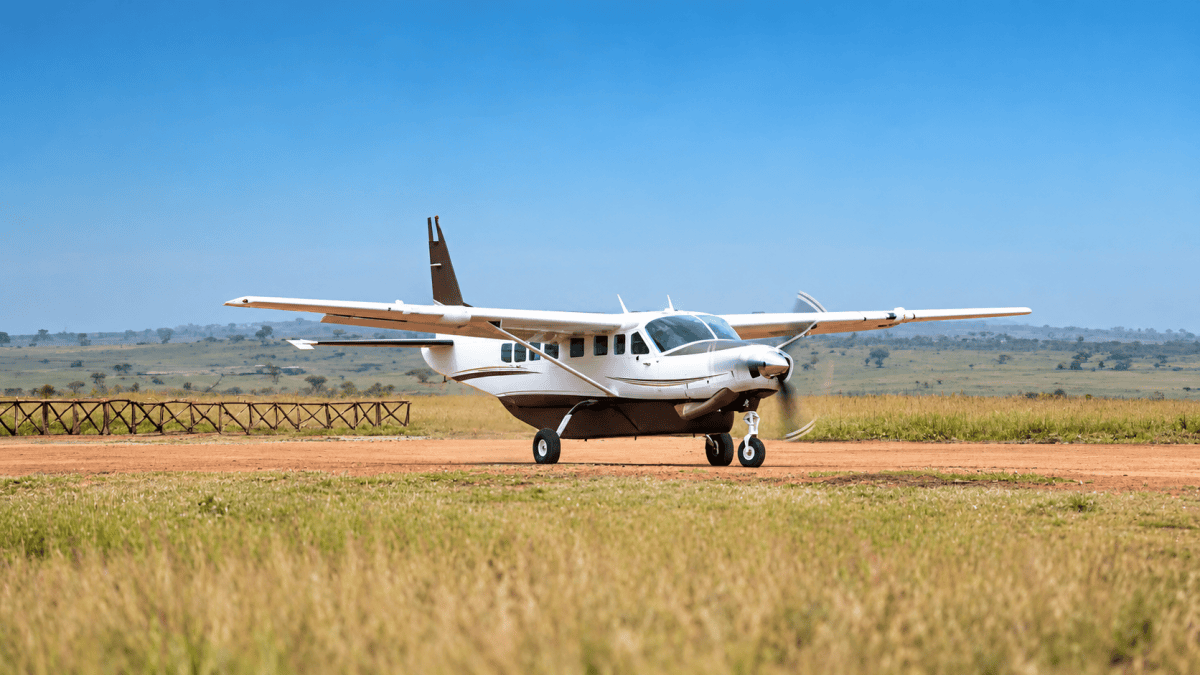
At the end of a safari, one hour in a small aircraft can look far more attractive than another day in a Land Cruiser. The bags are dusty, the early starts have accumulated, and the idea of flying directly from the Serengeti to Zanzibar feels like the easiest decision in the itinerary.
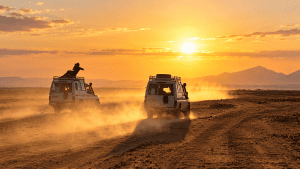
At the beginning of the same trip, however, driving may be the better experience. The road carries you gradually from Arusha into farmland, Maasai country, the Rift Valley highlands and finally the open plains. The journey explains how northern Tanzania fits together in a way that a flight cannot.
The safari flight vs road transfer Tanzania decision is therefore not simply about speed or price. Flying is worth the money when it removes an unproductive journey, connects remote regions or protects a short holiday. Driving is better when the route itself contributes to the safari, allows guide continuity or connects neighbouring destinations logically.
The practical verdict
For a classic northern circuit safari, the strongest solution is often a combination of both.
Drive from Arusha through Tarangire, Lake Manyara or Ngorongoro and into the Serengeti. This creates a geographical sequence and allows the same driver-guide and vehicle to remain with you. Then fly from the Serengeti back to Arusha or onwards to Zanzibar instead of retracing the entire route by road.
Flying becomes especially valuable when:
- You have limited safari time
- You are travelling from the northern Serengeti
- You are continuing directly to Zanzibar
- You want to reach Ruaha, Nyerere, Katavi or Mahale
- A road transfer would consume most of a usable day
- Long, rough journeys would be physically difficult
Driving remains worthwhile when:
- The destinations form a natural overland route
- The road passes through changing landscapes or wildlife areas
- You want the same guide and private vehicle throughout
- You are carrying more luggage than a bush flight permits
- The flight would still require long transfers at both ends
- The saving would not materially improve the itinerary
A one-hour flight does not mean a one-hour transfer
Flight schedules can make air travel appear almost instantaneous. The fair comparison, however, begins when you leave one room and ends when you enter the next.
A bush flight may require:
- A drive from the lodge to the airstrip
- Early arrival for check-in and baggage handling
- One or more intermediate airstrip stops
- Time waiting for other passengers
- Baggage collection after landing
- A second road transfer from the arrival airstrip
A published flight of approximately one hour may therefore occupy three or four hours of the day. That can still be much faster than driving, but it should not be described as though passengers disappear from one lodge and instantly arrive at another.
Scheduled safari aircraft operate more like airborne shared transfers than conventional nonstop commercial flights. The routing may change according to passenger bookings, weather and the airstrips being served that day. The aircraft might land several times before reaching your destination.
When comparing a flight and road journey, ask for the complete estimated timeline rather than the airborne time alone.
What you gain when you fly
You protect usable safari time
The strongest reason to fly is that time inside the right destination may be more valuable than time travelling towards it.
If a flight allows you to spend the morning game driving in the Serengeti, reach Zanzibar that afternoon and wake beside the ocean the next day, it has protected a meaningful part of the holiday. Returning overland to Arusha before flying to the island may require an additional night and much more driving.
The same principle applies to a short safari. A traveller with four or five available nights cannot use the same transport plan as someone spending three weeks in Tanzania. A flight can turn a transfer day into an afternoon game drive.
You can reach remote Tanzania realistically
Southern and western Tanzania change the calculation. Ruaha, Nyerere, Katavi and Mahale are not convenient additions to a short northern circuit road itinerary.
Flying makes combinations possible that would otherwise require extremely long overland journeys. Our Ruaha and Nyerere fly-in itinerary, for example, uses scheduled air connections to link wildlife areas where an equivalent road plan would consume too much of a six-day trip.
Western destinations make an even stronger case. A journey combining Katavi and Mahale depends on air access because of distance, remoteness and the specialised nature of the experience.
You avoid retracing the same route
The drive into the Serengeti can be revealing. The drive back along much of the same route may feel less rewarding, particularly after several days on safari.
A fly-out itinerary avoids unnecessary repetition. You experience the changing landscapes on the outward journey, then use the aircraft to recover time at the end.
This is the logic behind our eight-day northern Tanzania safari, which combines an overland route through the parks with a flight from the Serengeti at the end.
You may arrive with more energy
Road travel in Tanzania is not uniformly uncomfortable. Main roads can be good, and a properly maintained safari vehicle is designed for long journeys. Conditions change once the route enters unpaved park roads, corrugations, dust or wet-season mud.
A flight can be valuable for older travellers, young families, people with back problems or anyone who finds several consecutive long drives tiring.
Small aircraft introduce a different kind of discomfort. Cabins can be compact, engine noise is noticeable, turbulence may occur and some passengers dislike flying in smaller planes. The best choice depends on which form of travel you handle better.
What you lose when you replace every road with a flight
The landscape stops connecting
Driving reveals the space between the famous names. You see towns, farms, cattle, escarpments and the gradual transition from highlands to plains. Tanzania becomes a country rather than a collection of lodges connected by airstrips.
The journey from the Ngorongoro Highlands towards the Serengeti is long, but it is not necessarily dead time. Depending on the route and itinerary, the day can include changing scenery, cultural context, archaeological interests around Olduvai and game viewing after entering the Serengeti ecosystem.
A flight shows the scale of the country beautifully from above, but it removes much of the detail at ground level.
You may lose guide continuity
On a private driving safari, the same driver-guide and vehicle may accompany you from Arusha through several parks. The guide gradually learns whether you prefer birds, big cats, photography, landscapes or longer periods observing animal behaviour.
Fly-in safaris often use vehicles and resident guides supplied by each camp. This can be advantageous because those guides know the immediate area well. It can also mean meeting a new guide at every property and joining shared game drives unless a private vehicle has been reserved.
Before choosing to fly, establish:
- Who meets you at the arrival airstrip
- Whether the transfer is also a game drive
- Whether camp activities are private or shared
- How many guests may be placed in each vehicle
- Whether you can request full-day game drives
- Whether private guiding requires an additional payment
Flying into a luxury camp does not automatically mean the game-drive vehicle is private.
You may still pay for vehicle repositioning
A flight does not always remove the cost of ground transport. If you want the same private guide and vehicle after flying, the vehicle may need to travel separately or be replaced at the destination.
Some itineraries use a driver-guide to take guests into the Serengeti, then send the vehicle back empty after the guests fly out. That operational movement still costs fuel, time and staff resources and may be reflected in the safari price.
Other itineraries switch to a camp game package, in which accommodation, meals and shared activities are bundled together. This can be efficient, but it changes what is being purchased.
The baggage limit catches travellers by surprise
Bush aircraft have stricter baggage limits than most international flights. The allowance also varies between airlines, routes, aircraft and ticket types.
Coastal Aviation currently states a standard total allowance of 15 kg per passenger, including carry-on baggage. Auric Air currently states 20 kg in total, including hand luggage, cameras and other personal items. These policies can change, and the allowance shown on your confirmed ticket is the one that matters.
Soft-sided bags are normally easier to load into small aircraft than rigid suitcases. Wheels, frames and handles form part of the total weight and can make a bag difficult to fit into irregular baggage compartments.
Travellers carrying photographic equipment should be particularly careful. Cameras and lenses may be included within the total allowance rather than receiving a separate cabin allowance.
Before paying for a flight, confirm:
- The total allowance per passenger
- Whether hand baggage is included in that total
- Maximum bag dimensions
- Whether hard-sided cases are accepted
- The procedure and cost for requesting additional weight
- Whether excess baggage is guaranteed on the same aircraft
- Where unneeded luggage can be stored
Do not arrive at a bush airstrip assuming that paying an excess fee will guarantee every bag travels with you. Aircraft payload and space may be limited.
Routes where driving usually makes sense
Arusha to Tarangire
Tarangire forms a logical overland beginning to many northern circuit safaris. Driving allows the guide and guests to meet properly, and the transfer is part of a wider route towards Lake Manyara and Ngorongoro.
Flying may make sense for a high-end, extremely short itinerary, but it is not automatically a better use of money when the road journey fits naturally into the circuit.
Tarangire, Lake Manyara and Ngorongoro
These areas can be connected sensibly by road. Using separate flights between every stop may introduce more airstrip transfers and waiting than the map suggests.
The important question is not whether a flight exists. It is whether it saves enough complete door-to-door time to justify breaking the continuity of the route.
Ngorongoro to the Serengeti
This can be a substantial driving day, but it also joins two important landscapes. For many first-time visitors, driving the route once is worthwhile.
The value depends on where in the Serengeti you are staying. Reaching the far north by road demands much more time than travelling to the central area. During northern migration season, flying from an appropriate airstrip may protect valuable days.
Review the geography in our guides to the Ngorongoro Conservation Area and Serengeti National Park before treating every property advertised as “Serengeti” as equally accessible.
Routes where flying often earns its price
| Route | Why flying can make sense | What to check |
|---|---|---|
| Serengeti to Zanzibar | Avoids returning overland to Arusha before travelling to the coast | Intermediate stops and transfer time from Zanzibar airport to the hotel |
| Northern Serengeti to Arusha | Protects a day that could otherwise be dominated by retracing a long route | Departure airstrip and onward international-flight connection |
| Dar es Salaam or Zanzibar to Nyerere | Makes a short southern safari practical | Camp vehicle arrangements and final airstrip routing |
| Ruaha to Nyerere | Connects two distant southern wildlife areas efficiently | Operating days, seasonal schedules and baggage allowance |
| Arusha to Katavi or Mahale | Remote western destinations are difficult to incorporate by road | Flight frequency, possible stops and minimum stay required |
Do not place a bush flight too close to your international departure
Safari flights can be affected by weather, airstrip conditions, aircraft routing and operational changes. Times may also be adjusted according to the stops required that day.
A connection that looks possible on paper may leave too little protection if the bush flight is delayed. This is especially important when connecting to a long-haul international service on a separate ticket.
Depending on the routing and ticket conditions, it may be wiser to spend the final night in Arusha, Dar es Salaam or Zanzibar rather than relying on a tight same-day connection from a remote airstrip.
Your itinerary should state who monitors the flights, who assists if a schedule changes and what happens to prepaid accommodation or transfers.
Compare the true total cost
The airfare is only one part of the comparison.
For the flying option, include:
- The ticket and applicable taxes
- Transfers at both airstrips
- Additional baggage arrangements
- Private camp vehicle supplements
- Possible overnight accommodation before an onward flight
For the driving option, include:
- The vehicle and guide
- Fuel and driver accommodation
- Additional park or transit fees
- A possible extra travel night
- The value of holiday time used on the road
A flight can be more expensive on the invoice but better value if it saves a complete day of a short holiday. A road transfer can be cheaper while providing a richer experience if the landscapes and stops belong naturally to the route.
Use the four-hour test
As a working planning rule, examine any road transfer expected to occupy a large part of the day. Then ask four questions:
- Does the journey itself offer scenery, cultural context or useful game viewing?
- Would flying create meaningful time in the destination rather than simply more waiting?
- What happens to the guide and vehicle after the flight?
- What else could the airfare improve if it remained in the budget?
If the road adds nothing, repeats a route already travelled and removes valuable time from a short stay, the flight is probably worth considering.
If the road connects neighbouring parks, preserves your private guide and shows an important transition between landscapes, driving may remain the better safari.
The best answer is often drive in, fly out
There is no prize for completing every kilometre by road, and there is no reason to fly merely because an airstrip exists.
For many first-time northern Tanzania journeys, driving into the parks and flying out of the Serengeti provides the most intelligent balance. You experience the country at ground level, maintain continuity with your guide and avoid repeating the longest part of the route at the end.
For southern and western Tanzania, flying is often part of what makes the itinerary possible. For a safari followed by Zanzibar, a flight from the bush to the island can preserve the clean transition that makes the combination so appealing.
When comparing options, do not ask only, “How long is the flight?” Ask what time you leave the first lodge, what time you reach the next one, what happens to your luggage and who will guide you after landing.
Those answers reveal whether the aircraft is buying you a better safari or simply a more expensive transfer. If you would like both versions priced properly, choose a route from our safari itinerary collection and ask us to compare the drive-in, fly-out and fully overland alternatives.