The Tallest Mountains in Africa, and What Climbers Need to Know
November 20, 2026
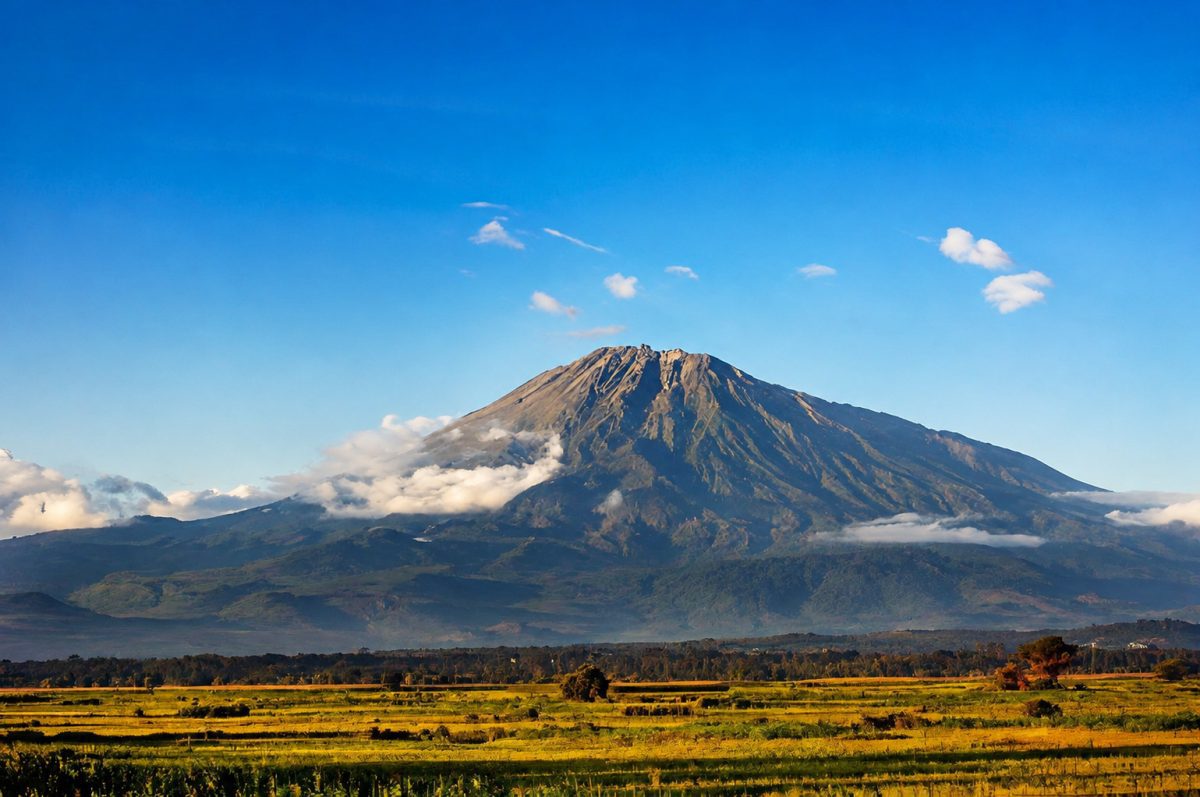
The highest mountains in Africa are Kilimanjaro in Tanzania (5,895 m), Mount Kenya (5,199 m) and Mount Stanley on the Uganda and Congo border (5,109 m). Next come the other great peaks of the Rwenzori range, then Mount Meru in Tanzania and Ras Dashen in Ethiopia.
Most lists stop at the heights. For anyone thinking of climbing one, the more useful question is what each mountain actually demands. Some are long walks that a fit beginner can do. Others need ropes, crampons and real mountaineering skill. This guide covers both.
What are the tallest mountains in Africa?
| Rank | Mountain (highest point) | Height | Country | Can a trekker reach the top? |
|---|---|---|---|---|
| 1 | Kilimanjaro (Uhuru Peak) | 5,895 m | Tanzania | Yes, no technical skills needed |
| 2 | Mount Kenya (Batian) | 5,199 m | Kenya | No. Trekkers reach Point Lenana, 4,985 m |
| 3 | Mount Stanley (Margherita Peak) | 5,109 m | Uganda and DR Congo | With glacier gear and a guide |
| 4 | Mount Speke (Vittorio Emanuele) | 4,890 m | Uganda | With glacier and scrambling experience |
| 5 | Mount Baker (Edward Peak) | 4,843 m | Uganda | With scrambling experience |
| 6 | Mount Emin | 4,798 m | DR Congo | Rarely climbed |
| 7 | Mount Gessi | 4,715 m | Uganda | Rarely climbed |
| 8 | Mount Luigi di Savoia | About 4,627 m | Uganda | Experienced hikers |
| 9 | Mount Meru (Socialist Peak) | 4,566 m | Tanzania | Yes, a steep trek |
| 10 | Ras Dashen | 4,550 m | Ethiopia | Yes, a long trek |
| 11 | Mount Karisimbi | 4,507 m | Rwanda and DR Congo | Yes, a hard two-day hike |
| 12 | Mount Elgon (Wagagai) | 4,321 m | Uganda and Kenya | Yes, a gentle multi-day trek |
Heights vary slightly between surveys, and some lists count the Rwenzori peaks as one mountain range rather than separate mountains. North Africa’s highest peak, Toubkal in Morocco, is 4,167 m.
Why East Africa holds almost all the giants
Nearly all of Africa’s highest mountains stand along the East African Rift, where the continent is slowly pulling apart. Kilimanjaro, Mount Kenya, Meru, Elgon and Karisimbi are volcanoes formed by that rifting. The Rwenzori range is different: it is a block of ancient rock pushed upwards, not a volcano, which is why it looks so jagged. It still holds glaciers this close to the equator, though they are shrinking fast.
1. Kilimanjaro, Tanzania: 5,895 m
Africa’s highest mountain is also the world’s highest free-standing mountain and one of the Seven Summits, the highest points on each continent. It is a dormant volcano with three cones, Kibo, Mawenzi and Shira, and the summit, Uhuru Peak, sits on the crater rim of Kibo.
What climbers need to know: no ropes or technical skills are needed. The challenge is altitude. Climbs take five to nine days, and longer itineraries give much better summit chances. Every climber must go with a licensed guide. Read our complete guide to climbing Kilimanjaro and our comparison of Kilimanjaro’s peaks.
2. Mount Kenya: 5,199 m
Mount Kenya is an ancient, eroded volcano just south of the equator, with rugged rock peaks rising from moorland and lakes. Its two highest points, Batian (5,199 m) and Nelion (5,188 m), are technical rock climbs.
What climbers need to know: most visitors trek to Point Lenana (4,985 m), the third-highest summit, which needs no technical skills. Treks usually take four to six days on the Sirimon, Chogoria or Naro Moru routes. Many people find Mount Kenya wilder and more beautiful than Kilimanjaro, and much quieter. The altitude gain can be quick, so an extra day helps.
3. Mount Stanley and the Rwenzori: 5,109 m
The Rwenzori Mountains, often called the Mountains of the Moon, run along the border of Uganda and the Democratic Republic of Congo. Mount Stanley’s highest point, Margherita Peak, is the third-highest summit in Africa. Speke and Baker, the fourth and fifth, stand close by around the Bujuku Valley.
What climbers need to know: this is a very different challenge. The lower slopes are some of the wettest, muddiest terrain in Africa, with bogs, giant heathers and moss forests. The summit of Margherita needs crampons, an ice axe, a rope and a guide to cross the glaciers. A climb usually takes seven to nine days. It is ideal for hikers who want a true mountain adventure and do not mind getting wet.
9. Mount Meru, Tanzania: 4,566 m
Mount Meru rises inside Arusha National Park, about 70 km west of Kilimanjaro. It is a steep volcano with a dramatic horseshoe-shaped crater and an ash cone inside it. Its last minor eruption was recorded around 1910.
What climbers need to know: Meru takes three to four days and is steeper than Kilimanjaro near the top, with a narrow ridge on summit morning. Climbers are escorted by an armed park ranger, as buffalo and elephant live on the lower slopes. It is excellent acclimatisation before Kilimanjaro, and gives one of the best views of Kilimanjaro at sunrise. See our Mount Meru climbing guide and the 4-day Mount Meru trek.
10. Ras Dashen, Ethiopia: 4,550 m
Ras Dashen, also called Ras Dejen, is the highest point of Ethiopia’s Simien Mountains, a landscape of deep gorges and sheer cliffs. The Simien are home to gelada monkeys, Walia ibex and the Ethiopian wolf.
What climbers need to know: the summit itself is a walk with a short scramble, but reaching it usually means a multi-day trek through remote villages. The appeal is the scenery and wildlife as much as the height.
11. Mount Karisimbi: 4,507 m
The tallest of the Virunga volcanoes rises on the border of Rwanda and the Democratic Republic of Congo. The climb starts in Volcanoes National Park, home to mountain gorillas.
What climbers need to know: it is usually a two-day hike with a night on the mountain. Trails are steep and often muddy, and nights near the top are cold.
12. Mount Elgon: 4,321 m
Mount Elgon is a huge, eroded shield volcano on the Uganda and Kenya border, with one of the largest volcanic calderas in the world. Its highest point, Wagagai, is on the Ugandan side.
What climbers need to know: the gentlest of Africa’s high mountains, with long, gradual trails, caves, waterfalls and hot springs. A good choice for a first multi-day mountain trek.
Other mountains worth knowing in Tanzania
Tanzania has more to climb than Kilimanjaro and Meru, and some of these peaks fit neatly into a safari:
- Ol Doinyo Lengai (about 2,960 m): the Maasai “Mountain of God” near Lake Natron, an active volcano with a steep night climb.
- Loolmalasin (about 3,680 m): the highest point of the Crater Highlands, inside the Ngorongoro Conservation Area.
- Mount Hanang (about 3,420 m): a lone volcano in northern Tanzania, rarely climbed by visitors.
- The Usambara and Uluguru Mountains: older, forested ranges with village-to-village walking rather than summits.
Cho>Choosing between Kilimanjaro, Mount Kenya and the Rwenzori
le>Add>Adding a mountain to a safari
climb pairs naturally with a safari. In Tanzania, the usual order is to climb first and then rest on safari, where you can sit in a vehicle and let your legs recover. Kilimanjaro and Meru are both close to Arusha, the starting point for the northern safari parks. See our Tanzania safari itineraries for ideas, and check that your travel insurance covers trekking at altitude.Qui>Quick answers
Wha>What is the highest mountain in Africa?ilimanjaro in Tanzania, at 5,895 m.Wha>What is the second highest mountain in Africa?
ount Kenya, at 5,199 m.Whi>Which African mountain is hardest to climb?
ount Kenya’s Batian and Nelion peaks, which are technical rock climbs. Among trekking summits, Margherita Peak in the Rwenzori is the most demanding.Is >Is Kilimanjaro the easiest of the high African mountains?
t needs no technical skills, but its altitude makes it a serious challenge. Elgon is gentler.If you would like to climb Kilimanjaro or Meru and add a safari, tell us your plans and we will build the trip around them.