The Peaks of Kilimanjaro: Kibo, Mawenzi, Shira and How Tall the Mountain Is
November 9, 2026
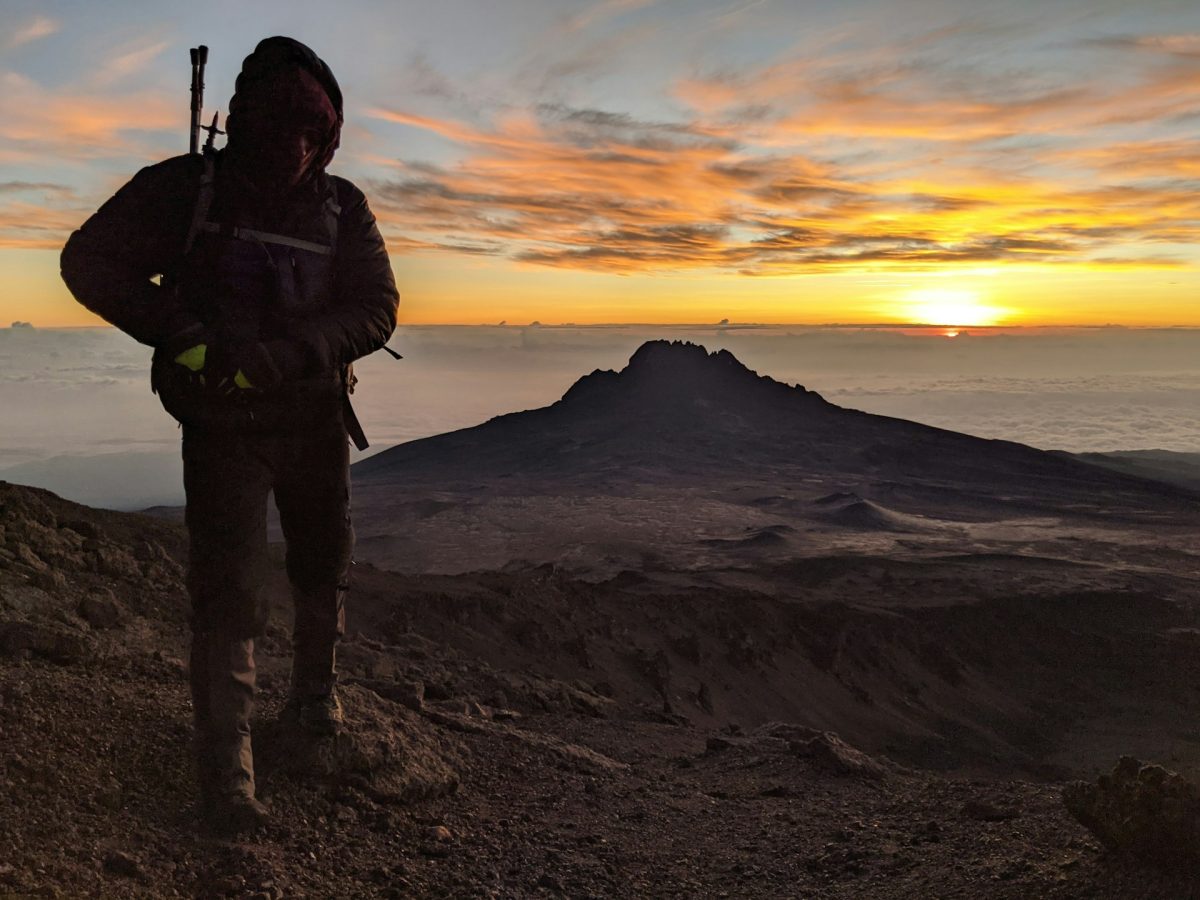
Mount Kilimanjaro is 5,895 metres (19,341 feet) high at Uhuru Peak, its summit. That makes it the highest mountain in Africa and one of the Seven Summits, the highest points on each continent.
But “Kilimanjaro” is not one peak. It is a massif made of three volcanic cones: Kibo, Mawenzi and Shira. Each has its own summit, its own character and its own place in a climb. If you are wondering which of the peaks of Kilimanjaro you will actually stand on, the answer is Kibo. Here is why, and what the other two add to the journey.
The>The three peaks of Kilimanjaro
le>Kib>Kibo: the summit cone
ibo is the giant, snow-streaked dome in the classic photographs. It is the youngest of the three cones and is dormant, not extinct. Inside its main crater lies a smaller inner cone and the Reusch Crater, with a deep pit called the Ash Pit. Gas vents near the inner crater still give off a faint sulphur smell on some days.The crater rim has several named points, and they matter on summit night:
- Gilman’s Point (about 5,685 m): where climbers on the Marangu and Rongai routes reach the rim.
- Stella Point (about 5,756 m): where climbers on Machame, Lemosho and most western routes reach the rim.
- Uhuru Peak (5,895 m): the true summit, usually 45 minutes to 1.5 hours further around the rim from Stella Point, and longer from Gilman’s.
Reaching Gilman’s or Stella Point earns a certificate in its own right, but most climbers want Uhuru. The last stretch along the rim is gentle in gradient. It feels hard only because of the altitude and the hours already walked.
The>The glaciers on Kibo
ibo still carries ice: the Northern and Southern icefields and named glaciers such as the Furtwängler, Kersten, Heim, Rebmann and Credner. They are shrinking fast. Studies estimate that more than 80% of the ice mapped in 1912 has gone, and some scientists expect most of the summit ice to disappear within the next few decades. If seeing the glaciers matters to you, there is a good case for not waiting.Mawe>Mawenzi: the dramatic second peak
wenzi is the rugged, broken peak you see to the east from much of the climb. Its highest point, Hans Meyer Peak, is about 5,148 m, making it the third-highest summit in Africa after Kibo and Mount Kenya. It is named after the German geographer who, with Ludwig Purtscheller and local guide Yohani Kinyala Lauwo, made the first recorded ascent of Kibo in 1889.Unlike Kibo, Mawenzi’s summit is a technical rock climb on crumbling rock. It is not part of any trekking route. On the Marangu, Rongai and Northern Circuit routes, though, you pass close to it, and the Mawenzi Tarn camp on the Rongai route sits right below its cliffs. It is one of the most dramatic campsites on the mountain.
Shir>Shira: the plateau you walk across
ira was once a full volcano. Over time it collapsed, leaving a broad plateau at around 3,800 to 4,000 m on the western side of the mountain. Its highest point, Johnsell Point, is about 3,962 m.On the Lemosho, Shira and Machame routes, you cross this plateau in the first days of the climb. It is open, wild country with wide views of Kibo and, on clear mornings, Mount Meru far to the west. Because you spend time at this height early on, the Shira plateau helps your body adjust before the higher camps.
How >How Kilimanjaro formed
limanjaro was built by volcanic eruptions linked to the East African Rift. Shira formed first and later collapsed. Mawenzi followed and has since been worn into sharp ridges. Kibo grew last, burying parts of the older cones under its lava. Kibo’s last major eruptions were hundreds of thousands of years ago, and there is no eruption in recorded history, but warm vents near the inner crater show the volcano is sleeping rather than dead.How >How Uhuru Peak got its name
ring the colonial period the summit was known by a German name, Kaiser-Wilhelm-Spitze. When Tanganyika became independent in 1961, it was renamed Uhuru Peak. “Uhuru” means “freedom” in Swahili. A torch was carried to the summit to mark independence, and the Uhuru Torch remains a national symbol in Tanzania today.How tall is >How tall is Kilimanjaro in context?
on the summit sign is 5,895 m. Modern GPS surveys have measured the summit a few metres lower, at around 5,892 m. For planning and for your photo at the sign, 5,895 m is the number everyone uses.Here is how that compares with other famous mountains:
| Mountain | Height | Where |
|---|---|---|
| Kilimanjaro (Uhuru Peak) | 5,895 m | Tanzania |
| Mount Kenya (Batian) | 5,199 m | Kenya |
| Mount Stanley (Margherita Peak) | 5,109 m | Uganda and DR Congo |
| Mount Meru | About 4,566 m | Tanzania |
| Mont Blanc | About 4,806 m | France and Italy |
| Mount Everest | 8,849 m | Nepal and China |
What makes Kilimanjaro special is not just its height. It rises about 4,900 m from the plains around its base, which is why it is called the world’s highest free-standing mountain. There is no range around it, just one massive volcano lifting out of farmland and savannah.
What the hei>What the height means for you as a climber
, there is about half the oxygen available at sea level. That, not the steepness, is the real challenge of Kilimanjaro. Your body needs time to adapt, which is why the number of days you spend on the mountain matters more than anything else.A few landmarks help you understand the altitude profile of a climb:
- Park gates: about 1,600 to 2,300 m.
- Shira plateau and Horombo Hut: about 3,700 to 3,900 m.
- Lava Tower: about 4,600 m, a classic acclimatisation stop on the western routes, where you climb high and then descend to sleep at Barranco.
- Barafu Camp and Kibo Hut: about 4,600 to 4,700 m, the high camps before summit night.
- Uhuru Peak: 5,895 m.
Our guide to climbing Kilimanjaro explains how to choose a route and a number of days that give you the best chance of reaching the top. You can also see where the routes start in our guide to where Kilimanjaro is.
Seeing all t>Seeing all three peaks on one climb
t to see Kibo, Mawenzi and Shira properly, choose a route that circles more of the mountain. The Northern Circuit and Lemosho routes cross the Shira plateau and give long views of Kibo. The Rongai route climbs past Mawenzi from the north. Roy Safaris runs the 7-day Rongai route, which includes the Mawenzi Tarn camp below Mawenzi’s cliffs.For a warm-up, many climbers also tackle Mount Meru first. At about 4,566 m, it is excellent acclimatisation and gives one of the best views of Kilimanjaro from across the plains.
Quick answer>Quick answers
is Mount Kilimanjaro?5,895 metres (19,341 feet) at Uhuru Peak.
How many pea>How many peaks does Kilimanjaro have?
anic cones: Kibo, Mawenzi and Shira. Kibo holds the summit, Uhuru Peak.Is Kilimanja>Is Kilimanjaro an active volcano?
rmant, not extinct. Mawenzi and Shira are extinct. There has been no eruption in recorded history.Which is the>Which is the hardest peak of Kilimanjaro?
ts summit needs technical rock climbing, so trekkers do not climb it.If you would like to stand on Uhuru Peak, tell us when you want to climb and we will suggest the route that suits you best.