Mount Meru Tanzania: Height, Location & Climbing Guide
August 26, 2026
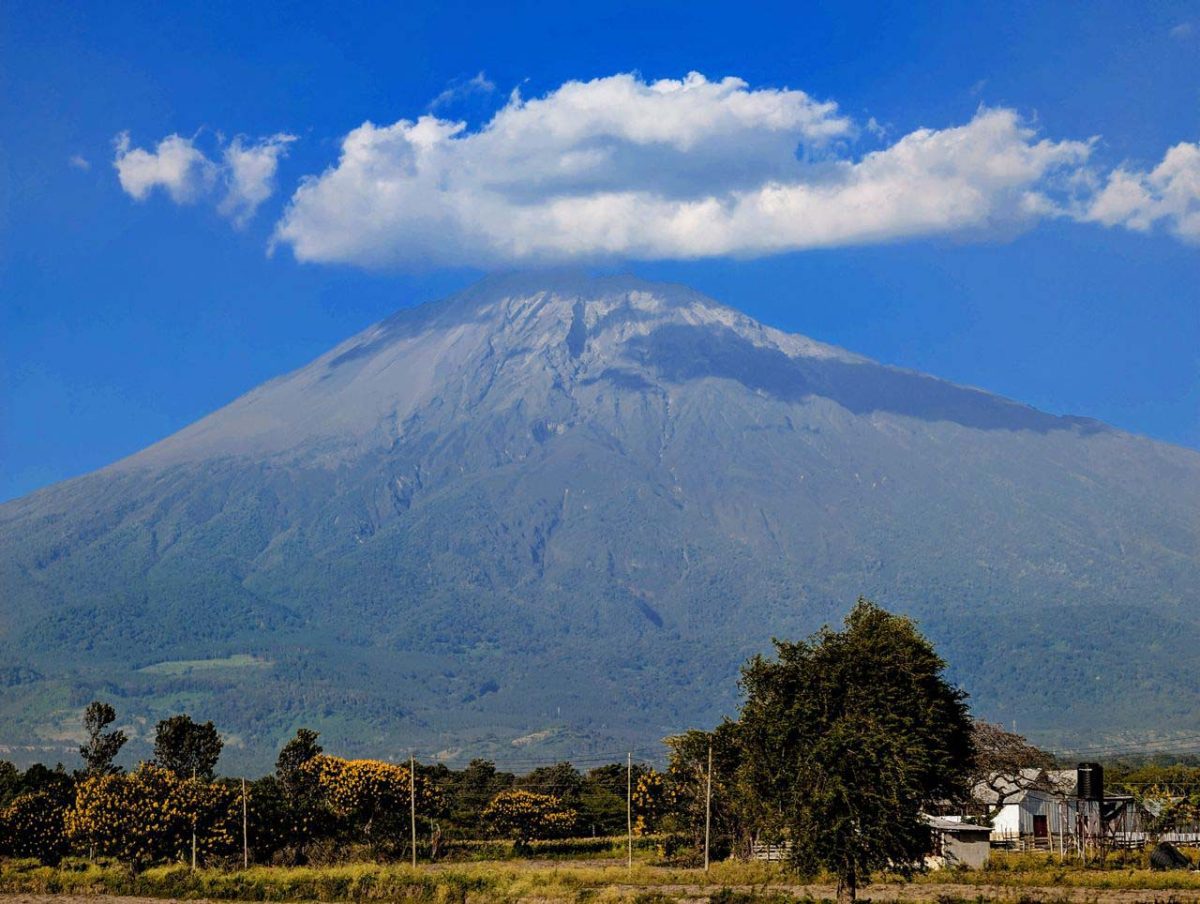
Mount Meru rises above Arusha National Park as one of Tanzania’s most rewarding mountain adventures: a quieter, steeper and more wildlife-rich alternative to the country’s best-known peak.
Often introduced as Kilimanjaro’s smaller neighbour, Mount Meru deserves more than a supporting role. Its trail moves from open grassland and montane forest to high moorland, volcanic rock and an exposed crater rim. Along the way, climbers may encounter giraffes, buffaloes and colobus monkeys before watching Kilimanjaro emerge on the horizon at sunrise.
The expedition is shorter than a typical Kilimanjaro climb, but it is not necessarily easy. Mount Meru is steep, the altitude gain is rapid and the descent can be surprisingly demanding. This guide covers the mountain’s height, location, route, climbing difficulty and practical details that are often missing from standard descriptions.
Mount Meru at a glance
How high is Mount Meru?
Mount Meru’s commonly advertised height is 4,566 metres, or 14,980 feet. It is Tanzania’s second-highest mountain after Mount Kilimanjaro.
Travellers may notice small differences between published elevations. Roy Safaris lists the summit at 4,566 metres in its climbing itinerary and 4,565 metres on its destination page. Tanzania Tourism uses both 4,562 and 4,566 metres across its travel content, while the Smithsonian Global Volcanism Program records an elevation of 4,550 metres.
These variations reflect the measurements and datasets used by different organizations. For travel planning and climbing itineraries, 4,566 metres remains the figure most widely used by Tanzanian mountain operators.
Mount Meru is a stratovolcano with a large breached crater on its eastern side. Its volcanic history formed the steep inner walls, ash cone and narrow summit ridge that give the climb its distinctive appearance. The Smithsonian records its most recent known eruption in 1910.
Where is Mount Meru located?
Mount Meru stands inside Arusha National Park in northern Tanzania. The mountain rises immediately north of Arusha, the city that serves as the starting point for many Northern Circuit safaris and trekking expeditions.
The trailhead is just over an hour’s drive from Arusha, depending on the starting point, traffic and park arrangements. Kilimanjaro lies approximately 70 kilometres east of Meru and can appear above the clouds during a clear summit morning.
This convenient location makes Mount Meru trekking easy to combine with Arusha National Park, Tarangire National Park, Ngorongoro Crater or the Serengeti. Climbers can stay in Arusha before the expedition and return to the city after leaving the mountain.
What makes Mount Meru different?
The opening stage feels partly like a mountain trek and partly like a walking safari. The lower route crosses open grassland and forest inhabited by giraffes, buffaloes, antelope, dik-diks, baboons and black-and-white colobus monkeys.
Buffaloes have been spotted close to the trail, particularly around the lower grasslands and forest. Seeing a large animal while travelling on foot feels very different from observing it from a safari vehicle. This is one reason trekking groups are accompanied by an armed park ranger.
The ranger determines how the group proceeds through wildlife areas. Climbers must remain together, avoid moving ahead independently and follow all instructions during an animal encounter.
Wildlife sightings are never guaranteed, but Meru offers something Kilimanjaro generally cannot: the possibility of seeing large animals on foot before entering the mountain’s higher vegetation zones.
Mount Meru is shorter than Kilimanjaro, but its steep trail, crater-rim exposure and concentrated itinerary make it a serious mountain.
The Momella Route explained
The Momella Route is the established trail to Socialist Peak. It begins at Momella Gate at approximately 1,500 metres and uses Miriakamba and Saddle huts for overnight accommodation.
Climbs are arranged through a mountain operator that coordinates park registration, hut reservations, meals, guides, porters and the ranger escort. Before booking, travellers should request an itemized quotation and confirm whether park fees, ranger charges, rescue fees, taxes, transfers, crew wages and accommodation are included.
Park tariffs can change, so current charges should be confirmed at the time of booking rather than taken from an old article or forum discussion.
Day 1: Momella Gate to Miriakamba Hut
The first day begins with registration at Momella Gate before the group enters the open grasslands with its park ranger. The trail passes the well-known arch-shaped fig tree and continues through the lower slopes towards Miriakamba Hut.
The walk normally takes five to six hours, reaching approximately 2,500 metres by late afternoon. Wildlife encounters are most likely during this stage, although the animals seen will depend on the season, weather and movement within the park.
Different approaches to Miriakamba have been used, including a shorter trail and a longer, more scenic option. Current availability may depend on park conditions. Travellers interested in the scenic approach should ask which trail is planned before the climb begins.
Miriakamba offers functional mountain accommodation rather than hotel-style comfort. Climbers should expect shared sleeping areas, simple toilets and limited facilities. A suitable sleeping bag, personal toiletries, earplugs and a small headlamp will make the overnight stay more comfortable.
Day 2: Miriakamba Hut to Saddle Hut
The second day follows a steeper trail towards Elephant Ridge, where the landscape begins to open and views extend over Arusha National Park. The route continues steadily to Saddle Hut at approximately 3,570 metres.
Although this section may take only around four hours, it involves a significant increase in sleeping altitude. Climbers who normally live near sea level may begin noticing the thinner air as they approach the hut.
Many itineraries include an optional afternoon ascent of Little Meru, which Roy Safaris lists at approximately 3,820 metres. The excursion provides views of the main summit ridge while giving climbers an opportunity to gain elevation and return to sleep lower at Saddle Hut.
Little Meru should still be approached at a controlled pace. Anyone experiencing a headache, dizziness, nausea or unusual fatigue should inform the guide rather than dismissing the symptoms.
Day 3: Saddle Hut to Socialist Peak and Miriakamba Hut
Summit day begins in the early hours. After a light snack, climbers usually leave Saddle Hut at around 2:00 a.m. and ascend towards Rhino Point at approximately 3,800 metres.
Beyond Rhino Point, the route follows rocky volcanic ground towards Socialist Peak. The darkness, cold, altitude and exposure make this the most demanding section of the expedition.
Mount Meru does not normally require ropes or technical climbing skills, but describing it as a simple walk can be misleading. Parts of the route involve scrambling, loose rock and narrow crater-rim sections where balance and concentration matter.
The summit is reached around sunrise when conditions and group pace allow. In clear weather, climbers can see the crater rim, ash cone, surrounding plains and Kilimanjaro on the eastern horizon.
The day is far from over after reaching the summit. Climbers descend to Rhino Point, return to Saddle Hut for food and a short rest, and then continue to Miriakamba Hut. The long descent is one of the most underestimated parts of the climb.
Day 4: Miriakamba Hut to Momella Gate
After breakfast, the final stage descends through the lower forest and grassland to Momella Gate. The walk creates another opportunity to spot giraffes, dik-diks, blue monkeys and black-and-white colobus monkeys.
Completing the descent over four days provides a more comfortable finish than continuing from the summit to the park gate in one exhausting push. Travellers can review the complete four-day Mount Meru trek safari for the day-by-day plan from Arusha.
Should you climb Mount Meru in three or four days?
A three-day ascent is possible, but the four-day itinerary is the better choice for most travellers. One point is frequently misunderstood: the fourth day does not necessarily add another acclimatization day before the summit.
In standard three- and four-day schedules, climbers generally reach Saddle Hut on day two and attempt Socialist Peak on day three. The principal difference is the descent. A three-day itinerary may continue from the summit all the way to Momella Gate, while the four-day version stops overnight at Miriakamba.
This distinction matters because the descent can be punishing. Climbers often find that their knees and leg muscles suffer more on the way down than during the ascent. Loose ground, steep sections and several hours of downhill walking create a different type of fatigue.
The four-day itinerary is particularly sensible for travellers beginning a safari soon afterwards. It allows the mountain experience to end at a more comfortable pace instead of arriving at the gate completely exhausted.
How difficult is Mount Meru?
Mount Meru is a strenuous high-altitude trek. Its lower summit height does not automatically make it an easy alternative to Kilimanjaro.
The main challenges include rapid elevation gain, steep forest and moorland trails, a midnight summit departure, cold weather, loose volcanic terrain, exposed crater-rim sections and a long descent.
Climbers who have completed both mountains sometimes find Meru more demanding underfoot. Kilimanjaro is higher and usually takes longer, but Meru concentrates its steep climbing and descending into a shorter itinerary.
Training should include sustained uphill walking and deliberate preparation for descending. Stairs, step-down exercises, trekking poles and long hikes involving repeated elevation loss can prepare the knees more effectively than flat-road running alone.
Altitude and acclimatization
Physical fitness does not prevent altitude illness. Acute mountain sickness can affect strong and experienced hikers as well as beginners. Common symptoms include headache, fatigue, dizziness, nausea and loss of appetite.
Climbers experiencing symptoms should tell their guide immediately and should not continue ascending simply to protect a summit attempt. If symptoms become worse while resting at the same elevation, descent may be necessary.
Travellers with heart, lung or other relevant medical conditions should consult a doctor familiar with high-altitude travel before booking. Medication for altitude illness should only be used following appropriate medical advice.
Is Mount Meru good preparation for Kilimanjaro?
Mount Meru can provide valuable preparation for Kilimanjaro, particularly when the full itinerary includes Saddle Hut, Little Meru and Socialist Peak.
A short walk to Miriakamba is enjoyable for its forest and wildlife, but it does not provide the same altitude exposure as sleeping above 3,500 metres. Travellers considering Meru specifically for acclimatization should understand this difference.
The full climb also provides an opportunity to test hiking boots, waterproof clothing, trekking poles, headlamps and summit-night layers before attempting Kilimanjaro. It familiarizes climbers with starting in darkness and maintaining a deliberately slow high-altitude pace.
If the two mountains are combined, allow some recovery time between them. Beginning Kilimanjaro with legs already exhausted from Meru’s descent can reduce the practical benefit of the acclimatization climb.
Best time to climb Mount Meru
The most dependable periods are generally June to October and December to February. These months usually provide drier trails and better visibility.
The long rains typically affect March through May, while November may experience shorter rains. Conditions can still vary considerably from year to year.
Dry season does not guarantee dry summit weather. Climbers have experienced high winds, heavy rain, sleet and occasional snow on summit night. Conditions on the upper mountain can also be completely different from the weather in Arusha.
Waterproof layers should therefore remain inside the daypack rather than being packed in a porter-carried duffel. A summit forecast is useful, but it should never replace preparation for rapidly changing mountain weather.
What to pack for Mount Meru
- Waterproof, broken-in hiking boots
- Moisture-wicking base layers
- Warm fleece or insulated midlayers
- Waterproof jacket and trousers
- Warm hat and sun hat
- Insulated gloves with a reliable grip
- Headlamp and spare batteries
- Trekking poles
- Sleeping bag suitable for cold mountain conditions
- Water bottles or a hydration system
- Sunglasses and sun protection
- Personal medication
- Small first-aid and blister kit
- Familiar snacks that remain appealing at altitude
Keep spare batteries close to the body during summit night because cold temperatures can drain them more quickly. Supportive hiking boots are preferable to lightweight trail-running shoes on the cold, loose and rocky upper route.
Questions to ask before booking
- What park, ranger, hut and rescue fees are included?
- Is the Little Meru acclimatization hike part of the itinerary?
- Which trail will be used to reach Miriakamba Hut?
- What personal and group equipment is provided?
- How does the guide assess altitude symptoms?
- What is the turnaround procedure during severe weather?
- How much weight may each guest give to a porter?
- What tipping guidance is provided for the mountain crew?
Clear answers to these questions reveal more about an operator than a claimed summit-success percentage.
Is Mount Meru worth climbing?
Mount Meru is worth climbing for travellers who want a quieter mountain, volcanic scenery, wildlife and a genuinely challenging summit day. Its appeal is not simply that it costs less or requires fewer days than Kilimanjaro.
The real experience lies in the progression: walking among wildlife, entering dense forest, climbing above the clouds, reaching a high saddle and crossing the crater rim as daylight appears behind Kilimanjaro.
Conditions vary between climbs, particularly around the weather and summit ridge. Yet Meru’s natural beauty, varied landscapes and uncrowded character consistently leave a strong impression. Treat it as a serious mountain rather than a shortened Kilimanjaro, and it can become one of the most memorable parts of a Tanzania journey.
Plan your Mount Meru and Tanzania safari adventure
Mount Meru’s position near Arusha makes it a natural starting point for a wider Tanzania itinerary. After the climb, continue to Tarangire, Ngorongoro or the Serengeti while your legs recover on a private wildlife safari.