Tanzania in May: The Green Season Most Travellers Miss
September 9, 2026
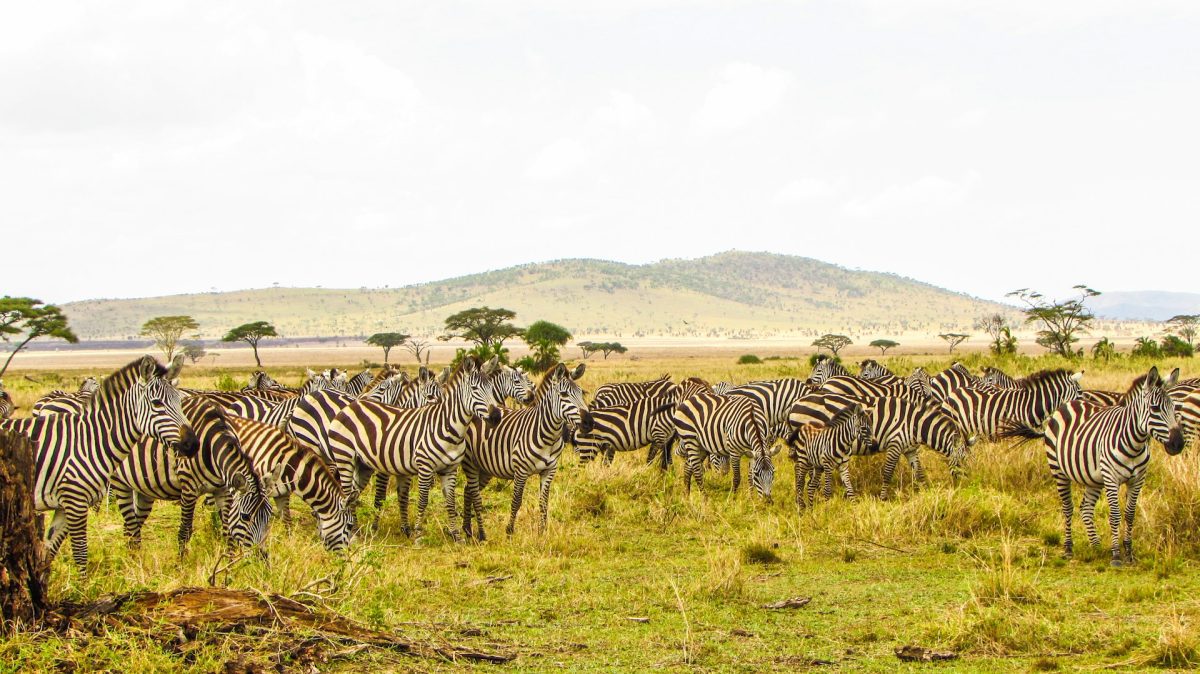
May is the month that gets dismissed too quickly. It sits inside Tanzania’s long-rain season, so many travellers remove it from consideration before asking what the rain actually changes. That can be a mistake. May can bring green plains, dramatic skies, active wildlife, fewer safari vehicles and useful savings at selected camps. It can also bring muddy roads, altered routes and days when patience matters more than a rigid itinerary.
A Tanzania safari in May is not the safest choice for someone who wants predictable weather. It suits a flexible traveller who values atmosphere, photography and quieter wildlife encounters. Success comes from choosing practical camps, allowing enough time and adapting the route to current conditions.
Is May a good time to visit Tanzania?
Yes, for the right trip. Northern Tanzania remains open and wildlife does not disappear when it rains. The Serengeti, Ngorongoro Crater and Tarangire can all deliver rewarding game viewing. What changes is the distribution of animals, the condition of the tracks and the amount of certainty an itinerary can promise.
| May is especially good for | May may be less suitable if you want |
|---|---|
| Green scenery and expressive skies | The lowest possible chance of rain |
| Fewer vehicles at many sightings | Every lodge and track to be operating normally |
| Migration movement through central and western Serengeti | A guaranteed Grumeti or Mara River crossing |
| Possible low-season accommodation value | A tightly timed multi-park schedule |
What May weather really means on safari
May is commonly associated with the long rains, but a monthly icon showing rain every day is not a useful safari forecast. Rain may arrive in heavy showers, overnight periods or local storms, with bright intervals between them. It can also persist longer. Conditions vary across Tanzania and from one year to the next.
The more important question is what has happened before you arrive. Several wet weeks can soften black-cotton soil, flood low-lying tracks and change which routes are usable even on a clear morning. A skilled driver-guide reads the surface, knows alternative approaches and avoids turning a wildlife drive into an unnecessary recovery operation.
Pack for wet ground rather than imagining continuous rain. A light waterproof layer, closed shoes, quick-drying clothing and protection for cameras are useful. Early mornings around Ngorongoro can feel cold, while brighter afternoons at lower elevations may still become warm.
Where is the Great Migration in May?
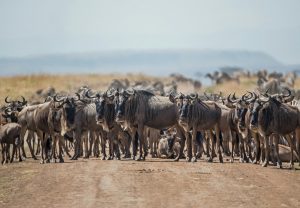
During May, the migrating wildebeest and zebra are generally leaving the southern plains and moving through the central and western Serengeti. The herds may form long columns, spread across fresh grazing or gather as they progress towards the Western Corridor. Rainfall determines the details, so the correct answer is a zone rather than one permanent dot on a map.
May also overlaps with the migration’s rut, when male wildebeest compete and the plains can become unusually noisy and energetic. This is a different spectacle from February’s calving grounds or the famous northern river crossings. It is about movement, courtship and scale, often seen against a greener landscape.
The Grumeti River becomes increasingly relevant as the herds move west, particularly later in May and into June. However, it is misleading to sell every May departure as a river-crossing safari. The animals may arrive earlier or later, and crossings can happen without warning. A good itinerary follows current reports instead of forcing the trip to match an old migration calendar.
Our guide to when to see the Great Migration explains why each stage requires a different Serengeti base.
Central Serengeti or the Western Corridor?
Central Serengeti is the more resilient choice for many May journeys. The Seronera region supports resident lions, leopards, hyenas, elephants and plains game whether or not the largest migration herds are nearby. Its network of tracks and year-round accommodation also gives an itinerary more options when rain changes access.
The Western Corridor becomes attractive when current herd reports show substantial movement towards the Grumeti. It offers riverine forest, open plains and a different side of the Serengeti, but camp opening dates and access should be checked. Choosing the west simply because a generic calendar says “May” can leave you ahead of the migration.
With four Serengeti nights, splitting the stay may work. With only two, changing camp can consume too much of the visit. In that case, a strong central base and a guide with recent information may provide a better safari than chasing a precise seasonal prediction.
The best northern parks in May
Ngorongoro Crater
Ngorongoro provides resident wildlife inside a compact, dramatic landscape. Rain may make the crater rim misty and the descent cool, but game viewing on the floor can remain productive. The crater is also useful insurance within a migration itinerary because its wildlife does not depend on the travelling herds.
Lake Manyara
Late May can be beautiful around Lake Manyara, with a green groundwater forest, primates, elephants and strong birding. High water may alter lakeshore access, so the park should be selected for habitat variety rather than a promised flamingo scene or tree-climbing lion. Our detailed guide asks whether Lake Manyara is worth visiting in late May and explains how recent road reports should shape the decision.
Tarangire
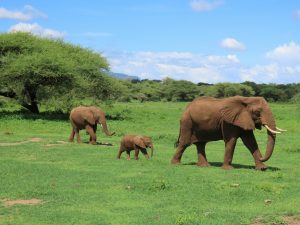
Tarangire is green in May, and elephants, giraffes, birds and resident predators remain present. Wildlife is generally more dispersed because seasonal water is still available beyond the Tarangire River. Visit for baobabs, varied habitat and a peaceful start to the safari, not for the concentrated dry-season herds seen later in the year.
Should you visit southern or western Tanzania in May?
May requires more caution outside the northern circuit. Some camps in Ruaha, Nyerere, Katavi and Mahale close for part of the rainy season, while access and scheduled flights may be reduced. This does not make the regions impossible, but it makes them poor additions to an itinerary assembled without live operational checks.
Early May and late May are not the same trip
Early May is more likely to carry the full wet-season character, with softer roads, fewer open seasonal camps and migration herds that may remain relatively central. By late May, rain often becomes less frequent and more camps prepare for high season. The final third of the month can offer a fine compromise: fewer visitors than June, improving conditions and landscapes that remain green.
Is May good for Zanzibar?
May is not Zanzibar’s most dependable beach month. It falls within the main rainy period, and showers, cloud, humidity and rougher sea conditions can affect boat trips and beach plans. Some smaller properties use the season for maintenance or close temporarily.
Clear periods occur, temperatures remain warm and quieter hotels can be appealing, especially later in the month. Choose a property with comfortable indoor space and flexible activities, confirm that nearby restaurants and excursions are operating, and do not build an expensive extension around uninterrupted sunshine. Browse our Zanzibar beach stays before choosing a coast.
Can you climb Kilimanjaro in May?
Kilimanjaro remains climbable, but May is one of the wetter periods on the mountain. Rain in the forest zone, cloud, slippery trails and moisture inside clothing or sleeping systems can make the climb less comfortable. Fewer climbers may appeal, yet solitude is not a fair trade if wet-weather trekking makes you miserable.
Prioritise waterproofing, experienced mountain staff and enough time to acclimatise. Rain lower down does not remove the risks of altitude or justify a shortened itinerary.
A sensible May itinerary
For seven safari nights, consider one or two nights around Tarangire or Lake Manyara, one or two near Ngorongoro and at least three in the Serengeti. Keep the Serengeti allocation flexible between central and western areas according to recent rainfall and migration reports.
Avoid stacking single-night stays. Packing every morning makes a wet-season journey feel harder and removes the spare time needed when roads are slow. Our seven-day classic Tanzania safari is a useful starting structure, but May may justify more Serengeti time and fewer hotel changes.
What to pack for Tanzania in May
- A lightweight waterproof jacket
- Neutral, quick-drying layers
- Closed shoes with a reliable sole
- A fleece for dawn drives and Ngorongoro
- Dry bags or covers for cameras and electronics
- Binoculars for wildlife and birding
- Sun protection for bright intervals
- Soft-sided luggage suitable for bush flights
May compared with April and June
April generally sits deeper within the long rains and can have greater operational disruption. May remains green and uncertain, but conditions commonly improve as the month progresses. June begins the main dry-season transition, with more camps open, rising demand and migration interest shifting towards the Western Corridor.
For a complete comparison, use our best time to visit Tanzania guide.
Our verdict on Tanzania in May
May is not a secret dry season, and it should never be advertised as one. It is a green, changeable and often rewarding month for travellers who can accept rain and allow the safari to adapt. Its strengths are quieter parks, textured landscapes and the chance to see the migration in motion without building the entire journey around a riverbank.
We can check current camp operations, road conditions and herd reports before choosing the route. Contact us to plan your Tanzania safari in May around the season as it really is.