Tanzania in April: The Safari Month Most Travellers Misunderstand
September 6, 2026
Tanzania in April is not the safari month we recommend to everyone. It is the month we recommend to the right person. The long rains are established, some tracks become difficult, several seasonal camps close and wildlife can take more work to find. In return, the country is intensely green, the parks are quiet and a sighting may unfold without a semicircle of other vehicles.
April works when rain is treated as part of the landscape rather than a defect in the holiday. Storm light rolls across the plains. Rivers and marshes refill. Birds occupy every layer of the habitat. The smell of wet earth replaces dry-season dust. This is a slower, less predictable safari, but it can feel unusually intimate.
The mistake is selling April as secretly identical to July at a lower price. It is not. The better approach is to understand what changes, then decide whether those changes improve or weaken the trip you want.
April safari myths and the more useful reality
| Common assumption | More useful planning advice |
|---|---|
| It rains continuously every day | Rain can be heavy, but dry periods and usable game-drive hours still occur |
| Wildlife disappears | Animals remain, although water and tall vegetation allow them to spread out |
| Every road becomes impassable | Main routes may remain usable while particular tracks or low areas become difficult |
| Every lodge is discounted | Some offer strong value, some close, and others retain standard pricing |
| A cheaper itinerary is automatically better | Camp access, vehicle quality and route design matter more in wet conditions |
What the long rains change on safari
Rain changes more than whether you need a jacket. It changes where a vehicle can go, how far animals range and how a day should be paced. Water across the landscape releases wildlife from the permanent rivers and waterholes that structure dry-season viewing. Fresh grass grows quickly, sometimes making smaller animals harder to see.
A heavy overnight storm can leave deep mud or standing water even when morning begins under blue sky. The most useful guide is not necessarily the one who attempts every track. It is the one who recognises when a route is becoming unsafe or inefficient and knows where productive, firmer alternatives lie.
Build fewer long transfers into the itinerary. A dry-season schedule that looks comfortable on paper can become tiring when rain slows the road. Staying two or three nights in one well-positioned camp gives the guide options and allows the landscape to dictate the day.
Where to safari in April
Central Serengeti
Central Serengeti is one of the more dependable choices because resident wildlife remains across its river valleys, plains and kopjes. Migration herds may be moving through central or western areas, but their distribution depends on rain. The value of central Serengeti is that the safari does not collapse if the wildebeest are elsewhere. See the habitats and routes on our Serengeti safari page.
Ngorongoro Crater
Ngorongoro remains a strong wet-season anchor. Resident wildlife, a contained game-viewing area and the green crater floor create reliable interest. Roads can be muddy and the rim may be cold, misty or wet, but visitor numbers are often far below the dry-season peak. Our Ngorongoro Conservation Area guide helps distinguish the crater from the much larger surrounding landscape.
Tarangire and Lake Manyara
Tarangire’s dry-season elephant gatherings are absent because wildlife can use water across the ecosystem. The park still has elephants, baobabs and excellent birding, but sightings may require more searching. Lake Manyara can be beautiful in the rains, though local access should be checked. Our Tarangire guide explains why the park’s character changes with water.
Southern and western parks
April is generally not the first choice for remote southern or western circuits. Heavy rain, seasonal closures and access challenges can reduce options. If Ruaha, Nyerere, Katavi or Mahale is your main goal, plan around the property’s confirmed operating dates and transport rather than assuming the northern circuit’s advice applies nationwide.
Where is the Great Migration in April?
April is a movement month. The herds generally leave the southern short-grass plains and progress through central Serengeti towards the western corridor. They can spread across a huge area, so the visual experience may be long lines and scattered groups rather than the dense calving-season concentrations of February.
Rain drives the timing. If grazing remains good in the south, some herds may linger. If conditions change earlier, others may already be farther northwest. No camp can guarantee the migration on a particular April date. Current field information and a flexible regional plan are more valuable than a rigid calendar.
Read our Great Migration planning guide before choosing accommodation. In April, it is especially important to build a rewarding safari around resident wildlife as well as moving herds.
Why photographers and birders consider April
April light can be extraordinary. Dark clouds, saturated grass and sudden shafts of sun create depth that is absent during the pale dry season. Dust is reduced, colours are strong and vehicle numbers are low. The trade-off is that rain may arrive just as the light becomes interesting, so equipment protection must be immediate rather than buried in a suitcase.
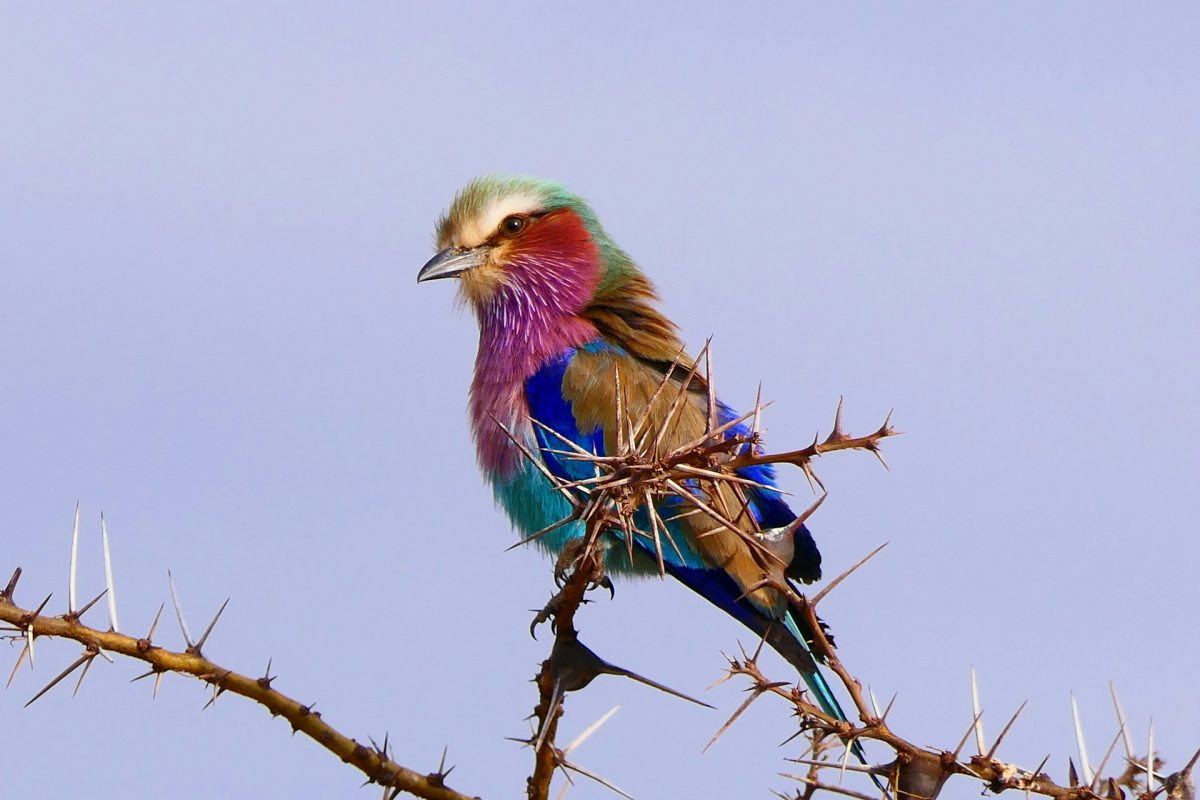
Birding is another major reason to travel. Wetlands are active, food is abundant and migratory species may still be present. A private vehicle helps because a bird-focused drive moves differently from a standard big-game circuit. Tell the guide before departure that you want time with smaller subjects.
April costs less, but value depends on the route
Selected lodges and camps offer low-season rates during April, sometimes creating access to a level of accommodation that would cost more in peak months. Lower demand can also improve availability. The saving is meaningful only if the property is open, well maintained and correctly positioned for wet-season access.
Do not choose the most remote discounted camp without understanding the transfer. A cheaper room can create expensive flying, difficult driving or lost game-viewing time. Compare the total itinerary, not the nightly rate. Our collection of Tanzania safari itineraries provides realistic route frameworks that can be simplified for April.
Should you add Zanzibar in April?
April is among Zanzibar’s wettest periods. There can be bright hours and appealing hotel rates, but prolonged rain, humidity and cloud are more likely than in January, February or the main dry season. Water visibility and boat activities may also be affected by local sea conditions.
If the beach is the emotional centre of the holiday, choose another month. If Zanzibar is a cultural and restorative addition to a safari, it can still work. Select a property with good indoor spaces, a spa or covered terraces, and include Stone Town, food and cultural experiences rather than depending entirely on sunbathing.
Is April suitable for Kilimanjaro?
April is one of the wetter and less popular periods on Kilimanjaro. Forest trails can be muddy, cloud can obscure views and keeping clothing or sleeping equipment dry becomes harder. Fewer people on the mountain is an advantage, but it does not remove the need for sound weather judgement and strong support.
Most first-time climbers with flexible dates are better served by January to early March or June to October. An experienced trekker committed to April should choose a properly paced route, high-quality waterproof equipment and an operator prepared to alter plans when conditions require it.
Who enjoys an April safari?
April suits repeat visitors who no longer need every famous sight delivered in the easiest conditions. It suits birders, landscape photographers and travellers who value quiet camps. It can also suit a flexible couple more easily than a family with young children and a tightly fixed daily routine.
It is a poor fit for anyone who becomes anxious when plans change, wants guaranteed beach weather or has only a few days to see several distant parks. A short trip loses too much when one difficult road affects the schedule.
What to pack without overpacking
- A breathable waterproof jacket with a hood
- Quick-drying neutral trousers and shirts
- Closed shoes with reliable grip
- A warm layer for Ngorongoro and dawn drives
- Dry bags or waterproof covers for electronics
- Extra lens cloths and camera protection
- Sun protection for clear intervals
- Soft-sided luggage that is easy to handle
Heavy boots and a wardrobe of safari clothing are rarely necessary for a lodge-based trip. The priority is keeping a small number of useful layers dry.
The best way to plan April
Build around central Serengeti and Ngorongoro, then add other areas only when access and operating dates are confirmed. Reduce one-night stays, avoid ambitious same-day transfers and keep at least one section of the itinerary flexible. A private vehicle gives the guide greater freedom to work around local weather.
For a broader seasonal comparison, read our best time to visit Tanzania guide. If the green season appeals to you, contact us with your dates and priorities. We will tell you plainly where April adds value and where another month would serve you better.