Is a Private Safari Vehicle Worth the Extra Cost?
October 15, 2026
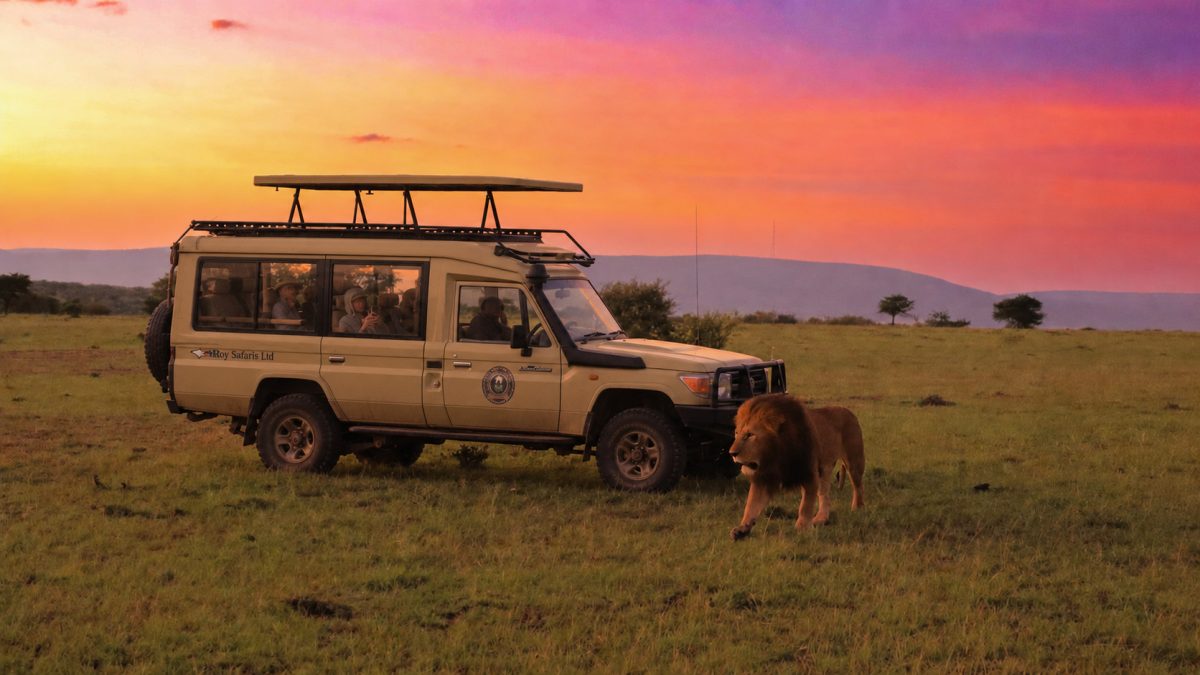
The lioness has finally lifted her head. For most of the morning, she has been almost invisible in the grass, raising one ear occasionally before disappearing again. Now she is watching a herd of zebra approaching the water.
Your guide thinks something may happen. One person wants to wait. Another wants to find elephants. Someone else is hungry, and the vehicle was supposed to return for lunch twenty minutes ago. This is the moment when the question “Is a private safari vehicle worth it?” stops being about luxury and becomes a question of who controls the day.
A private vehicle does not produce more animals. It cannot summon a leopard, guarantee a river crossing or reserve an empty corner of the Serengeti. What it buys is control over timing, space, priorities and the small decisions that shape a game drive.
The short answer
A private safari vehicle is usually worth the extra cost for serious photographers, families with children, honeymooners, travellers with mobility or health considerations and anyone who wants to determine the pace of each day.
It can also represent surprisingly good value for four to six relatives or friends travelling together because the vehicle cost is divided within the group.
A shared safari is often the more sensible choice for a solo traveller, a sociable couple with a limited budget or anyone happy to follow a fixed schedule. Sharing is not an inferior version of safari. It is a different compromise: you spend less per person in exchange for sharing decisions, space and time.
What does “private vehicle” actually mean?
A private safari vehicle is reserved for your booking party. If you are a couple, only the two of you travel with the driver-guide. If you are a family of five, the vehicle belongs to those five family members for the agreed safari programme.
Private does not mean you will have the park to yourself. Other vehicles may gather at an important sighting, particularly around big cats, river crossings and accessible areas of the Ngorongoro Crater. Your guide must still follow park regulations, approved tracks, opening hours and wildlife-viewing rules.
It also does not always mean that every drive throughout the holiday is private. Some itineraries use a private vehicle and guide for the overland journey, while certain camps provide their own shared open-sided vehicles. Always check the inclusions day by day.
For example, the wording “game drives included” does not tell you:
- Whether the vehicle is private or shared
- Whether the same guide stays with you
- How many guests may be placed in the vehicle
- Whether each passenger receives a window position
- Whether departure and return times are fixed
- Whether full-day drives are possible
Before comparing prices, ask the operator to state exactly which transfers and game drives are private.
What you are really paying for is control of time
The greatest advantage of a private game drive is not privacy. It is the ability to use safari time according to your interests.
You can leave early without waiting for another room. You can remain with a leopard after other guests become restless. You can stop for giraffes, birds, trees, tracks or landscapes that might not interest everyone. If the morning has been exceptional, you can continue rather than returning because another passenger booked a massage.
The reverse is equally useful. You can finish early when you are tired, skip an afternoon drive or enjoy a slower breakfast without inconveniencing strangers.
This flexibility matters in a destination as large as Serengeti National Park. A guide may need to choose between staying with a promising sighting and travelling towards another part of the park. In a private vehicle, that decision can reflect your priorities rather than an average of six different preferences.
Private does not mean completely unstructured. Long distances, park hours, road conditions and camp meal arrangements still influence the day. A good guide will explain what is realistically possible rather than agreeing to every request.
Photography changes the calculation
For casual phone photography, a well-managed shared vehicle can be perfectly adequate. For someone travelling with long lenses, multiple camera bodies or a specific photographic goal, the private-versus-shared difference becomes much larger.
Wildlife photography depends on position, patience and light. The best angle may be on one side of the vehicle. An animal may face the wrong direction for twenty minutes before turning into the light. A cheetah might appear to be resting before suddenly beginning to hunt.
In a shared vehicle, the guide must consider everyone. One guest may want photographs while another has already taken theirs and wants to move. Passengers may need to rotate seats or lean across one another. Camera bags consume space, and a large lens is difficult to handle when every seat is occupied.
A private vehicle lets the guide position the car for your equipment and preferred angle, subject to park rules and consideration for other vehicles. You can wait for behaviour instead of collecting quick identification photographs.
Photographers should ask for more than the word “private.” Confirm:
- How many usable window positions the vehicle provides
- Whether the roof opens for standing photography
- Whether beanbags or suitable camera supports are available
- Whether charging is possible in the vehicle
- How luggage and camera equipment will be stored
- Whether the guide has experience positioning for light and animal movement
- Whether the itinerary allows early departures and full-day drives
A private vehicle with an inexperienced guide is not automatically a photographic vehicle. The guide’s judgement remains more important than the vehicle label.
For families, flexibility matters more than silence
Parents sometimes worry that their children will disturb other guests. That concern can make adults spend the entire game drive monitoring every question, snack request and change of mood.
A private vehicle removes that social pressure. A child can become excited about an elephant, lose interest during a quiet hour or need an unexpected toilet break without changing a stranger’s safari.
It also allows parents and guides to adjust the rhythm:
- Shorter drives for younger children
- Later departures after a difficult night
- More frequent stops
- Earlier returns when attention begins to fade
- Extra time with animals the children find fascinating
- Simple explanations pitched to their ages
This freedom can make a private vehicle more valuable than upgrading to a more elaborate lodge. A beautiful suite is enjoyable, but the family may spend most daylight hours inside the safari vehicle.
Families should still discuss minimum ages, child seats, toilet arrangements and suitable drive lengths before booking. A private vehicle does not remove the need for realistic planning.
Comfort is about more than legroom
Safari vehicles may look spacious in photographs taken while they are empty. Add six adults, day bags, jackets, cameras, water bottles and charging cables, and the interior can feel very different.
On rough roads, personal space becomes more valuable. Passengers stand and sit repeatedly as sightings appear. Everyone wants a clear line of view. The people in the best positions may unconsciously keep them, while quieter travellers accept less useful seats to avoid creating tension.
With fewer passengers, it is easier to:
- Move between viewing positions
- Keep equipment accessible
- Avoid looking across another person
- Use a spare seat for a bag or camera
- Ask the guide questions without competing for attention
- Stop when someone needs a break
This does not mean that a couple needs a seven-seat vehicle to enjoy Tanzania. It means the space becomes part of the experience when you spend several hours a day travelling over corrugated tracks.
Our first-time Tanzania safari guide explains other practical realities that are easy to overlook when comparing attractive lodge photographs.
The guide relationship becomes more personal
On a private driving safari, the same driver-guide may stay with you through several destinations. Over time, the guide learns that one traveller loves birds, another is fascinated by animal behaviour and someone else would rather wait for one meaningful sighting than rush through a wildlife checklist.
The guests also learn how the guide works. Conversation becomes easier, questions become more specific and daily plans can be agreed the evening before.
This continuity is particularly valuable on a route combining Tarangire, the Ngorongoro Conservation Area and the Serengeti. The guide is not meeting you afresh at every property. They understand what you have already seen and what remains important.
Shared camp vehicles can offer a different advantage. Resident guides may know the immediate area exceptionally well, and meeting other travellers can add a pleasant social dimension to the day. Neither guiding model is universally superior.
How much more does a private vehicle cost?
There is no reliable universal upgrade price. The difference depends on how the safari has been built.
A shared departure divides the vehicle, fuel and guide costs among unrelated travellers. A solo guest therefore pays a much smaller share of those fixed costs. On a private safari, one traveller or couple absorbs most of them.
As the private party grows, the per-person difference often narrows. Four friends sharing one vehicle may find that privacy costs much less per person than expected. With five or six travellers, the decision may be less about price and more about whether everyone can view comfortably.
| Traveller type | Likely value of private vehicle | Main reason |
|---|---|---|
| Solo traveller | Usually lowest financial value | One person carries the vehicle and guide cost. |
| Couple | High experiential value, higher cost | Privacy, pace and uninterrupted time with the guide. |
| Family with children | Often very high value | The day can change around energy, meals and attention spans. |
| Four to six friends | Often strong value per person | Fixed vehicle costs are divided within the group. |
| Serious photographer | Very high value | Control over position, light, waiting time and equipment space. |
Ask for two comparable quotations, one private and one shared. Keep the dates, camps, room categories, park fees and flights identical. That isolates the real cost of vehicle privacy instead of comparing two completely different trips.
When a shared vehicle is the better decision
Choose shared game drives when saving money protects something more important. The difference could fund an additional night in the Serengeti, a better-located camp or enough time to avoid a rushed itinerary.
Shared vehicles also suit travellers who enjoy meeting people. A good group can make the drive livelier, and wildlife sightings often create an immediate connection between strangers.
A shared safari is most likely to work well when:
- The group is kept reasonably small
- Every passenger has an appropriate viewing position
- Departure times are clearly communicated
- The itinerary attracts travellers with similar interests
- You are comfortable compromising on stops and return times
- The saving materially improves the rest of the journey
Do not assume that “shared” always means crowded or inflexible. Ask how many guests are normally placed in the vehicle and whether the property runs morning, afternoon or full-day drives.
There is also a hybrid option
The choice does not have to be private for every day or shared for every day.
You might use a private vehicle and guide for the northern circuit, then take shared activities at a remote fly-in camp. A photographer might reserve a private vehicle during the most important Serengeti days but share shorter drives elsewhere. A family might keep the safari private and use shared transfers where flexibility adds little value.
Some couples choose comfortable mid-range camps and invest the savings in a private vehicle. Others prefer exceptional accommodation and are perfectly happy sharing the camp’s game drives.
Browse different Tanzania safari itineraries and consider where control would meaningfully change the experience. Privacy is most valuable on the days when timing, photography or individual needs matter most.
Five questions reveal whether the upgrade is worthwhile
- Would you happily leave a promising sighting because another guest wants to return?
- Do you have specialist interests such as photography, birds, animal behaviour or landscapes?
- Could children, health needs or mobility concerns change the day unexpectedly?
- How much of the total holiday will be spent inside the vehicle?
- What would you sacrifice elsewhere to pay for privacy?
If your answers point towards flexibility, the vehicle may deserve priority over a room upgrade. If you are relaxed about schedules and would rather spend the difference on another safari night, sharing may give you the better trip.
The verdict
A private safari vehicle is worth paying for when you intend to use the freedom it provides. It is particularly valuable when you want to determine departure times, wait for animal behaviour, protect photographic space, accommodate children or travel at a pace that would be difficult to impose on strangers.
It is less compelling when you are travelling alone, have flexible interests and can join a small, well-organised group at a substantially lower price.
The mistake is treating the vehicle as a minor line in a quotation. On many safaris, it is where you will spend more waking hours than anywhere else. The camp provides the bed, but the vehicle determines how you experience the landscape between breakfast and sunset.
When comparing operators, ask each company how its vehicles and guides are allocated, not simply whether the itinerary is described as private. If you want help deciding where a private vehicle would genuinely improve your route, send us your group size, travel month and preferred parks. We can price the options separately so you can decide whether the extra control is worth more than what the same budget could buy elsewhere.