How Many Safari Destinations Can You Fit Into Two Weeks Without Rushing?
October 14, 2026

In two weeks, most travellers can enjoy four or five bases in Tanzania without rushing. That usually means three or four safari areas, plus a beach or a quiet place to rest at the end. Go beyond that and the time you spend moving between places starts to eat into the time you spend watching wildlife.
So the honest answer to how many safari destinations fit into two weeks is not a list of parks. It is a count of moves. Every time you pack up and change lodges, you lose part of a day. The real question is how many of those days you are willing to give up.

How many safari destinations in two weeks: count the moves, not the parks
A two week Tanzania safari gives you 13 nights on the ground. That sounds like a lot. But the first and last days go to flights and airport transfers, and each change of base after that takes part of a day too.
A useful way to think about it:
- A short move, such as Tarangire to the Ngorongoro highlands, costs about half a day, though you can often game drive on the way.
- A long move, such as Ngorongoro to the central Serengeti, can take most of a day once you include the Serengeti itself.
- A flight between regions is quick in the air, but airport transfers, check-in and waiting for small aircraft still use up a morning or an afternoon.
With five bases, you make four moves. With seven bases, you make six. Those extra two moves can quietly cost you two full days of safari, which is a lot to lose in two weeks.
The better approach is to give each base at least two nights, and three in the places that matter most. Two nights means one full day where you wake up, go out and come back to the same bed. Three nights gives you two of those days, and room to rest if you need it.
How far apart the parks really are
Maps of northern Tanzania make the parks look close together. Some are. Others are separated by long, slow roads. The times below are typical driving times, before any stops or game viewing along the way.
| Route | Typical time |
|---|---|
| Kilimanjaro International Airport to Arusha | 1 to 1.5 hours by road |
| Arusha to Tarangire | 2 to 3 hours by road |
| Tarangire to Karatu, in the Ngorongoro highlands | 2 to 3 hours by road |
| Karatu to the Ngorongoro Crater floor | 1 to 1.5 hours by road |
| Ngorongoro to the central Serengeti | 4 to 6 hours by road |
| Central Serengeti to Ndutu | 2.5 to 4 hours by road |
| Central to northern Serengeti | 3 to 5 hours by road |
| Central Serengeti back to Arusha | 6 to 9 hours by road |
| Arusha to Zanzibar | About 1.5 hours by air |
Two things change these numbers in practice. First, reaching a park gate is not the same as reaching your camp. The Serengeti is huge, and some camps sit hours inside it. Second, the road is paved from Arusha as far as the Ngorongoro entrance gate, but beyond it the roads are gravel or dirt, often corrugated and dusty. A five hour drive on those roads feels longer than five hours on a highway.
The good news is that a long drive inside a park is still a game drive. You may stop for lions or elephants along the way, and many guides plan the route so the transfer becomes part of the safari. That makes long moves more enjoyable, but it also makes them longer.
The real dividing line: the Serengeti
Tarangire, Lake Manyara and the Ngorongoro area sit fairly close to each other and to Arusha. You can move between them without losing much.
The Serengeti is different. Getting there, moving within it, and getting back out are all big pieces of time. If you drive in and drive back out, the return to Arusha alone can take most of a day. That is why many itineraries drive in and fly out.
For a two week trip, the Serengeti also opens a choice. You can stay in one area and go deep, or split your time between two areas, such as the central plains and the north in the dry season, or the central plains and Ndutu during calving. Splitting works well, but only if each area gets at least three nights.
Three ways to spend two weeks without rushing
Each of these uses about five bases. They are starting points, not fixed packages.
1. The northern circuit, done properly
- Arrival night near Arusha
- Tarangire, two nights
- Ngorongoro highlands, two nights, with a full day in the crater
- Central Serengeti, three nights
- Northern Serengeti or Ndutu, depending on the season, three nights
- Fly to Zanzibar for two or three nights, or fly home
This is the most popular shape for a 14 day safari itinerary. It covers the classic parks at a steady pace, with the long return drive replaced by a flight.
2. North and south together
Some travellers want the wilder, quieter feel of the southern parks as well as the Serengeti. That is possible in two weeks, but only by flying.
A typical shape is three bases in the north, such as Tarangire, Ngorongoro and the Serengeti, followed by three or four nights in Ruaha or Nyerere. The southern parks are usually reached by light aircraft, often through Dar es Salaam, so expect most of a day for that transfer. The reward is two very different safari experiences in one trip.
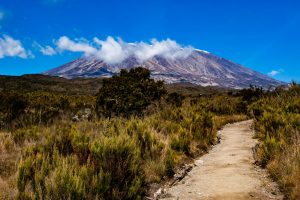
3. Safari and Kilimanjaro
Climbing Mount Kilimanjaro takes about a week on its own. The most popular routes usually take six to eight days on the mountain, and you should add a rest day afterwards. That leaves room for two safari bases at most, such as Tarangire and the Ngorongoro area, or a short visit to the Serengeti if you fly. Trying to add a beach as well usually turns the trip into a race.
How the season changes the count
The same two weeks can hold a different number of places depending on when you travel.
In the dry season, from about June to October, roads are firm and drive times are at their most predictable. The herds are usually in the western and northern Serengeti, which pulls your route further from Arusha. That makes a split between the central and northern Serengeti worth the long transfer, and a flight out at the end even more useful.
From about January to March, the herds are often on the southern plains around Ndutu, which sits closer to the Ngorongoro area. Distances shrink, so a calving season trip can feel more relaxed with the same number of bases.
In the long rains of April and May, some side roads turn muddy and transfers can run longer than the times above. Some seasonal and remote camps also close, which narrows your choice of bases. In this season, it often makes sense to plan one fewer stop than you would in the dry months.
Who should slow down even more
Four or five bases suits most travellers. Some groups do better with three or four.
Families with young children, older travellers and anyone who finds long hours in a vehicle tiring should lean towards fewer moves and more nights in each place. So should first-time visitors who want to take it all in rather than tick parks off a list. A lodge with a pool, or a camp where wildlife walks past the tents, can be worth as much as another park.
Keen photographers often want fewer bases too. More time in one area means more chances to wait for the right light, or to return to a den or a kill on a second morning.
Signs that your itinerary is rushed
When you review a draft plan, check it for these warning signs:
- More than one one-night stop
- Two long road transfers on back-to-back days
- Driving from the central or northern Serengeti all the way back to Arusha
- Six or more different lodges in 14 days
- A beach stay of only one night
- No half days and no time at camp
One warning sign is fine if there is a good reason for it. Three or four usually means the plan is trying to do too much. The fix is almost always to drop a place, not to squeeze harder.
When flying saves the trip
On a two week trip, one or two well chosen flights can give you back a day or more.
The most useful flights are the ones that replace long, slow road legs. Flying out of the Serengeti at the end is the classic example. It avoids a long drive back to Arusha on the day you are most tired. Flying between the north and south circuits is the only realistic way to see both in two weeks.
Flights have their own limits. Light aircraft usually allow around 15 kg of luggage per person in a soft bag, and flights run on set schedules. You also lose time with your own guide and vehicle, since many fly-in camps use their own. For many travellers, a mix works best: drive the first half, when the parks are close together, and fly the long legs.
What about the beach?
Ending with a few days on Zanzibar is a natural way to finish a long safari. The flight from Arusha takes about an hour and a half, and the change of pace helps after days of early starts and dusty roads.
Give the beach at least three nights if you can. With two nights, you get just one full day. With three, you get two, which is when it starts to feel like a rest. If your two weeks are tight, it is often better to cut one safari base than to shorten the beach to a single night.
The practical verdict
Two weeks is a generous amount of time for a Tanzania safari. Used well, it lets you see the classic northern parks in depth, or combine two very different regions, without feeling rushed.
The number to watch is not parks but moves. Aim for four or five bases, two nights minimum at each and three in the Serengeti. Drive where the parks are close, fly where they are far, and keep at least a little time each day for doing nothing at all. If a plan needs more than that, it is time to choose.
Our Tanzania safari itineraries are a good starting point for your planning, and each one can be adjusted to a slower or faster pace. If you have two weeks and a list of places you would love to see, send us your wish list and we will show you how much of it fits comfortably. You can also read more about Roy Safaris and our tailor-made trips from Arusha.