Tanzania in November: Green-Season Safaris Without the Crowds
September 3, 2026
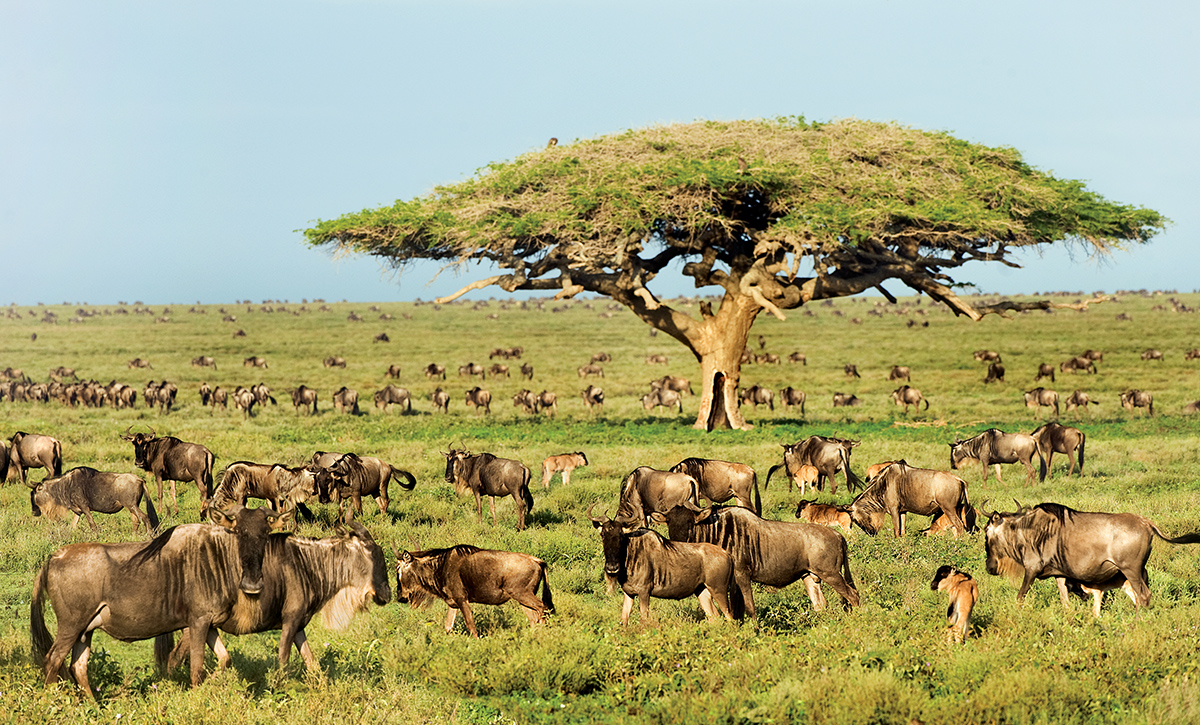
Tanzania in November is for travellers who would rather watch the landscape wake up than follow the peak-season crowd. The first meaningful showers after the long dry months can turn dusty plains green, clear the air and draw fresh life into the parks. Migratory birds begin arriving, newborn antelope appear and many famous wildlife areas feel noticeably less pressured.
November is commonly described as the short-rains season, but that phrase creates the wrong picture. It does not usually mean a month of continuous rain. A typical trip may include bright mornings, building clouds and a passing afternoon or evening shower. Rainfall is local and unpredictable, however, so one traveller’s dry week does not guarantee the same conditions for the next.
After planning journeys in Tanzania since 1989, we have found that November works best when the itinerary embraces the season. It is not the month to copy an August route and hope for August conditions. It is a chance to prioritise flexible game drives, good all-weather access, birding, photography and the quieter side of northern Tanzania.
Is November a good time to visit Tanzania?
Yes, November can be an excellent time to visit Tanzania, particularly if you value green scenery, fewer vehicles and a more relaxed safari atmosphere. Wildlife remains abundant throughout the northern circuit. The Ngorongoro Crater still supports resident animals, central Serengeti remains productive, and Tarangire offers far more than the large dry-season gatherings for which it is best known.
The trade-off is reduced predictability. Fresh water across the landscape allows some animals to spread out. New grass can make the scenery beautiful while also changing where wildlife feeds. A shower may briefly interrupt an open-roof game drive, and a heavy local storm can make an unsealed track muddy. Good guiding matters because the day may need to change with the weather.
| November advantage | What to consider |
|---|---|
| Fewer vehicles in many safari areas | Wildlife can be more dispersed after rain |
| Fresh green landscapes and cleaner air | Rainfall is irregular and difficult to predict |
| Strong birding as seasonal migrants arrive | Longer grass can make some sightings harder |
| Potential shoulder-season accommodation value | Offers vary and should not be assumed |
| Dramatic clouds and colourful photography | Protect cameras from sudden showers |
What is the weather like in Tanzania in November?
November usually marks the return of the short rains across much of northern Tanzania. Days are warm, and humidity begins increasing after the dry season. Showers are often brief and may arrive later in the day, leaving useful morning hours for game drives. Weather patterns can vary sharply between the Serengeti, the highlands around Ngorongoro, Arusha and the coast.
Travellers repeatedly report that the word rainy sounds more disruptive than the experience on many November safaris. A storm may cool the afternoon and settle the dust, followed by clear light. At the same time, it would be misleading to promise that rain never affects a trip. A strong shower can close a vehicle roof, slow an unsealed-road transfer or leave camp paths muddy.
Pack light clothing for warm afternoons, a fleece or light jacket for early starts, and a compact waterproof layer. Neutral quick-drying trousers are more useful than heavy rain boots for most lodge-based safaris. Keep cameras, chargers and documents in protective bags inside your luggage.
Where is the Great Migration in November?
The Great Migration does not follow fixed dates. Its movement is shaped by rain and the fresh grazing that follows. During November, herds commonly begin travelling south from the northern Serengeti toward central and eastern areas. If rain reaches the southern short-grass plains early, some groups may continue farther south. If it arrives late, the movement may be delayed.
This makes November a poor month for anyone demanding a guaranteed migration location, but a rewarding month for travellers comfortable with an informed, flexible plan. Mobile camps may reposition for the changing season, and current reports from guides become more valuable than a diagram printed months earlier.
Central Serengeti is often a sensible anchor because it offers resident wildlife as well as the possibility of encountering moving herds. Lions, leopards, cheetahs, elephants, giraffes and many other species do not disappear when the migration shifts. The strength of the Serengeti is the complete ecosystem, not only the wildebeest.
Best places to visit in Tanzania in November
Central and eastern Serengeti
Central Serengeti provides a dependable base during a transitional month. Its varied habitats support resident predators and plains game, while migration groups may pass through as they turn south. Eastern areas can become increasingly interesting when fresh grass develops. We recommend enough time in the Serengeti to respond to current wildlife locations rather than attempting a rushed one-night stop.
Ngorongoro Crater
The crater offers reliable year-round wildlife viewing and works well as part of a November northern-circuit itinerary. Fresh growth changes the colour of the crater floor, and the highlands can feel cool or misty early in the day. Staying close to the crater helps protect valuable morning game-viewing time.
Tarangire National Park
Tarangire’s enormous dry-season wildlife concentrations begin to disperse as water becomes available outside the river system. That does not make the park empty. Elephants, baobab landscapes and excellent birdlife remain, often with fewer safari vehicles than in peak months. November is particularly attractive for travellers who enjoy the park as a habitat rather than judging it by one seasonal spectacle.
Is Zanzibar good in November?
Zanzibar in November is hot, humid and changeable. There can be beautiful sunny periods as well as showers or thunderstorms. It suits travellers who accept mixed weather in exchange for a quieter island experience, but it is less suitable for someone whose entire holiday depends on uninterrupted beach sunshine.
Choose the coast according to how you want to use the sea. On much of the east coast, the water retreats a long way at low tide. This creates striking scenery and opportunities to walk across exposed reef flats with appropriate local guidance, but swimming times may be limited. Nungwi and Kendwa in the north and northwest generally offer easier swimming across more of the tidal cycle.
If Zanzibar is the main purpose of your holiday, build in enough nights to absorb a wet afternoon. If it is the relaxing finish to a safari, a hotel with a good pool, covered areas and activities beyond sunbathing gives the itinerary more resilience.
Can you climb Kilimanjaro in November?
Kilimanjaro can be climbed in November, but the short rains make it one of the less dependable periods. Moisture is particularly noticeable in the forest zone, trails can be muddy and cloud may limit views. Higher on the mountain, conditions remain cold and can change quickly regardless of the month.
The advantage is that trails may be quieter. That alone is not a reason to choose November if you have no flexibility or limited wet-weather trekking experience. Route length, acclimatisation and operator safety standards matter more than avoiding other climbers. For most first-time trekkers with open dates, January to early March or June to October provides a stronger starting point.
November safari costs and crowds
November often falls between the busiest dry-season months and the festive rush of late December. Some camps and lodges introduce shoulder-season rates, although pricing varies by property, location and date. International flights may also be better value than during Christmas, but no saving should be treated as automatic.
The quieter atmosphere can be as valuable as the price. Popular sightings may attract fewer vehicles, and camps can feel more personal. The exception is any area where the migration is temporarily concentrated. Wildlife determines where vehicles gather, even outside peak season.
What to pack for Tanzania in November
- Lightweight neutral clothing that dries quickly
- A compact waterproof jacket or poncho
- A warm layer for dawn drives and the Ngorongoro highlands
- Closed shoes with a practical sole
- Sun protection, including a hat and high-factor sunscreen
- Insect repellent and any medication advised by your clinician
- Water-resistant protection for cameras and electronics
- Soft-sided luggage suitable for any light-aircraft limits
A practical Tanzania itinerary for November
A balanced northern route may combine Tarangire, Ngorongoro and several nights in central Serengeti. With seven safari nights, spending three or four in the Serengeti is usually more rewarding than adding a distant park. Longer trips can add Zanzibar or adjust the Serengeti region using current migration information.
November compared with October and December
October in Tanzania is generally drier, with wildlife still closely connected to remaining water sources. November is greener, quieter and less predictable. December in Tanzania continues the green-season transition but becomes much busier and more expensive around Christmas and New Year.
If you remain undecided, our best time to visit Tanzania guide compares every month by safari, migration, Zanzibar and Kilimanjaro conditions.
Should you visit Tanzania in November?
Choose November if you want fewer vehicles, fresh scenery, strong birding and a safari that feels less tied to the conventional peak season. Avoid it if reliable beach sunshine is your only priority or if even a brief weather-related change would spoil the holiday.
The month rewards good planning. We can select camps with dependable access, allow enough time in productive regions and keep the route responsive to rain and wildlife movement. To build a November journey around what matters to you, contact us to plan your Safari Tanzania itinerary.