East Africa Travel Guide: What to See, Where to Go, and How to Plan it
August 10, 2026
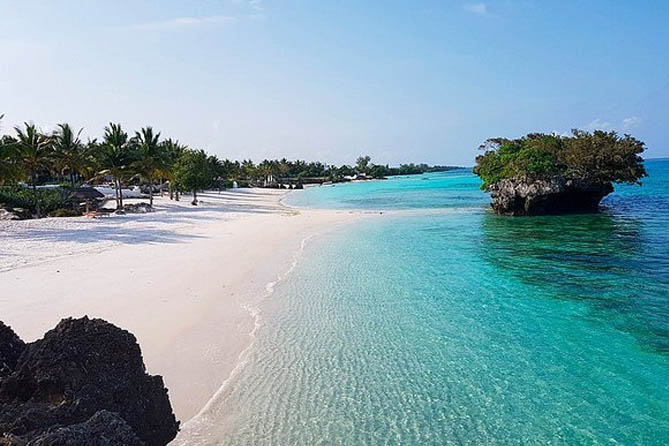
East Africa is the region most people picture when they say the word “safari.” It is home to the Great Migration, mountain gorillas, Mount Kilimanjaro, and some of the best-run safari infrastructure on the continent. But treating East Africa as only a safari destination misses most of what the region actually offers. This is also a coastline dotted with some of the most beautiful islands on Earth, a region with deep and distinct cultures that predate colonial borders by centuries, cities that are quietly becoming Africa’s tech hubs, and a growing base of remote workers who have decided this is where they want to live, not just visit.
This guide covers all of it. We will go through the six countries usually grouped into East Africa (Kenya, Tanzania, Uganda, Rwanda, Ethiopia, and Burundi), what each is known for, and then go beyond the safari angle entirely to cover the beaches, the culture, the cities, the remote work scene, and the conservation story that most guides skip over.
What Ties East Africa Together
Most of East Africa shares a few common threads. The region sits along the Great Rift Valley, which gives it dramatic highlands, volcanic peaks, and deep lakes within short distances of each other. Wildlife density is high across Kenya, Tanzania, and Uganda in particular, and tourism infrastructure in these three is generally solid. English is widely spoken across most of the region, since Kenya, Uganda, Rwanda, and Tanzania were all under British influence at some point (Tanzania was under German rule first, then British). Swahili is also common across Kenya, Tanzania, and parts of Uganda, which helps travelers pick up a few phrases quickly.
The other common thread is timing. Most of East Africa runs on two dry seasons, roughly June to October and January to March, and two rainy seasons in between. Wildlife viewing is generally easier in the dry months, since animals gather around fewer water sources and the grass is shorter, making them easier to spot. Beach weather, on the other hand, follows a different pattern along the coast, which we will get into below.
Kenya: The Original Safari Country
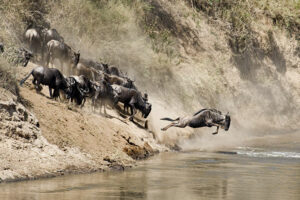
Kenya is where the word “safari” (Swahili for “journey”) became attached to wildlife tourism in the first place, and it remains the country most people think of first. The Maasai Mara is the headline attraction, especially between July and October, when the Great Wildebeest Migration crosses over from Tanzania’s Serengeti and the Mara River crossings draw crowds of photographers and first-time safari-goers alike. Outside the Mara, Amboseli National Park offers some of the best photo opportunities anywhere in Africa: large elephant herds walking across open plains with Mount Kilimanjaro rising in the background, even though the mountain itself is across the border in Tanzania.
Nairobi itself is often dismissed as just a stopover city, but it has a few things worth a half day, including the Giraffe Centre and the Sheldrick Wildlife Trust, where you can watch orphaned baby elephants being fed and cared for. Kenya tends to be the most budget-friendly of the safari-heavy countries, with a wide range of camps and lodges at different price points, and it is usually the easiest entry point into the region thanks to Nairobi’s international flight connections.
Tanzania: Kilimanjaro, the Serengeti, and the Crater
Tanzania shares the Serengeti-Mara ecosystem with Kenya, but it holds two things Kenya does not. The first is Mount Kilimanjaro, Africa’s tallest peak at 5,895 meters, and one of the more achievable high-altitude climbs in the world for a reasonably fit trekker with no technical climbing experience. Multiple routes exist, ranging from about five to nine days, and the longer routes generally give your body more time to adjust to the altitude, which improves your odds of reaching the summit.
The second is the Ngorongoro Crater, a collapsed volcanic caldera about 20 kilometers across, packed with wildlife that stays inside the crater walls year-round rather than migrating. It is one of the most reliable places in Africa to see the Big Five (lion, leopard, elephant, buffalo, and rhino) in a single day. Tanzania is also home to most of the Serengeti itself, and the Serengeti’s southern plains are where the Great Migration’s calving season happens, generally between January and March, when hundreds of thousands of wildebeest calves are born within a few weeks of each other.
Tanzania generally costs more than Kenya for a comparable safari, partly because park fees are higher and partly because many of its top parks (the Serengeti and Ngorongoro especially) limit vehicle density to protect the experience.
Uganda: Gorillas, Chimps, and the Source of the Nile
Uganda gets less marketing than Kenya or Tanzania, but it packs in a surprising range of experiences for its size. The headline draw is gorilla trekking in Bwindi Impenetrable National Park and Mgahinga Gorilla National Park, both in the country’s southwest. A Uganda gorilla permit costs around $800 per person, dropping to roughly $600 during the April, May, and November low season, which makes it noticeably cheaper than the same experience in Rwanda.
Uganda also offers chimpanzee tracking in Kibale Forest, considered one of the best places in Africa to see chimps in the wild, and it has a genuinely different kind of adventure tourism around Jinja, where the Nile River begins its journey from Lake Victoria. Whitewater rafting on the Nile here is some of the best in the world for the sport, alongside quieter options like kayaking and stand-up paddleboarding on calmer stretches. For wildlife beyond primates, Queen Elizabeth National Park and Murchison Falls National Park both offer classic savanna safari game drives, along with boat safaris that get close to hippos and crocodiles along the water.
Rwanda: Small, Polished, and Built Around Gorillas
Rwanda is the smallest country in this group, and it has deliberately built its tourism industry around a high-value, lower-volume model. Gorilla trekking in Volcanoes National Park is the main draw, and a permit here costs around $1,500 per person, nearly double Uganda’s price. What you get for that is generally gentler trekking terrain, since Rwanda’s side of the Virunga volcanoes tends to be less steep than Uganda’s or the DRC’s, plus some of the most polished lodge infrastructure in the region.
Rwanda also has Akagera National Park in the east, a smaller but genuinely rewarding savanna park that has reintroduced lions and rhinos in recent years after both were locally extinct for a period, and Nyungwe Forest National Park in the southwest, known for chimpanzee tracking and a canopy walkway suspended above the forest floor. Kigali itself, Rwanda’s capital, has become known as one of the cleanest and most orderly cities in Africa, and the Kigali Genocide Memorial is a heavy but important stop for understanding the country’s more recent history.
A useful detail for planning: Kenya, Uganda, and Rwanda participate in a shared East Africa Tourist Visa, which costs about $100, covers all three countries, allows multiple entries, and is valid for 90 days. This makes combining these three countries in one trip considerably simpler than applying for three separate visas. Tanzania is not part of this scheme and still requires its own separate visa.
Ethiopia: A Different Kind of East Africa Trip
Ethiopia stands apart from the rest of the region’s safari identity. It is a high-altitude, mountainous country with its own ancient history and its own branch of Christianity dating back to the 4th century. The best-known site is Lalibela, home to 11 medieval churches carved directly downward out of solid volcanic rock, still in active religious use today. The Simien Mountains in the north offer some of the best trekking in Africa, with dramatic escarpments and a good chance of seeing gelada monkeys, a species found only in Ethiopia’s highlands.
Ethiopia also has the Danakil Depression, one of the hottest and lowest places on Earth, with active volcanoes, sulfur springs, and salt flats that draw a smaller number of more adventurous travelers. This is a genuinely different trip from a Kenya-Tanzania safari circuit, built around history, culture, and hiking rather than wildlife.
Burundi: The Region’s Least-Visited Country
Burundi rarely appears on standard East Africa itineraries, and tourism infrastructure here is limited compared to its neighbors. Lake Tanganyika, one of the deepest freshwater lakes in the world, forms much of Burundi’s western border and offers swimming, boating, and fishing in a setting most travelers never see. Kibira National Park has some of the last remaining rainforest in the region and offers a chance at seeing primates in a far less developed setting than Uganda or Rwanda’s parks.
Beaches and Islands: The Side of East Africa Most Guides Skip
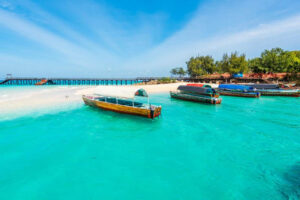
Ask most people what East Africa looks like and they’ll describe grassland and wildlife. Almost nobody mentions that the region also has one of the most underrated stretches of coastline in the world, running from southern Kenya down through Tanzania. This is the part of the trip a lot of first-timers add almost as an afterthought, and then wish they had given more time to.
Zanzibar is the headline name, and it deserves it. Technically part of Tanzania, the island (properly called Unguja, though everyone just says Zanzibar) has Stone Town at its center, a UNESCO World Heritage old town of narrow alleys, carved wooden doors, and a mixed Arab, Persian, Indian, and African history that goes back over a thousand years as a trading post. Outside Stone Town, the island splits into distinct beach zones. Nungwi and Kendwa in the north have calmer water and are better for swimming year-round, since they sit outside the tidal range that affects much of the island. The east coast around Paje and Jambiani has become a genuine kitesurfing hub, with steady wind for much of the year drawing a growing international kitesurfing crowd. The Spice Tour, a walk through working plantations growing cloves, nutmeg, cinnamon, and vanilla, is a genuinely worthwhile half day and explains why this stretch of coast was fought over for centuries.
Fewer travelers make it to Pemba Island, Zanzibar’s quieter neighbor to the north, which has some of the best diving in the Indian Ocean thanks to steep coral walls just offshore and far less boat traffic than Unguja. Mafia Island, south of Zanzibar, is even less visited and has become known specifically for whale shark encounters, with a reliable season roughly between October and March when the gentle giants gather to feed close to shore.
On the Kenyan side, the Lamu Archipelago is one of the oldest continuously inhabited Swahili settlements on the East African coast, and Lamu Old Town is also a UNESCO World Heritage Site. Cars are essentially absent here. Donkeys and dhows (traditional wooden sailboats) still do most of the moving around, which gives the island a pace that feels genuinely different from anywhere else in the region. Further south, Diani Beach is Kenya’s most developed beach resort area, with a long stretch of white sand backed by coral cliffs, and it works well as a straightforward add-on to a Nairobi or Mara-based safari since it is a short flight from either. Watamu, between Mombasa and Lamu, has a marine national park protecting one of the healthiest coral reef systems on this stretch of coast, and it is a strong choice for snorkeling without needing full scuba certification.
The honest advice from people who have actually done a safari-plus-beach trip: budget at least four or five days for the coast if you’re including it, not the two-day tack-on many itineraries default to. The flight connections make it tempting to treat the beach portion as a quick decompression stop, but Zanzibar and Lamu in particular reward slower travel.
Culture and Everyday Life
East Africa’s culture does not fit into a single story, and that is part of what makes it worth exploring beyond the parks. The Maasai, whose distinctive red shuka cloth and beadwork are probably the most recognizable single image associated with East African culture worldwide, live across parts of southern Kenya and northern Tanzania, and many conservancies now run community visits and cultural experiences that are actually owned and operated by Maasai communities themselves rather than outside tour operators, which is worth specifically asking about when booking.
Along the coast, Swahili culture is its own distinct thing, blending African, Arab, Persian, and Indian influences built up over a thousand years of Indian Ocean trade. This shows up in the food (think coconut-based curries, biryani, and grilled seafood with tamarind and chili), the architecture (carved wooden doors, coral stone buildings), and the language itself, since Swahili grew out of this exact mixing of cultures.
Food across the region varies more than people expect. Ugali (a stiff maize porridge) and nyama choma (grilled meat, usually goat or beef) are staples across Kenya, Tanzania, and Uganda, typically eaten with your hands and shared. Ethiopia runs on an entirely different food culture built around injera, a spongy sourdough flatbread used to scoop up spiced stews called wat, eaten communally off one shared plate. Ethiopia’s coffee ceremony, where green beans are roasted, ground, and brewed in front of guests over the course of roughly an hour, is worth experiencing specifically because Ethiopia is widely credited as the birthplace of coffee itself, with the plant originating in the country’s highland forests.
Markets are one of the most underrated things to build into a trip. Nairobi’s Maasai Market moves locations depending on the day of the week and sells beadwork, carvings, and textiles directly from makers. Kigali’s Kimironko Market and Kampala’s Owino Market offer a genuinely unfiltered look at daily commerce that most safari-only itineraries skip entirely.
Cities and Urban Life
The safari-and-beach framing of East Africa leaves out that the region’s cities have their own momentum right now, separate from tourism. Nairobi has earned the nickname “Silicon Savannah” for its genuinely large tech startup scene, backed by strong mobile money infrastructure (M-Pesa, Kenya’s mobile payment system, is one of the most successful mobile money platforms in the world and changed how most Kenyans handle money day to day). The city has a real restaurant and nightlife scene in neighborhoods like Westlands and Kilimani, well beyond what most transit-only visitors ever see.
Kigali has positioned itself deliberately as one of Africa’s most livable and business-friendly capitals, with strict cleanliness rules (plastic bags are banned, and the city holds a mandatory community clean-up morning on the last Saturday of each month called Umuganda) and a growing focus on tech and conferences, including hosting major continental events. Addis Ababa, Ethiopia’s capital, sits at over 2,300 meters of altitude, making it one of the highest capital cities in the world, and it functions as the diplomatic capital of Africa, home to the headquarters of the African Union. Dar es Salaam, Tanzania’s largest city and former capital, is a busy Indian Ocean port city that most travelers only pass through en route to Zanzibar, but it has its own fish markets, colonial-era architecture, and a fast-growing skyline worth a day if your flight connections allow it. Kampala, Uganda’s capital, is known for a genuinely lively nightlife scene and sits right on Lake Victoria, the largest lake in Africa and the primary source of the Nile.
Digital Nomads and Remote Work
East Africa has quietly become part of the global remote work conversation, and this is one of the least covered angles of the region for outside travelers. Kenya introduced a formal Digital Nomad Visa (officially the Class N permit) in 2024, aimed at remote workers employed by companies outside Kenya or freelancers with clients abroad. The exact income thresholds and fees attached to the visa have been adjusted more than once since launch, so anyone seriously considering it should check Kenya’s official immigration portal directly for current numbers rather than relying on older blog posts, but the direction is clear: Kenya wants to formally welcome remote workers rather than leave them cycling through tourist visas.
Nairobi is the natural hub for this, with a dense concentration of co-working spaces, faster internet than most of the region, and an existing international community built around its tech and NGO sectors. Kenya’s coast, particularly Diani, has also picked up a smaller but visible remote worker community drawn by the combination of beach lifestyle and reasonable cost of living compared to Western Europe or North America.
Rwanda has taken a different but related approach, pushing hard on its tech and innovation sector through initiatives branded around Kigali as an innovation hub, and the country’s overall ease of doing business and low crime rate make it attractive to remote workers even without a dedicated nomad visa in the same style as Kenya’s. For travelers weighing whether to visit versus actually base themselves in the region for a few months, the honest answer is that Nairobi and Kigali are currently the two cities in East Africa best set up for it, with reliable internet, functioning co-working spaces, and enough of an existing expat and remote work community that you are not starting from zero.
Conservation Tourism: Where Your Trip Actually Funds Wildlife Protection
This is a part of East African travel that deserves more attention than it usually gets. Much of the region’s wildlife tourism is directly tied to conservation funding, and understanding how that works changes how you might choose where to stay and what to book.
Gorilla trekking is the clearest example. The high permit prices in Rwanda and Uganda are not just profit margins. A significant portion goes directly into anti-poaching patrols, veterinary care for the gorillas, and revenue-sharing programs that give surrounding communities a direct financial stake in keeping the gorillas alive and the forest intact, which is part of why both countries’ gorilla populations have been growing rather than shrinking in recent decades, a genuinely rare conservation success story.
In Kenya, community conservancies have become one of the more interesting developments in East African tourism over the last two decades. Places like Il Ngwesi and the conservancies coordinated under the Northern Rangelands Trust are owned and managed by local communities rather than the government or private companies, with tourism revenue flowing back into the community directly rather than through a separate middleman. Ol Pejeta Conservancy in central Kenya is also home to the last two northern white rhinos on Earth, both female, kept under permanent armed guard, making a visit there as much about witnessing a species’ near-extinction as it is a standard game drive.
For travelers who want their trip to genuinely support conservation rather than just observe it, asking direct questions when booking is worth the effort: whether a lodge is community-owned or community-partnered, what percentage of park fees or permit costs go toward conservation versus administration, and whether guides are hired from local communities. These details are not always advertised prominently, but most reputable operators will answer directly if asked.
Putting Together a Real Itinerary
A common mistake people make when planning East Africa is trying to fit too many countries into too little time. Moving between parks by road takes longer than most people expect, and border crossings add hours you would not plan for on paper. A realistic guideline is one country per week, or two countries if you are traveling for two weeks or more and picking countries that sit close together, like Kenya and Tanzania, or Rwanda and Uganda.
For a first East Africa trip, a common and reliable combination is Kenya and Tanzania together, covering the Maasai Mara, the Serengeti, and Ngorongoro Crater, with a Zanzibar extension at the end for beach time, ideally four or five days rather than two. For travelers who want gorillas as the centerpiece, Rwanda and Uganda pair well together, and the East Africa Tourist Visa makes moving between them straightforward. Ethiopia and Burundi are usually better suited to a second or third trip to the region, once you already know what East Africa travel involves. And for anyone interested in extending a trip into a longer stay, Nairobi and Kigali are worth a look specifically for their remote work infrastructure, not just as safari gateway cities.
One thing that comes up often from people who have actually done these trips: book gorilla permits and Great Migration season lodges well ahead. Gorilla permits are capped daily by both Rwanda and Uganda, and the best migration-season camps in the Mara and Serengeti sell out months in advance for July through October travel. Waiting until a month or two before departure usually means settling for whatever is left rather than what you actually wanted.
If you are looking at any combination of Kenya, Tanzania, Uganda, Rwanda, Burundi, or Zanzibar, it is worth working with an operator that runs itineraries across the whole region instead of booking each country separately. Roy Safaris, based in Tanzania, builds trips across this entire cluster as one connected itinerary, so a Serengeti safari, a Rwanda gorilla trek, and a Zanzibar beach stop can all be planned as a single trip instead of several disconnected bookings with different operators.
Final Thoughts
East Africa rewards travelers who pick a focus rather than trying to see everything at once, and it rewards even more the ones who realize the safari is only one layer of what the region offers. Wildlife and the Great Migration point you toward Kenya and Tanzania. Gorillas and primates point you toward Uganda and Rwanda. History, altitude, and culture point you toward Ethiopia. Beaches and island time point you toward Zanzibar, Pemba, and Lamu. City life and a genuine remote work scene point you toward Nairobi and Kigali. And if you have already done the rest of the region and want something almost nobody else has seen, Burundi is there waiting. Pick your focus first, then build the itinerary around it, and the rest of the planning gets a lot simpler.