The 10 Largest National Parks in Tanzania, Ranked by Size
September 22, 2026
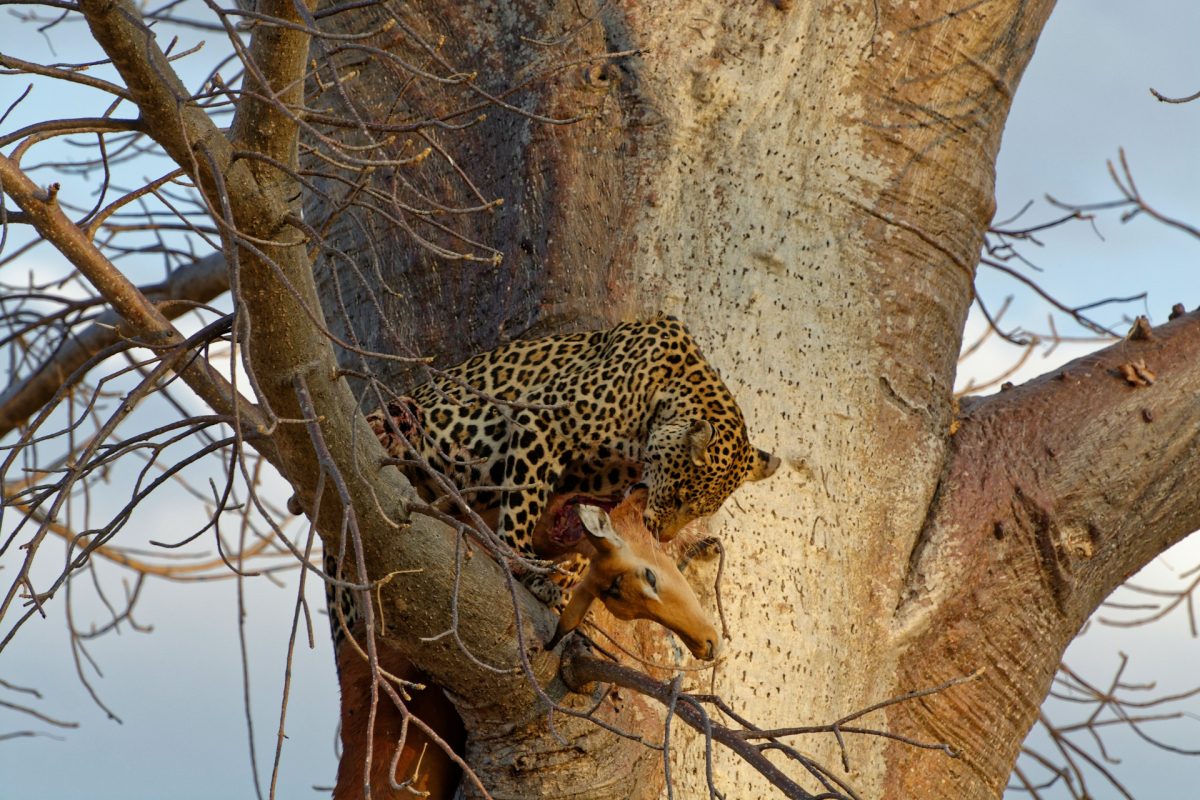
Tanzania is famous for the Serengeti, but the Serengeti is not the country’s largest national park. It is not even the second largest. Tanzania’s largest national parks stretch from the Rufiji River and the baobab country of Ruaha to remote western floodplains.
Size matters, although not always in the way travellers expect. A vast park can protect entire river systems and migration corridors, but it can also require flights, longer drives and more careful decisions about where to stay. A smaller park may deliver more wildlife sightings in one afternoon because animals are concentrated around a limited number of water sources.
The ranking below uses the published surface area of each national park. It does not include game reserves or the Ngorongoro Conservation Area, which is managed separately and is not legally classified as a national park.
| Rank | National park | Approximate area | Region |
|---|---|---|---|
| 1 | Nyerere National Park | 30,893 km² | Southern Tanzania |
| 2 | Ruaha National Park | 20,226 km² | Southern Tanzania |
| 3 | Serengeti National Park | 14,763 km² | Northern Tanzania |
| 4 | Burigi-Chato National Park | 4,707 km² | North-western Tanzania |
| 5 | Katavi National Park | 4,471 km² | Western Tanzania |
| 6 | Ugalla River National Park | 3,865 km² | Western Tanzania |
| 7 | Mkomazi National Park | 3,245 km² | Northern Tanzania |
| 8 | Mikumi National Park | 3,230 km² | Southern Tanzania |
| 9 | Tarangire National Park | 2,850 km² | Northern Tanzania |
| 10 | Udzungwa Mountains National Park | 1,990 km² | Southern Tanzania |
1. Nyerere National Park: 30,893 km²
Nyerere is the largest national park in Tanzania and one of Africa’s great protected wildernesses. It was established in 2019 from the northern portion of the Selous Game Reserve, which explains why older books and websites may still describe Ruaha as Tanzania’s largest park or use Selous when discussing the same general landscape.
Its scale becomes easier to understand when compared with an entire country. Nyerere National Park covers approximately 30,893 square kilometres, making it slightly larger than Belgium. Within this country-sized wilderness are rivers, lakes, floodplains, grasslands and enormous stretches of miombo woodland.
The Rufiji River gives Nyerere its character. Its channels, lakes, sandbanks and palm-fringed banks support hippos, crocodiles, elephants and an extraordinary variety of birds. Nyerere is also an important stronghold for African wild dogs, although no sighting is ever guaranteed across a landscape this large.
A Nyerere National Park safari can combine conventional game drives with boat safaris. Its immense size does not mean visitors explore all 30,893 square kilometres. Most tourism operates within accessible areas north of the Rufiji, making camp location more important than the total area.
2. Ruaha National Park: 20,226 km²
Ruaha is Tanzania’s second-largest national park, but it can feel even more expansive because visitor traffic is relatively light. The park sits where eastern and southern African ecosystems overlap, creating an unusual mixture of species and landscapes. Greater kudu, sable and roan antelope share the wider ecosystem with elephants, buffalo, giraffes and familiar plains game.
The Great Ruaha River is the park’s central artery. During the dry season, animals gather around the river and its remaining pools, while predators work the surrounding woodland and plains. Baobabs, rocky hills and extensive miombo woodland make the scenery noticeably different from the open grasslands most people associate with Tanzania.
Because Ruaha is so large, a rushed two-night stop barely introduces it. A well-planned Ruaha safari normally concentrates on one section rather than attempting to cover distance for its own sake.
3. Serengeti National Park: 14,763 km²
The Serengeti ranks third by area, yet it remains Tanzania’s most internationally recognised national park. Its influence extends beyond the legal park boundary into the wider Serengeti-Mara ecosystem, through which wildebeest, zebra and gazelles move in response to rainfall and fresh grazing.
Fourteen thousand square kilometres is too large to treat as one destination. The short-grass plains in the south, central Seronera Valley, western corridor and northern river country offer different scenery and become important at different points in the migration cycle. A camp advertised simply as “in the Serengeti” may therefore be several hours from the wildlife event a traveller hopes to see.
The park’s size is one reason a Serengeti safari improves when the itinerary is built around a specific season and region. It is not a place to collect in a single afternoon between Ngorongoro and the next lodge.
4. Burigi-Chato National Park: 4,707 km²
Burigi-Chato is one of Tanzania’s newer national parks and the largest in the north-western part of the country. Its landscape includes Lake Burigi, smaller lakes, savannah, woodland and wetlands close to the borders with Rwanda and Uganda.
This is not yet a mainstream safari destination like Serengeti or Tarangire. Burigi-Chato represents the expansion of protected landscapes beyond the established northern circuit and offers a possible link between Lake Victoria, north-western Tanzania and wider East African journeys.
Anyone considering a visit should confirm current accommodation, road and activity arrangements before building it into an itinerary. Here, remoteness is not a marketing expression. It directly affects how the trip must be organised.
5. Katavi National Park: 4,471 km²
Katavi is slightly smaller than Burigi-Chato but considerably better known among travellers seeking a remote safari. Its defining features are the Katuma River and the seasonal floodplains around Lakes Katavi and Chada. During the dry months, water retreats and wildlife concentrates around the remaining pools.
That concentration can produce dramatic scenes involving buffalo, elephants, hippos and crocodiles. The park also supports lions, leopards and a variety of antelope, but Katavi’s real appeal is the feeling of scale without the vehicle density found in busier parks.
Reaching Katavi National Park requires more effort and expense than adding another stop to the northern circuit. It is often paired with Mahale Mountains National Park, creating a western Tanzania itinerary that combines a classic wildlife safari with chimpanzee trekking and Lake Tanganyika.
6. Ugalla River National Park: 3,865 km²
Ugalla River National Park entered Tanzania’s national-park network in 2019. The landscape is dominated by miombo woodland, open grassland, wetlands and the slow-moving Ugalla River, which becomes particularly important to wildlife as the dry season advances.
Ugalla remains unfamiliar to most international travellers. Tourism information is limited, and a visit requires specialist planning rather than assuming that lodges, roads and scheduled flights will work like those in Serengeti.
Its inclusion demonstrates how much protected land lies beyond the standard safari map. Ugalla may fascinate experienced, expedition-minded travellers, but it is not a casual substitute for Katavi or Ruaha.
7. Mkomazi National Park: 3,245 km²
Mkomazi lies below the Pare and Usambara mountains and connects ecologically with Kenya’s Tsavo landscape. The environment is drier than the Serengeti and supports open savannah, acacia woodland and dramatic mountain backdrops.
The park is closely associated with conservation work involving black rhinos and African wild dogs. Wildlife viewing, however, should not be marketed as a compressed version of Serengeti. Animals may be more dispersed, and the pleasure of Mkomazi often comes from its scenery, birdlife, conservation story and relative quiet.
A visit to Mkomazi National Park can work well alongside the Usambara Mountains, the Same area or a northern Tanzania itinerary that has already covered the more familiar parks. Its position in this ranking may surprise travellers because it attracts far less attention than several smaller destinations.
8. Mikumi National Park: 3,230 km²
Mikumi is only slightly smaller than Mkomazi, yet the visitor experience is very different. Its Mkata floodplain creates broad, open viewing country where giraffes, zebra, wildebeest, buffalo and elephants can often be seen without travelling deep into the park.
Accessibility is one of Mikumi’s main advantages. It can be reached overland from Dar es Salaam and combines naturally with Udzungwa Mountains National Park. This makes it useful for travellers who do not have the time or budget for a fly-in safari farther south.
Its accessibility should not be mistaken for insignificance. A Mikumi National Park safari introduces the southern circuit in a manageable format, while the park’s size leaves room for quieter sections beyond the most frequently used routes near the floodplain.
9. Tarangire National Park: 2,850 km²
Tarangire proves that a park does not need to top the size ranking to produce enormous wildlife encounters. During the dry season, the Tarangire River becomes a lifeline for animals moving through the wider ecosystem. Elephants are the park’s signature, often appearing among baobabs, riverine woodland and the open areas around Silale Swamp.
The park is commonly given a single night on fast northern-circuit itineraries. That can be enough for an introduction, but it overlooks how different northern and southern Tarangire can feel. Staying longer makes it possible to move beyond the busiest entrance-area routes and appreciate the park as a landscape rather than an opening act before Serengeti.
A Tarangire safari is especially valuable from roughly June through October, although green-season birding and scenery provide a different reason to visit.
10. Udzungwa Mountains National Park: approximately 1,990 km²
Udzungwa completes the top ten, but it breaks the pattern established by the other parks. This is primarily a hiking and forest destination rather than a conventional game-drive park. Part of the Eastern Arc Mountains, it protects rainforest, woodland, mountain habitats, waterfalls and species found in few other places.
Sanje Waterfall is its most famous walk, but Udzungwa’s importance goes far beyond one viewpoint. The forests shelter endemic plants and primates, including the Udzungwa red colobus and Sanje crested mangabey. Visitors explore on foot with guides, which creates a slower and more physical experience than watching wildlife from a vehicle.
Udzungwa pairs naturally with nearby Mikumi. Together, the parks show why size alone is an incomplete way to understand Tanzania: one offers accessible savannah wildlife, while the other protects vertical forest landscapes that cannot be experienced through a pop-up roof.
Does a larger national park mean a better safari?
No. Park size tells you how much land is protected, not how many animals you will see in a day. Wildlife density, rainfall, water, vegetation, guide knowledge and the location of your camp all affect the experience.
Nyerere and Ruaha reward travellers who allow enough time and choose the right area. Serengeti requires seasonal positioning. Tarangire can produce exceptional dry-season viewing within a much smaller space. Udzungwa should be chosen for forests and walking rather than the number of large mammals visible from a road.
The ranking is most useful as a map of Tanzania’s variety. These parks protect rivers, migration routes, floodplains, mountains and woodland. Choosing one depends less on finding the largest name and more on whether you want river safaris, migration country, remote wilderness, concentrated dry-season wildlife or a day beneath an Eastern Arc forest canopy.
A well-designed Tanzania safari does not attempt to collect all ten. It chooses a small number whose seasons, landscapes and travel connections belong together, then gives each of them enough time to feel as large as it really is.