15 Best National Parks and Wildlife Reserves in Africa
September 23, 2026
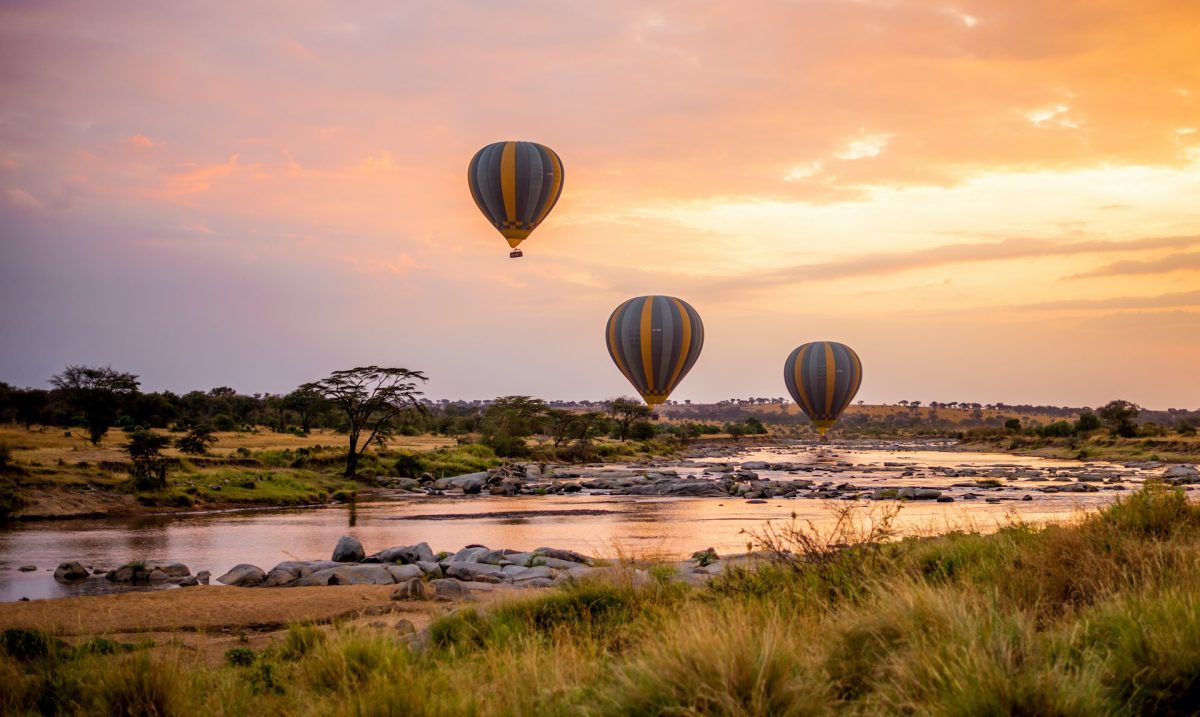
Africa’s best national parks are not interchangeable versions of the same safari. One may place you beneath a riverbank as wildebeest hesitate above crocodile-filled water. Another may bring elephants across a dusty road with a city skyline behind them. Elsewhere, the day begins in a dugout canoe, on foot beside the Zambezi or climbing through mountain forest in search of gorillas.
This is an editorial selection rather than a ranking based purely on visitor numbers. Wildlife, landscape, accessibility, guiding, conservation importance and the quality of the overall safari experience all matter. The list also includes the Maasai Mara National Reserve and the Okavango Delta. Neither is legally a national park, but leaving them out of a guide to Africa’s finest safari areas would make the guide less useful.
The result is a shortlist for different kinds of travellers: first-time visitors, photographers, families, migration followers, repeat safari-goers and anyone prepared to swap a vehicle for a canoe or forest trail.
For unforgettable safari and wildlife experiences
| Rank | Safari destination | Country | Best known for |
|---|---|---|---|
| 1 | Serengeti National Park | Tanzania | Great Migration and big cats |
| 2 | Maasai Mara National Reserve | Kenya | Mara River crossings |
| 3 | Nairobi National Park | Kenya | Wildlife beside a capital city |
| 4 | Kruger National Park | South Africa | Big Five and self-drive safaris |
| 5 | Tarangire National Park | Tanzania | Elephants and baobabs |
| 6 | Amboseli National Park | Kenya | Elephants below Kilimanjaro |
| 7 | Okavango Delta | Botswana | Water-based wilderness |
| 8 | Chobe National Park | Botswana | Large elephant gatherings |
| 9 | South Luangwa National Park | Zambia | Walking safaris and leopards |
| 10 | Etosha National Park | Namibia | Waterhole wildlife viewing |
| 11 | Bwindi Impenetrable National Park | Uganda | Mountain gorilla trekking |
| 12 | Volcanoes National Park | Rwanda | Gorillas and volcanic scenery |
| 13 | Hwange National Park | Zimbabwe | Elephants and expansive wilderness |
| 14 | Mana Pools National Park | Zimbabwe | Canoeing and walking |
| 15 | Lower Zambezi National Park | Zambia | River safaris beneath the escarpment |
1. Serengeti National Park, Tanzania
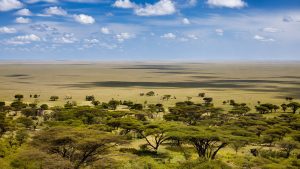
If one landscape has come to represent safari, it is the Serengeti. The park’s reputation rests partly on the Great Migration, but reducing it to wildebeest would miss much of what makes it exceptional. Lions rest on granite kopjes, cheetahs scan the short-grass plains and leopards occupy the riverine woodland around Seronera.
The experience changes across the year and across the park. Calving unfolds in the southern ecosystem, the herds move through the western corridor and dramatic river crossings may occur in the north. This is why a Serengeti safari should be planned around season and location, not simply around the park’s name.
It takes first place because it delivers scale, predator density, varied scenery and the possibility of returning in a different month to encounter an entirely different Serengeti.
2. Maasai Mara National Reserve, Kenya
The Maasai Mara is not a national park. It is a national reserve adjoining Tanzania’s Serengeti, with the Mara Triangle managed separately within the wider reserve. Its legal title does little to diminish its place in safari history.
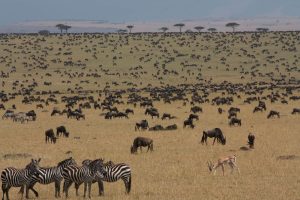
From roughly July into October, migrating herds may enter the Mara and attempt crossings of the Mara River. Timing remains unpredictable, and no guide can schedule a crossing like a theatre performance. Outside migration season, the Mara still offers productive big-cat viewing, open grasslands and resident wildlife.
Its popularity brings busy sightings in peak months. Conservancies around the reserve can provide a quieter complement, but the central attraction remains the same: an intensely wildlife-rich extension of the Serengeti ecosystem.
3. Nairobi National Park, Kenya
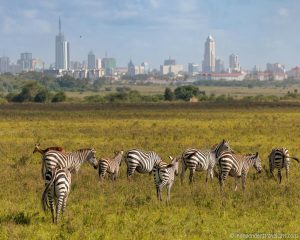
No other major African capital has this kind of wildlife landscape at its edge. In Nairobi National Park, giraffes, lions and rhinos move across open country while aircraft descend and city buildings rise on the horizon.
Its accessibility makes it ideal for a first or final safari day, but calling it convenient should not be confused with calling it minor. The park is an important black-rhino sanctuary and supports lions, buffalo, giraffes, zebra and abundant birdlife. Elephants are notably absent, which is one reason expectations should be set before visiting.
Nairobi earns third place because the contrast is unforgettable. A morning game drive can be followed by lunch in the city, yet the photographs may look as though civilisation is days away.
4. Kruger National Park, South Africa
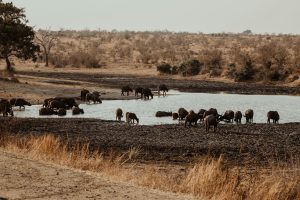
Kruger is one of Africa’s most accessible large wildlife parks. Its paved and gravel road network, rest camps and self-drive system allow visitors to build a safari with more independence than is possible in many East African parks.
The park protects close to two million hectares and supports the Big Five alongside wild dogs, cheetahs, hyenas and an extensive bird list. The south generally has more roads, accommodation and visitor traffic, while northern sections feel quieter and reward birders and repeat visitors.
Kruger’s strength is choice. It can be explored independently, with a guide or alongside private reserves bordering the park. That flexibility has made it a gateway safari for generations.
5. Tarangire National Park, Tanzania
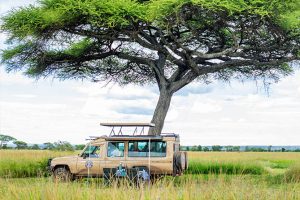
Tarangire is often treated as the warm-up before Serengeti, which is an injustice to one of northern Tanzania’s most characterful parks. Its baobabs give the landscape an ancient silhouette, while the Tarangire River draws wildlife as surrounding areas become dry.
Elephants are the signature. Families may gather along the river, cross directly in front of vehicles or disappear into woodland that looked empty moments earlier. Lions, leopards, giraffes, zebra and numerous antelope add variety, while Silale Swamp creates a different habitat farther south.
A Tarangire safari deserves more than a hurried afternoon, particularly from June through October. Staying longer allows the park to become a destination rather than an introduction.
6. Amboseli National Park, Kenya
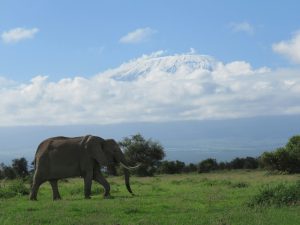
Amboseli has produced one of safari’s most recognisable images: elephants walking beneath the snow-capped summit of Kilimanjaro. The mountain is actually across the border in Tanzania, and it is not always visible, especially once cloud gathers later in the day.
The ecosystem is shaped by water moving underground from Kilimanjaro and emerging in swamps that remain productive through dry conditions. Elephants, buffalo and waterbirds gather around them, while drier plains support zebra, wildebeest and predators.
Amboseli is relatively compact, so sightings can feel concentrated. Its long-running elephant research and individually recognised animals also give encounters a depth beyond simply counting how many elephants appear.
7. Okavango Delta, Botswana
The Okavango is neither a single national park nor a typical river delta. Water arriving from Angola spreads across the Kalahari sands instead of reaching the sea, creating a seasonal network of channels, islands and floodplains.
Here the vehicle is only one way to travel. Mokoro excursions, motorboat trips and walking can place visitors at water level among reeds, frogs, dragonflies and red lechwe. On larger islands and drier concessions, lions, elephants, wild dogs and other big game provide a more conventional safari dimension.
The Delta’s camps are often expensive and logistics frequently involve light aircraft, but its marriage of water and wildlife is found nowhere else on this scale.
8. Chobe National Park, Botswana
Chobe’s riverfront can produce elephant scenes that seem almost excessive. Herds emerge from woodland to drink, swim and cross channels, sometimes while several more groups remain visible along the bank.
Boat safaris are central to the experience. From the water, hippos, crocodiles, buffalo and elephants can be watched without the restrictions of a road. The riverfront is also easy to combine with Victoria Falls, contributing to its popularity.
Chobe extends beyond the busy waterfront. Savuti offers a drier, predator-rich landscape, while quieter areas reward travellers prepared to spend more time moving through the park.
9. South Luangwa National Park, Zambia
South Luangwa helped establish Zambia’s reputation for walking safaris. Leaving the vehicle changes the scale of attention: tracks, wind direction, alarm calls and small details become as important as the next large animal.
The Luangwa River and its oxbow lagoons support hippos, crocodiles, elephants and prolific birdlife. Leopards are a particular attraction, and night drives can reveal nocturnal behaviour missed during daylight.
This is a strong choice for travellers who already understand the rhythm of a game drive and want a more sensory safari. Walking is carefully guided, but it remains a wild experience rather than a bush-themed nature stroll.
10. Etosha National Park, Namibia
Etosha turns the usual safari search inside out. Rather than covering endless ground looking for wildlife, visitors can wait near waterholes and allow wildlife to arrive.
During the dry season, elephants, zebra, giraffes, springbok, lions and black rhinos may use the same water sources at different times. Floodlit waterholes at some camps extend viewing after dark, when patience can be rewarded by animals that remained hidden all day.
The enormous pale surface of Etosha Pan gives the park a visual identity unlike greener safari destinations. It is also well suited to self-drive travel, although distances and waterhole conditions still require planning.
11. Bwindi Impenetrable National Park, Uganda
Bwindi is not about scanning an open plain. It is a close, humid and physical encounter with an ancient forest. Guided treks lead through steep vegetation to habituated mountain-gorilla families, with the duration determined by where the gorillas are that day.
The permitted hour with a gorilla family can feel remarkably intimate. Individuals feed, groom, rest and move through vegetation while visitors follow strict guidance designed to reduce disturbance and disease risk.
Bwindi belongs on this list because a great African wildlife journey need not involve a game-drive vehicle. The forest itself, with birds, butterflies and primates, is part of the experience rather than scenery passed on the way to it.
12. Volcanoes National Park, Rwanda
Volcanoes National Park offers another route into mountain-gorilla country, this time among the forested slopes of the Virunga volcanoes. Rwanda’s efficient tourism infrastructure and road access from Kigali make it possible to incorporate gorilla trekking into a relatively compact itinerary.
Golden-monkey tracking and volcanic landscapes broaden the experience, while the history of gorilla research gives the park deep conservation significance.
Permits command a premium, so Volcanoes will not suit every budget. What it offers is a polished, high-impact primate experience that can work even when travellers have limited time.
13. Hwange National Park, Zimbabwe
Hwange is Zimbabwe’s largest national park and one of southern Africa’s great elephant landscapes. Its mix of woodland, grassland and seasonal pans supports predators and large herbivores across an area that feels genuinely expansive.
Water shapes dry-season viewing. Animals gather near pumped and natural waterholes, creating prolonged sightings rather than quick encounters beside a road. Some camps overlook these gathering points, turning the hours between game drives into part of the safari.
Hwange also combines naturally with Victoria Falls, making it possible to move from one of Africa’s best-known natural landmarks into serious wildlife country without adding a complicated flight network.
14. Mana Pools National Park, Zimbabwe
Mana Pools is for travellers who want less separation between themselves and the landscape. Walking and canoeing are central experiences, with the Zambezi River, floodplain and escarpment producing a setting of exceptional beauty.
Elephants are famous for stretching onto their hind legs to reach higher branches, although seeing this behaviour is never guaranteed. Wild dogs, lions, hippos and abundant birdlife add to the park’s appeal.
Its seasonal access and wild character require more preparation than a mainstream safari circuit. That is precisely why Mana Pools inspires such loyalty among experienced safari travellers and photographers.
15. Lower Zambezi National Park, Zambia
Across the Zambezi from Mana Pools, Lower Zambezi National Park offers its own combination of river, escarpment and wildlife. Elephants move between woodland and river islands, hippos occupy channels and predators patrol the inland areas.
Canoeing can be peaceful and intensely alert at the same time. Boat trips, fishing, walking and game drives allow each day to be approached from a different angle rather than repeating the same road circuit.
The park’s best safari area occupies a relatively narrow strip between river and escarpment, concentrating activity in a way that can make wildlife viewing feel richer than the map suggests.
Other African national parks worth watching
No list of 15 can cover a continent. Several parks deserve attention precisely because their stories are still developing or because they remain outside the most familiar circuits.
Nyerere National Park, Tanzania
Nyerere National Park is Tanzania’s largest national park and is slightly larger than Belgium. The Rufiji River creates opportunities for boat safaris alongside game drives, while the wider landscape supports elephants, hippos, crocodiles and African wild dogs.
Gorongosa National Park, Mozambique
Gorongosa is one of Africa’s most closely watched restoration stories. Wildlife populations are recovering after being devastated during Mozambique’s civil conflict, and the park now represents the possibility of rebuilding an ecosystem rather than merely preserving what survived.
Akagera National Park, Rwanda
Akagera has developed into a Big Five destination through sustained conservation and wildlife reintroductions. Its lakes, wetlands and savannah provide a counterpoint to Rwanda’s mountain forests, making it possible to combine a classic safari with gorilla trekking.
Kafue National Park, Zambia
Kafue is one of Africa’s largest national parks. Its Busanga Plains, rivers and extensive woodland offer considerable variety, but distances mean that choosing the right sector is essential. It particularly suits travellers with enough time to avoid reducing a huge park to a hurried stop.
Zakouma National Park, Chad
Zakouma has become an important conservation success in Central Africa, known for large dry-season wildlife gatherings and the recovery of its elephant population. Its remoteness keeps it beyond the standard safari circuit, but that also gives it unusual expedition appeal.
Which African national park should you choose?
Choose Serengeti or the Maasai Mara if the Great Migration is the central dream, while remembering that nature does not guarantee a river crossing. Choose Tarangire, Amboseli, Chobe or Hwange if elephants matter most. Kruger and Etosha work particularly well for independent travellers, while South Luangwa and Mana Pools reward those drawn to walking.
Bwindi and Volcanoes replace open plains with forest and gorilla encounters. The Okavango and Lower Zambezi are strongest when water should become part of the safari rather than simply a place where animals drink.
The best choice is ultimately not the park with the longest species list. It is the landscape that matches the way you want to travel. If Serengeti and Tarangire sit at the top of that list, a carefully paced Safari Tanzania itinerary can connect them with Ngorongoro and other northern destinations without turning the journey into a race between park gates.