What Does Luxury Actually Mean on an African Safari?
October 17, 2026
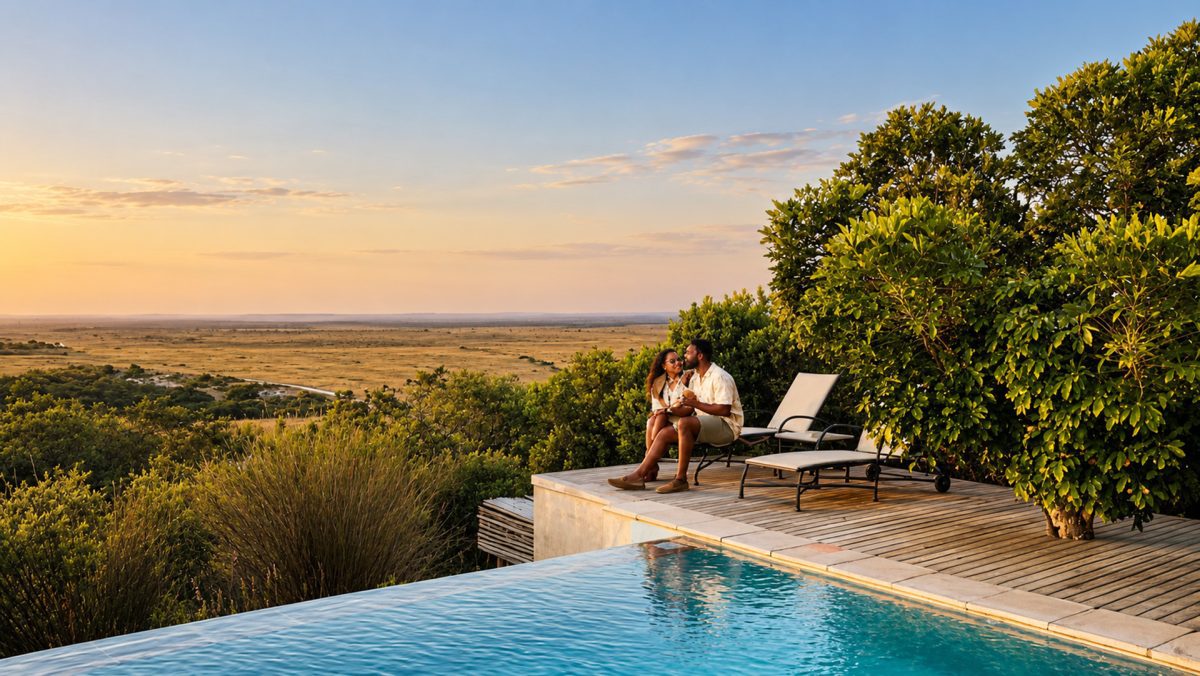
On an African safari, luxury is mostly about what happens outside your tent. A beautiful room helps, but the things that make a safari feel truly special are where the camp sits, who guides you, how many other people share your sightings, and how freely you can explore. A plunge pool cannot make up for a crowded sighting or an average guide.
That is the short answer to what luxury safari accommodation really means. The rest of this guide shows how to tell the difference between a camp that looks luxurious in photos and one that delivers a luxurious safari.
What is luxury safari accommodation, really?
In a city hotel, luxury is easy to measure. Thread count, marble bathrooms, a spa, a good wine list. Safari camps have all of these too, and many of the best ones are genuinely beautiful.
But a safari is not a hotel stay with some wildlife on the side. Most of your waking hours are spent in a vehicle, out in the bush. The room is where you sleep, shower and rest at midday. The wildlife is why you came.
So the luxury safari meaning that matters is wider. It covers five things:
- Location: how close the camp is to the wildlife you came for
- Guiding: how well your guide finds, reads and explains what you see
- Privacy: how many other guests and vehicles you share the experience with
- Access: what you are allowed to do, and where
- Service: how well the camp adapts to you, rather than you to it
Facilities sit underneath all of these. They are the comfortable base, not the main event.
Location: the luxury of time
The single most valuable thing a camp can give you is a short drive to the action. A camp in the right place means you are among the animals within minutes of leaving at dawn, not an hour later.
In the Serengeti, this matters more than almost anywhere. The park is huge, and the herds move with the rain. A permanent lodge can be well placed in one season and a long drive from the migration in another. That is why mobile camps exist. They move several times a year to stay close to the herds.
When you compare Serengeti safari accommodation, ask a simple question: how long will it take to reach good wildlife from this camp, in the month I am travelling? A simpler camp in the right place often beats a grand lodge in the wrong one.
Guiding: the luxury you notice most
Ask people what made their safari, and they rarely mention the bathroom. They mention the guide.
A great guide knows where a leopard was resting yesterday, reads the behaviour of a herd before a predator appears, and positions the vehicle so you have the light behind you. They also know when to leave a crowded sighting and find something quieter. In busy months, that last skill can be the difference between sharing a lion with a long line of vehicles and having a leopard to yourself.
Guide quality varies a great deal, at every price level. Some luxury camps have outstanding guides. Some modest operators do too. When you book, ask who your guide will be, how long they have been guiding, and whether they work full time for the company. Those answers often tell you more than the room photos.
Privacy: the luxury of fewer people
Quiet luxury on safari is mostly about numbers. How many tents does the camp have? How many vehicles will be at a sighting? Will you share your vehicle with strangers?
A boutique safari camp may have six to twelve tents. That changes the feel of everything. Meals are calmer, staff know your name by the first evening, and the area around camp is not full of vehicles from the same lodge. A large lodge can be very comfortable, but it is a different experience.
A private vehicle is the other big piece. With your own vehicle and guide, you choose when to go out, how long to stay at a sighting and when to head back. You are not waiting for someone who wants to leave, or moving on before you are ready. For many travellers, that freedom is the real luxury.
In peak months in the national park, popular sightings can still draw a lot of vehicles, even for guests of the finest camps. Luxury does not switch that off. What it can do is give you a guide who knows how to avoid the crowds, and the flexibility to go out early or stay out late when others return.
Access: what you are allowed to do
This is the part of luxury that most travellers do not know to ask about.
Inside Serengeti National Park, the rules are strict. Vehicles must stay on the tracks, drives run only in daylight, and walking is limited. These rules protect the park, and they apply to every visitor, whatever they are paying.
Some private concessions on the edges of the Serengeti, such as the Grumeti reserves in the west, work under different rules. There, camps can often offer night drives, guided walks and off-road driving to follow animals, with far fewer vehicles around. That kind of access is one of the clearest differences money can buy on safari, and it is far more valuable than a larger room.
Concessions are not the only answer. The national park has some of the best wildlife in Africa, and many travellers are very happy there. But if walking, night drives or near-total privacy matter to you, the type of land a camp sits on matters more than the camp itself. Roy Safaris can book concession camps as well as camps inside the park.
Service: luxury that adapts to you
Good safari service is less about formality and more about flexibility. A great camp will:
- Pack you a breakfast so you can leave before dawn and stay out with the animals
- Adjust meal times around your game drives, not the other way round
- Remember how you take your coffee, and what you would rather not eat
- Set up a sundowner or a bush dinner when the moment is right
- Let you rest in camp for an afternoon without fuss
This kind of service is often found at smaller camps, where the team is looking after a handful of guests rather than a full dining room.
Facilities: nice to have, not the point
None of this means facilities do not matter. After a long, dusty day, a hot shower, a comfortable bed and good food make a real difference. A pool is welcome at midday in the hotter months. Good lighting, charging points and a reliable way to keep warm on cold mornings all count.
But some features look better in a brochure than they feel on safari:
- Wi-Fi is often slow or limited in remote camps, and many guests are happy to switch off.
- A spa is lovely, but you may only have time for it once.
- A huge suite is wonderful to look at, but you will spend most daylight hours away from it.
Some of the most memorable camps in Tanzania are simple canvas tents with en suite bathrooms, in an extraordinary location, run by people who know the area deeply. That is quiet luxury in its truest sense.
Luxury looks different for different travellers
There is no single best luxury camp. The right one depends on who you are travelling with and what you hope to feel.
Honeymooners and couples often value privacy above everything. A small camp, a tent set well apart from the others, a private dinner and a guide who reads when to talk and when to stay quiet will mean more than a large suite.
Families tend to need space and flexibility. Family tents, a private vehicle so children can rest or snack when they need to, and a camp that welcomes younger guests are worth more than a formal dining room. Check age rules early, since some camps and activities have minimum ages.
Photographers usually care most about time and position. A private vehicle, a guide who understands light and angles, and the freedom to stay at one sighting for an hour are the real luxuries. Some guests also ask for a vehicle with extra space for camera gear.
First-time visitors often gain most from a strong guide who explains what they are seeing. Understanding why a herd is nervous, or what a lion’s posture means, turns a good sighting into a great one.
How to judge a “luxury” camp before you book
The word luxury is used very loosely in safari marketing. These questions help you see past it:
- How far is the camp from the main wildlife areas in my travel month?
- How many tents or rooms does it have?
- Will I have a private vehicle, or share with other guests?
- Who will guide me, and how experienced are they?
- Is the camp inside the national park or on a private concession, and what activities does that allow?
- What is included, and what costs extra?
If the answers are strong, the camp will probably feel luxurious in the ways that count. If the only strong answers are about the room, think twice.
Where to spend, and where to save
On a fixed budget, it is usually better to spend on location, guiding and a private vehicle, and save on room size and extras. A mix of camps can work well too. You might choose a simpler, well placed camp for the busy migration area and a more indulgent lodge for the last nights, when rest matters more.
It is also worth spending on time. One more night in a great place often adds more than an upgrade to a bigger suite. The best moments on safari come from being in the right place for long enough to see something happen.
The practical verdict
Luxury on an African safari is not mainly about the room. It is the short drive to wildlife at dawn, a guide who finds what others miss, a sighting you share with few or no other vehicles, the freedom to set your own pace, and a team that shapes the day around you.
Choose the camp by its location, its guiding and its access first. Then enjoy the comfort as a bonus.
Roy Safaris offers both private and shared safaris. A private trip gives you your own vehicle and guide, and we can book camps inside the national park or on private concessions. Either way, we match camps to the season, your budget and the kind of luxury you value most. Our Tanzania safari itineraries show how different camp styles fit together, and we can tailor one around what matters to you.