Can a Ten-Room Safari Camp Feel More Luxurious Than a Five-Star Resort?
October 30, 2026
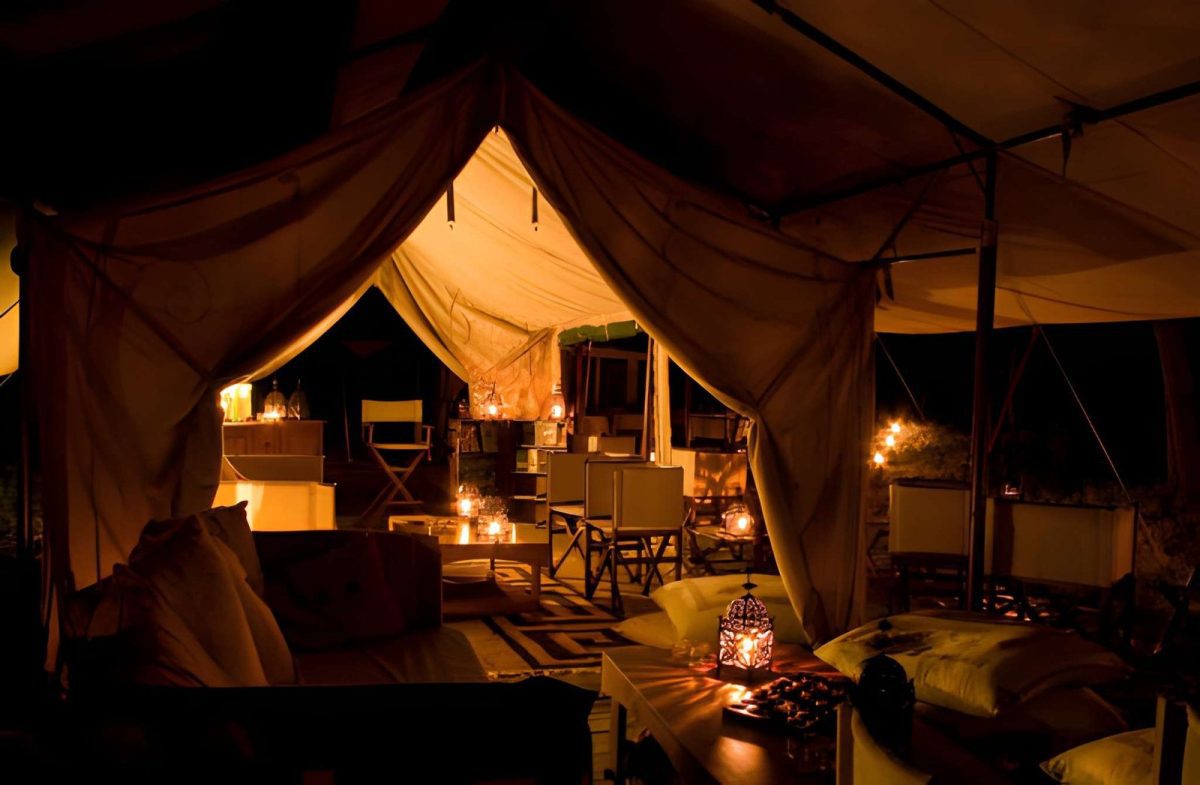
Often, yes. A small luxury safari camp with ten tents can feel more luxurious than a five-star resort, because on safari the things that feel most special are hard to scale up. Being known by name. Silence at night. A guide who has time for your questions. A tent placed where the wildlife is, not where a big building fits. A large resort can give you more facilities. A small camp tends to give you more of the bush, and more attention.
But “often” is not “always”. There are travellers who will be happier at a big, polished lodge, and we will get to them. First, it helps to picture what the difference actually feels like on the ground.
Picture Two Mornings
It is 5.45am in the Serengeti. At a large lodge, the dining room is filling up. There is a buffet, a coffee queue and the low noise of a hundred people getting ready at once. Outside, a line of safari vehicles waits with engines running. Everyone leaves at roughly the same time, and many head in roughly the same direction.
At a ten-tent camp, someone brings coffee to your tent while it is still dark and says good morning using your name. Breakfast is a few people around a fire, or a packed basket for the vehicle. Only a handful of vehicles leave camp. Twenty minutes later, you might be parked alone beside a pride of lions in the first light.
Neither morning is wrong. They are just different products. One is a very good hotel that happens to be in the bush. The other is a way of being in the bush that happens to include a very comfortable bed.
What “Five Stars” Actually Measures
Here is something most travellers never think about. In East Africa, official star grading for hotels, lodges and tented camps follows a common classification system set by the East African Community. It looks at the property and the services it provides. Tour guides are covered by separate standards, so the stars on a lodge say nothing about the quality of your game drives.
So a five-star rating can tell you a lot about the building, the rooms and the service standards. It tells you very little about the safari itself. A beautifully graded lodge can sit in an average wildlife area. A small camp with no formal rating at all can sit in the best place in the park for that month.
This is the heart of the question. Resort luxury is mostly measured inside the walls. Safari luxury is mostly felt outside them.
In a Small Luxury Safari Camp, Someone Knows Your Name
In a camp with ten tents, there might be twenty guests at most. The team often learns your name on the first afternoon. By day two, the bartender knows your drink, the chef knows you skip dessert, and the manager knows you want a later start tomorrow.
That kind of attention is very hard to deliver at scale, no matter how good the training. It is the difference between excellent service and personal service. Many travellers do not realise how much they value it until they feel it.
It shows up in small, practical ways too. Dietary needs are easier to handle when the chef is cooking for twenty instead of two hundred. Plans can change on the spot, such as a late lunch in camp, a bush breakfast, or a sundowner on a nearby rock. Laundry is a good example. Virtually all Tanzanian camps and lodges offer it, and smaller camps often include it in the rate. One useful detail: many camps will not wash women’s underwear for cultural and religious reasons, so pack a little travel wash.
There is a flip side. In a small camp, you are noticed. Dinner may be at one long table with the other guests, and some people would rather eat alone. If that matters to you, ask whether private tables are possible before you book.
The Sound of Nothing
Large resorts are rarely loud, but they are rarely quiet in the way the bush is quiet. There are pumps, kitchens, music near the pool, conversations from the next balcony and the steady background of a big operation.
A small camp has far less of that. Many run on solar power with limited generator hours, and some switch the generator off completely at night. What fills the space is the wild itself: birds at dawn, wind in the grass, a hyena whooping far away. For a lot of people, that silence turns out to be the most luxurious thing on the whole trip.
The trade-off is honest and worth naming. Quiet camps often have limited Wi-Fi, fewer charging points and no air conditioning. If you need to work on the trip, or you sleep badly in heat, check the details before you fall in love with the photos.
The Guide Question Is a Bit More Complicated
Small camps are often praised for their guides, and many of them deserve it. A camp guide who lives in one area all year knows its prides, its leopards and its quiet back roads. With fewer vehicles leaving camp, there is also less chance that your own neighbours end up at the same sighting.
But here is the part people miss. On many Tanzania safaris, especially private ones, your guide and vehicle travel with you from camp to camp. That is how Roy Safaris works on a private trip. Our guides are full-time staff, most with more than ten years of experience, and they drive our own vehicles. In that case, the camp’s guiding matters less, and the camp’s location and atmosphere matter more. You can read more on our why travel with Roy Safaris page.
So the real question is not just “does this camp have great guides?” It is “who will actually be driving me each morning, and does where I sleep help them find wildlife?”
Smallness Makes Good Locations Possible
This is the advantage that people feel most but notice least. A big lodge needs roads, water, power and a large footprint, so it usually sits in a fixed spot that works all year. A small camp can be light and quiet enough to sit somewhere remote, and in some cases it can move with the seasons.
That is why so many of the most loved Serengeti safari accommodation options are tiny. Some camps in remote corners of the park have just six tents, and a boutique safari camp in the Serengeti can feel like a private house in the wild. In the far north, small camps near the Mara River put you close to the herds when the Great Migration arrives, usually from around July. Seasonal mobile camps in the south follow the calving herds near Ndutu early in the year. Size and location are linked. Fewer tents make wilder places possible.
The Awkward Bits Nobody Puts in the Brochure
Small camps have a social side that is worth thinking about before you go. Around a campfire with eight other people, conversation is part of the evening whether you feel chatty or not. Most guests love it. A few find it tiring after a long day in the vehicle.
Group size matters too. If a family of twelve books most of a ten-tent camp, a couple taking the last two tents may feel like guests at someone else’s party. It is fair to ask the camp who else is likely to be there, especially in busy months.
And tipping can feel more personal. In a small team, you get to know the people who look after you, which makes saying goodbye warmer but also more visible. Many camps use a shared tip box for the whole staff, which takes the awkwardness out of it. Ask your operator for guidance on amounts before you travel.
None of this is a reason to avoid small camps. It is just the honest texture of the experience, and knowing about it means nothing catches you off guard.
Where the Five-Star Resort Honestly Wins
It would be dishonest to pretend small always wins. A larger luxury lodge is often the better choice for:
- Families with young children. More space, pools, sometimes children’s activities, and fewer guests to disturb if a toddler has a loud evening.
- Travellers with limited mobility. Big lodges usually have paved paths and step-free rooms. Small tented camps can involve uneven ground and raised decks.
- People who value privacy over personal attention. Some travellers like being anonymous. In a ten-tent camp, that is hard.
- Anyone who wants choice. Several restaurants, a spa menu, a gym and a large pool can make a long midday break easier.
- Tighter budgets. Small, remote camps carry high running costs, and their prices usually reflect it.
None of these are wrong reasons. A well-run large lodge in a good area can be a wonderful base, and it is sometimes the better match.
Questions That Cut Through the Brochure
If you are trying to decide, a few questions tell you more than any star rating. How many tents, and how many vehicles leave each morning? Is dinner shared or private? How many hours of power and Wi-Fi are there? Where exactly is the camp in the month you will travel? And, most important of all, who will be guiding you each day?
A camp that answers those questions clearly, and honestly, is usually a camp that will look after you well.
Why the Best Trips Often Use Both
Here is where we tend to land after a lot of trips planned in both directions. For most people who come to Tanzania for the wildlife, a small camp in the right place feels more luxurious than a big resort. Not because it is fancier, but because it is closer to what a safari is for. Quiet luxury in Tanzania looks like being known, being in the right place and having space to take it all in.
But the trip does not have to be one or the other. A larger lodge can make perfect sense on the night before an early flight, or at the start of the trip when you want an easy landing after a long journey. Then the small camp comes in where the wildlife is at its best, for two or three nights, so you have time to settle into its rhythm.
If you would like help working out where each kind of stay fits, explore our Tanzania safari itineraries or ask us to personalise your safari.
And if you are still unsure, try this. Imagine your last morning. Do you see yourself by a pool with a long breakfast menu, or sitting in a quiet tent doorway with a coffee, listening to the plains wake up? Your answer is probably your answer.