Who Is Actually Operating Your Safari on the Ground?
October 12, 2026
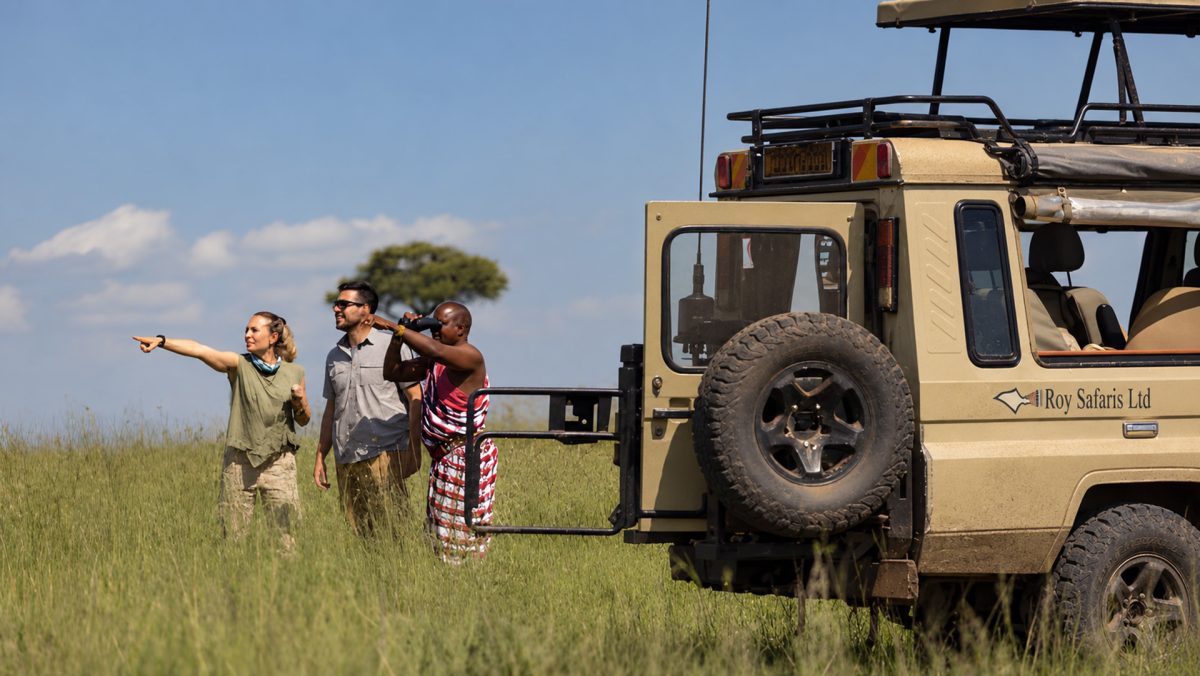
The company you pay is not always the company that runs your safari. Many Tanzania safaris are sold by one business and carried out by another. Sometimes the guide or the vehicle comes from a third.
So who operates your safari? Before you pay, you should be able to name four people or companies: the licensed operator holding your booking, the guide who will drive you, the owner of the vehicle, and the person you call in an emergency. If a seller cannot give you all four, you do not yet know who is running your trip.
This guide explains how safari bookings pass between companies, why that is not always a problem, and the exact questions that bring the full picture into view.
Who operates your safari? Why the answer is often unclear
A safari in northern Tanzania can pass through several hands before you reach Arusha. A common chain looks like this:
- The seller. A travel agent, online marketplace or tour company in your home country takes your booking and your money.
- The ground safari operator. A licensed company in Tanzania, sometimes called a destination management company or ground handler, books the lodges, park fees and transfers.
- The supplier. The ground operator may run its own vehicles and guides, or it may hire some of them in from another company or a freelance guide.
The term Tanzania destination management company usually describes the middle link. It is a local firm that handles everything on the ground for overseas agents, often for many agents at once. Some run their own fleet and guides. Others coordinate suppliers and own very little themselves. Both models exist, so the label alone tells you little.
Each link takes a margin, and each link is another place where information can get lost. The name on your invoice may never appear on the vehicle door, and you may only find out on the day, outside the airport.
Subcontracting is not automatically bad
A safari subcontractor in Tanzania can be excellent. Some overseas agents have worked with the same Arusha operator for many years and know its guides by name. Some local operators hire in extra vehicles in peak months from partners they trust.
The useful distinction is between a chain you can see and a chain you cannot. A good seller will tell you who the ground operator is, why they chose them and what happens if something goes wrong. A weak one will avoid the question, or answer with “our team in Tanzania” and no name.
What matters most is not how many companies are involved. It is whether someone in that chain takes clear responsibility, and whether you know who that is before you pay.
Name one: the contracted operator
This is the company legally responsible for delivering your safari in Tanzania. Start here.
In Tanzania, every tour operator needs a tourism licence from the Ministry of Natural Resources and Tourism, issued under the Tourism Act of 2008. In the safari trade it is widely called a TALA licence. It is required by law, not optional, and it must be renewed every year. Licensed tour operators must also meet vehicle rules, including a minimum fleet of their own tourism vehicles.
Ask for the licence number and the licensed company name. A real operator gives both without fuss. Then check that the company name matches the one on your contract and on the bank details or payment page. If you are told to pay a different company, or a personal account, ask why before sending anything.
Membership of the Tanzania Association of Tour Operators (TATO) is a useful extra check. It is voluntary, but members must hold a valid licence, and TATO publishes its member list. It is not a guarantee of quality, but it does tell you the company is known in the trade.
Name two: the guide
Your guide is also your driver, your spotter and, for most of each day, your host. On a private safari, the guide shapes the trip more than any lodge does.
Tanzanian law reserves tour guiding for Tanzanian citizens, and a government order in July 2025 restated the ban on non-citizens working as tour guides. A foreign tour leader can travel with a group and handle logistics, but the person guiding you in the parks must be a licensed Tanzanian guide. Guides need a tour guide licence, and those who drive guests also need the right professional driving licence.
The harder question is who employs the guide. Many good operators use some freelance guides in busy months, and quality varies. In practice, the problem is rarely that a guide is freelance. It is that nobody takes responsibility when things go wrong.
Ask these three things:
- Is the guide a full-time employee of the operator, or hired in for this trip?
- Can you tell me the guide’s name and experience before I travel?
- If I am unhappy with the guide, how quickly can you replace them, and who decides?
The last answer tells you most. Look for something specific: a time frame, a named person who makes the call, and a clear request that you contact them the moment a problem starts. Do not wait until the last night to raise it. A guide problem raised on day one can be fixed. One raised at the airport can only be refunded.
Name three: the vehicle provider
Ask whether the vehicle belongs to the operator or is hired from another company. Then ask what you will actually ride in.
A good safari vehicle for northern Tanzania is usually a 4×4, most often a Land Cruiser, with a pop-up roof for viewing. Check how many seats it has and how many people will share it. A promise of a window seat means little if every seat is filled and the middle passengers spend the day leaning across strangers. On a private safari, it should be just your group.
Also ask what happens if the vehicle breaks down. Roads into the Serengeti are rough, and breakdowns happen even with well kept vehicles. What matters is how fast a replacement can reach you. An operator with its own fleet in Arusha, and other vehicles already in the parks, can usually respond faster than one that has to find a vehicle to hire.
If your safari includes flights between parks, part of your trip may be run by the lodges themselves. Many fly-in camps use their own vehicles and guides. That is normal and often very good, but you should know which days your operator’s guide is with you and which days you are in the camp’s hands.
Name four: the emergency contact
Ask for a 24-hour phone number that is answered in Tanzania, by someone who can act. A call centre in another time zone cannot send a vehicle to the Serengeti. A local operations team can.
Then ask what happens in a medical emergency. Since 1 October 2026, most foreign visitors arriving in mainland Tanzania must buy a government travel insurance policy from the National Insurance Corporation (NIC). It costs US$44 for an adult, lasts up to 92 days and covers emergency medical treatment, medical evacuation, repatriation and lost luggage. Visitors who arrive first in Zanzibar use Zanzibar’s own scheme instead.
That policy is a legal entry requirement, not a full safety net. It does not replace your own comprehensive travel insurance, and some operators also recommend flying doctor cover, such as AMREF Flying Doctors, for evacuation from the bush. Ask your operator which cover they check for, and who arranges an evacuation if you need one.
A good answer to “who do I call?” names a person or a role, gives you a number, and tells you what they will do next. A vague answer is a warning sign.
Questions to send before you pay
Copy these into one email. A professional operator can answer all of them in a single reply.
- What is the full name of the licensed company in Tanzania that will operate my safari, and what is its TALA licence number?
- Is that the same company I am paying? If not, what is the relationship between you?
- Will my guide be your employee or hired in? Can you share their name before I travel?
- Who owns the vehicle, what type is it, and how many people will share it?
- What is your 24-hour emergency number in Tanzania, and who answers it?
- Is emergency evacuation cover included? If so, with whom, and what does it cover?
- If the guide or vehicle is not right, how quickly can you replace it?
Keep the replies. If anything changes before you travel, such as a new guide or a different vehicle, ask the operator to confirm it in writing.
Then do one last check on arrival. When you meet your guide, confirm their name and the company they work for, and look at the name on the vehicle. If either differs from what you were told, ask about it politely before you leave the airport. It is far easier to sort out a mix-up in Arusha than in the middle of the Serengeti.
Signs that the chain is hidden
Be careful if a seller:
- Will not name the Tanzanian operator until after you pay
- Asks you to pay a personal account or a company with a different name
- Cannot give a licence number, or sends one for a different company
- Quotes a price far below others for the same lodges and nights
- Gives only an overseas phone number for emergencies
A very low price is worth a closer look. Park fees are set by the park authorities and are the same whoever books them, and lodge rates and fuel only vary so much between operators. A large gap usually means something has been cut, often the vehicle, the guide or the number of people sharing.
How Roy Safaris answers the four questions
It is fair to ask us the same questions, so here are our answers.
- The operator. Roy Safaris is a licensed tour operator based in Arusha since 1989, and a current member of TATO.
- The guide. Our guides are full-time employees, not freelancers hired for the week. Most have worked with us for more than ten years.
- The vehicle. We run our own fleet of 24 custom-built safari vehicles, which we maintain ourselves. We prefer to use our own vehicles even in the busiest months, because we know their condition and how they have been cared for.
- The emergency contact. Our team in Arusha is available 24 hours a day on WhatsApp at +255 745 182 923.
The practical verdict
You do not need to avoid agents, and you do not need to avoid subcontracting. You do need to know who is doing what. A safari is safest when one licensed company in Tanzania owns the outcome and tells you so in writing.
The simplest route is to book directly with a ground safari operator in Tanzania that runs its own operations, or with an agent who names that operator up front. Either way, get the four names before you pay: the operator, the guide, the vehicle owner and the emergency contact.
If you are comparing companies, our guide to choosing a Tanzania safari company covers the wider checks, from reviews to pricing. You can also read more about how Roy Safaris works from Arusha, and send us any of the seven questions above. Once you have the right operator, our Tanzania safari itineraries are a good starting point for planning the route, and our Tanzania travel FAQs answer common planning questions.